The Ayutthaya Incident: How a Spanish Freelancer Burned a Japanese Ship and Cost Portugal Two Years of Silver
In May 1628, a Spanish commander sent to punish the Siamese went hunting for Japanese instead. He took 42 prisoners, stole the Shogun’s vermilion-seal pass, and watched his countrymen in Manila refuse to pay for it. The bill landed on the Portuguese merchants of Macau, and on one Lisbon-born factor whose career with the incident would end, 12 years later, with his head on a stake above Nagasaki.
The Ayutthaya Incident of May 1628 was an unauthorized Spanish attack in which Don Juan de Alcaraso, sent from Manila to punish Siam, burned the licensed red-seal junk of the Nagasaki merchant Takagi Sakuemon on the Menam Chao Phraya river, killing crew, taking 42 prisoners, and seizing the shogun's vermilion-seal pass. Holding Spaniards and Portuguese jointly liable under the Iberian Union, the Tokugawa shogunate embargoed Portuguese trade at Nagasaki for nearly two years, seizing five galliots before lifting the freeze in 1630, and the affair pushed Japan a decisive step toward the sakoku closure.
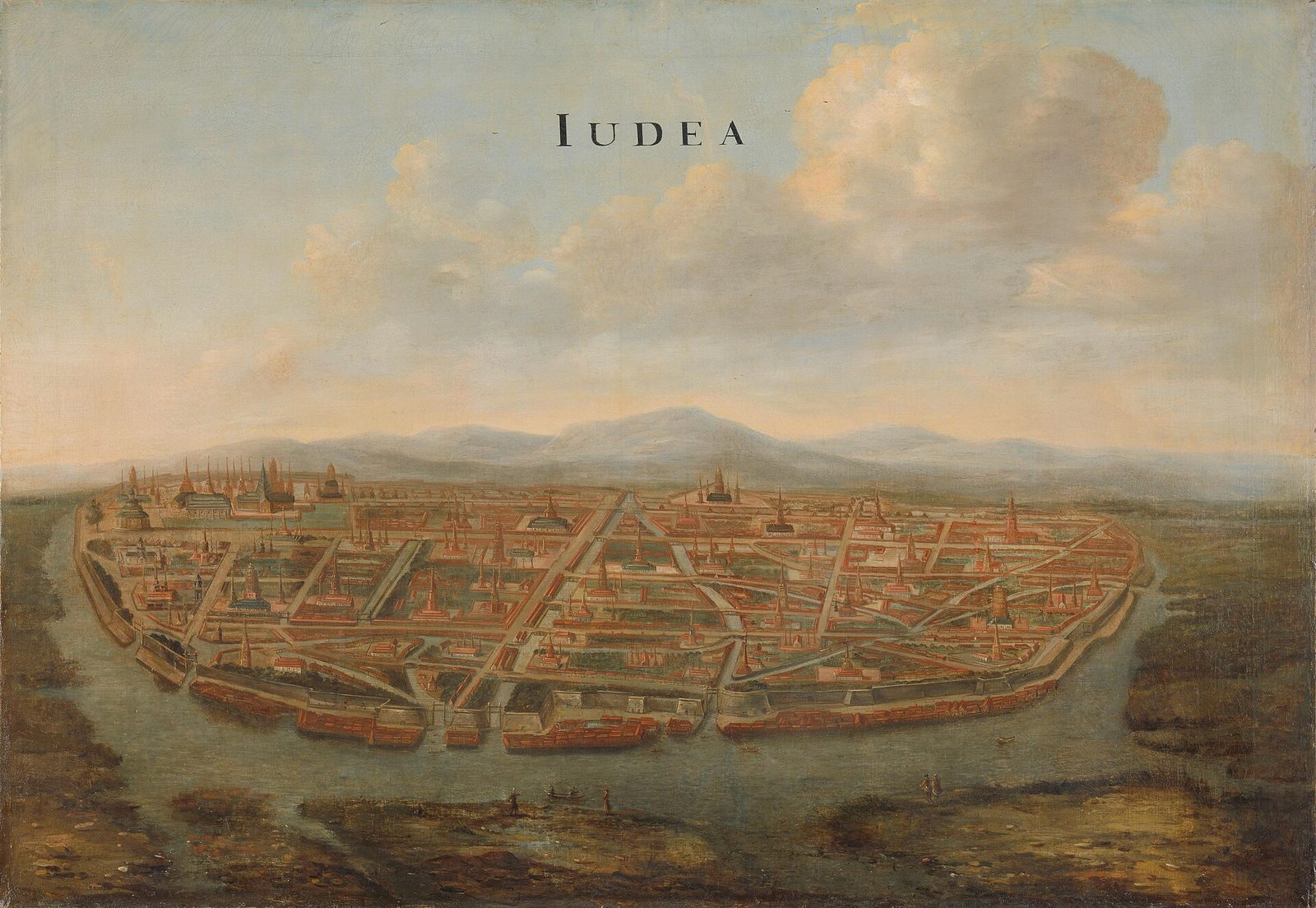
A Receipt Written in Smoke
Somewhere in the brown, sluggish water of the Menam Chao Phraya, on a humid afternoon in May 1628, a Japanese merchant captain watched a Spanish boarding party climb onto the deck of a ship that carried, in a small lacquered box, the personal seal of the most powerful man in Japan.
The box contained a single document: a goshuin, a vermilion-seal trading pass stamped with the personal red chop of the Tokugawa house and endorsing the voyage of the vessel now being seized. It was, in every meaningful diplomatic sense, the Shogun’s signature. It said: this ship sails under my protection; harm it, and you harm me. The captain carrying it was a Nagasaki merchant named Takagi Sakuemon. He had sent the junk south to Ayutthaya to trade, as his family and dozens of other licensed Nagasaki houses had been doing for a quarter of a century under a system the shogunate had built expressly to keep vessels like his own safe.
The Spanish commander on deck, Don Juan de Alcaraso, sent from Manila under orders that had nothing whatsoever to do with Japan, did not care. His men killed members of the crew. They took the flag. They took the seal. They took 42 survivors as prisoners. They loaded whatever cargo interested them onto their own galleons, set the Japanese junk on fire, and watched it sink.
A Spanish officer had just burned a signed letter from the Shogun of Japan. He did not know it yet, but he had also just handed the Tokugawa government an excuse, one it would not waste, to begin the final phase of severing its connection to the European world. The smoke rising off the river that afternoon was the first visible sign of a diplomatic catastrophe that would freeze Portuguese trade for nearly two years, detonate the Iberian Union’s legal fiction across a thousand miles of ocean, and nudge Japan another decisive step toward the closure that was now only a decade away.
It was an entirely unauthorized operation. A Spanish council in Manila would rule, two months later, that Alcaraso had explicitly overstepped his mandate. This proved to be small consolation. The cargo was gone, the ship was gone, the crew was dead or captured, and, somewhere in Alcaraso’s strongbox, or at the bottom of the Gulf of Siam, was a piece of paper that the most autocratic government in East Asia regarded as an extension of the Shogun’s own person.
The Piece of Paper That Started It All
To understand why the Tokugawa response was so disproportionate to the loss of one merchant junk, you have to understand what had been stamped onto that junk’s manifest.
The shuinjō, literally “vermilion-seal document”, was the backbone of Japanese overseas commerce in the first decades of the 17th century. Toyotomi Hideyoshi had introduced a version of it in 1592, but it was Tokugawa Ieyasu who developed the system into a functioning diplomatic instrument in the early 1600s, issuing licenses to daimyō, Nagasaki merchant houses, and even resident foreigners such as William Adams. By the time of the Ayutthaya incident, several hundred such passes had been distributed. Ships that carried one were known as shuinsen, red-seal ships, and they were distinguishable from the unlicensed junks and pirate vessels that had been harassing East Asian coasts for centuries.
Ieyasu had written directly to the kings of Siam, Cambodia, Cochinchina, and Luzon with a simple instruction: any Japanese junk arriving in your harbors without a red-seal pass is a pirate. Treat it as you see fit. But one that bears the seal is an extension of the Japanese state. Protect it as you would your own.
This was not metaphor. In the Tokugawa legal imagination, and increasingly in East Asian practice, an attack on a shuinsen was an attack on the Shogun himself. The Bakufu had already demonstrated its willingness to enforce this doctrine with teeth. In 1615, when a Dutch yacht captured a Portuguese vessel in waters the Japanese considered their own, the ensuing legal case had turned entirely on the question of whether Japanese sovereignty had been violated. The principle was simple, and by 1628 it was well established: the seal was sacred, the ships that carried it were untouchable, and anyone who forgot this would be reminded with economic violence.
Takagi Sakuemon was not a marginal figure. He was a machi-doshiyori, a town elder of Nagasaki, one of the senior merchant oligarchs who ran the city’s trade under the oversight of the Tokugawa-appointed magistrate. His ship was not a speculative private venture; it was a state-endorsed commercial expedition, operating under paperwork that connected directly to the desk of the Shogun’s most senior officials. His captain carried, in that small lacquered box, the closest thing Tokugawa Japan produced to a sovereign’s flag.
The Spaniards on the Menam Chao Phraya seized it, and then they burned the ship it came from.
The Vendetta
Don Juan de Alcaraso had not sailed from Manila with any intention of insulting the Shogun of Japan. He had sailed to punish the Siamese.
The story went back four years, to a grudge that had been ripening in the humid offices of the Manila governorate since 1624. In that year, a Spanish officer named Don Fernando, or Hernando, de Silva had died on the same stretch of river where Alcaraso would later find Takagi’s junk: the Menam Chao Phraya, running brown through Ayutthaya. The circumstances were the kind of waterfront squabble that Southeast Asian port cities manufactured on a weekly basis in the 1620s. De Silva was caught in a brawl involving a mix of Japanese mercenaries, Siamese traders, and whatever portion of Manila’s expeditionary force he had brought upriver with him. The Japanese community in Ayutthaya had grown to something like 1,500 men by this point, many of them rōnin, masterless samurai, who had drifted south after the Siege of Osaka in 1615 and taken service wherever a ruler would pay for steel and experience. They were, by most European accounts, among the most feared fighters in Southeast Asia.
In the brawl, they killed de Silva. A Spanish commander was dead on a Siamese riverbank, and Japanese swords had been among those that killed him. The incident slipped into the files of the Manila governorate as a humiliation awaiting a response, and over the next four years it condensed, as these moods do, into a policy.
By 1628, Manila had decided it was time to send ships south again, not to Japan, which Spain had formally broken diplomatic relations with in 1624 following earlier incidents, but to Siam, to punish the Ayutthaya court and its royal favorites for the death of de Silva and for various Siamese provocations in the intervening years. Two heavily armed galleons were fitted out for the mission: the San Ildefonso and the Nuestra Señora de la Peña de Francia. Command was given to Don Juan de Alcaraso.
His orders were specific. He was to cruise Siamese waters and attack Siamese craft. He was, in every written instruction Manila had handed him, to confine his violence to the ships of the kingdom he had been sent to punish.
Alcaraso interpreted his brief broadly. The Japanese, he reasoned, had killed de Silva. Japanese blades had been among those that drew Spanish blood on a Siamese river. The Japanese, therefore, were legitimate targets, regardless of what the paperwork said, regardless of the fact that the Bakufu had issued no hostile acts against Manila since 1624, and regardless of the unambiguous sign stamped on Takagi’s ship that he was sailing under shogunal protection.
This was the kind of decision that men make at the far end of long supply chains. The instructions an officer received on departure were inevitably shaped by the instructions he gave himself along the way. Alcaraso was a product of his century, a century in which the line between commissioned naval officer and freelance privateer was less firm than the parchment of his commission suggested.
The Councils in Manila
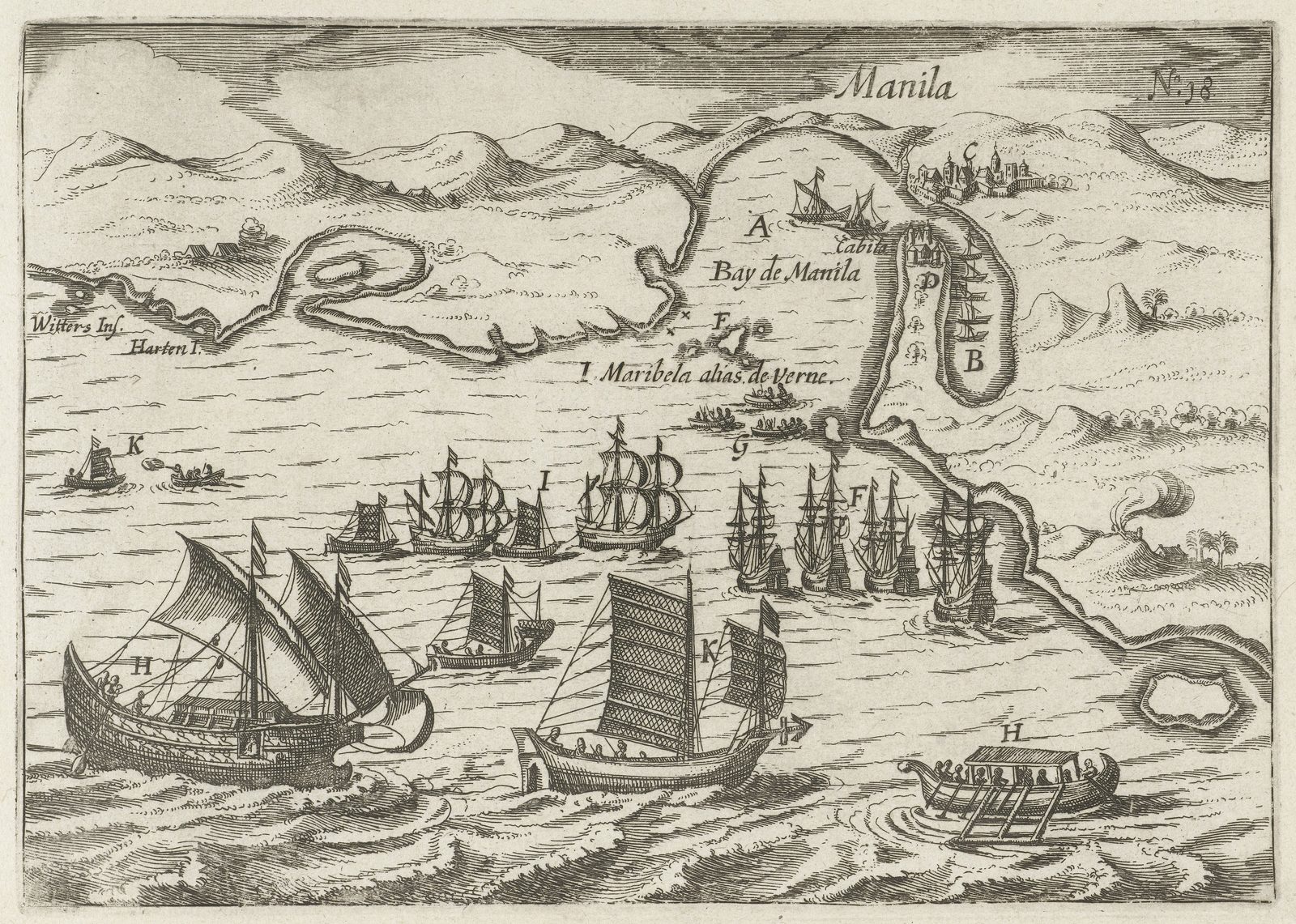
When Alcaraso sailed back into Manila Bay in the summer of 1628 with 42 Japanese prisoners in his holds and a Shogunal flag folded at the bottom of a chest, the mood in the governor’s residence was not congratulatory.
What happened next is told three different ways in the surviving sources, and reconciling them requires a certain comfort with administrative untidiness. The historical record, even within individual chapters of C. R. Boxer’s Fidalgos in the Far East, presents conflicting accounts of which Manila council made which decision and when. The fragments can, however, be reassembled into a reasonably coherent sequence, provided one accepts that Manila held not one council on the matter but two, six months apart, and that between them they managed to combine the worst features of prompt concession and belated refusal.
The first council met in July 1628, within weeks of Alcaraso’s return. Its conclusion was plain enough that Alcaraso must have had a bad afternoon: the capture of the Japanese junk had been illegal. He had exceeded his mandate. His orders had specified Siamese craft, and a shuinsen out of Nagasaki was demonstrably not a Siamese craft. Acting on that finding, the council released the 42 Japanese survivors and loaded them onto a Chinese craft for repatriation to Nagasaki, a gesture that, if it had succeeded, might have defused the entire crisis before it began. Instead, as we shall see, the Chinese ship never arrived, and the rumor that spread in Edo was that the Spaniards had scuttled it themselves.
The second council met in January 1629, by which time Macao’s merchants were writhing under the Japanese embargo and begging the Governor of Manila to offer proper reparations to lift it. This council took a far harder line. It reaffirmed that Alcaraso had exceeded his authority, but it refused to offer the Japanese any further satisfaction, no indemnity, no financial compensation, no formal apology. According to the historian William Lytle Schurz, the council actually drafted an elaborate indictment of Japanese conduct to justify its stance. The grievances it enumerated were long, pointed, and selective: Japan had prohibited commerce with Manila on religious grounds, had refused to receive Spanish ambassadors, and, the argument that always surfaces when 16th-century Spanish diplomacy meets a Japanese demand, had piratically confiscated the galleon San Felipe in 1596 and crucified the Franciscan missionaries at Nagasaki the following year. The Shogun’s men, the council concluded, had drawn first blood long before Alcaraso had drawn his. Manila owed Japan nothing.
Some of the sources collapse these two councils into a single body, placing both the release of the prisoners and the refusal of indemnification in January 1629, and framing the conciliatory gesture as coming directly from Governor Juan Niño de Tavora together with a letter offering to renew ancient commercial relations. Whether one treats them as one council or two, the net effect is the same: the Spanish had released the 42 prisoners; the prisoners had vanished en route; and Manila now declined to compensate Japan for the attack that had produced them. The Bakufu received an acknowledgement of guilt accompanied by a refusal of restitution. Which, functionally, was all the information it needed.
The 42
The fate of the 42 Japanese survivors is one of those episodes that reveal how the early modern world killed people not through malice but through the sheer friction of distance. The July 1628 council’s decision to release them had been, in its own way, a rare moment of administrative clarity: keeping 42 live Japanese sailors in a prison on Luzon was a standing invitation to further disaster, and sending them home at least had the virtue of removing them from the governor’s in-tray. Manila’s mistake was not in releasing the prisoners. It was in the mechanism it chose to release them with.
Spain had no diplomatic relations with Japan; the 1624 rupture meant no Spanish vessel could sail directly to Nagasaki without triggering an incident. The obvious solution was to charter a Chinese junk, since Chinese shipping moved freely in and out of Japanese ports and served as the standard intermediary by which Manila maintained any contact at all with the Japan trade. The 42 prisoners were loaded aboard with instructions to deliver them to Nagasaki.
The ship never arrived.
What happened to it is genuinely unknown, storm, pirates, any of the thousand accidents that the South China Sea inflicted on its traffic every year. None of its passengers or crew ever reached Japan. None of the 42 men who had watched the San Ildefonso’s boarding party come over their rail in May 1628 ever saw Nagasaki again.
In Japan, only one explanation made sense. The Tokugawa authorities, hearing that the prisoners had left Manila but never arrived, concluded that the Spaniards had scuttled the Chinese ship deliberately, drowning its passengers in the deep water off Manila Bay to eliminate the only direct witnesses who could testify, on Japanese soil, to what Alcaraso had done and to the fate of the stolen goshuin. It was a conclusion the Tokugawa government could not verify and the Spanish government could not disprove. In the absence of evidence either way, it became fact in Edo. And by the time the rumor hardened into Japanese policy, the Bakufu had already made its move. The Spanish were impossible to reach. But somewhere much closer to hand, at Nagasaki, at that very moment, riding at anchor under the guns of the shore batteries, were some other Iberians. The Tokugawa knew exactly where to find those.
The Logic of Joint Liability
The political mechanism that transferred Alcaraso’s debt from Spain to Portugal was the Iberian Union, the dynastic arrangement that had bound the two crowns together since 1580.
When Philip II of Spain had enforced his claim to the vacant Portuguese throne after the disaster of Alcácer-Quibir, he had sworn at the Cortes of Tomar in 1581 that the two empires would remain administratively separate: distinct viceroys, distinct trading networks, distinct laws and currencies. Only the monarch would be shared. In every other respect, Portugal would run its own affairs.
This was the legal theory. The Tokugawa had never accepted it. From the moment the Spanish had begun arriving in Japan from Manila in the 1580s, the Japanese had been aware that the “Portuguese” in Nagasaki and the “Castilians” in Kyūshū answered to the same king. The Jesuits had tried to explain the distinction; the Franciscans had tried to blur it. The Shoguns, who cared little for the fine print of European treaties, had concluded that Spaniards and Portuguese were two hands of the same body, and that when one hand committed an offense, the other was equally answerable. The rupture of diplomatic relations with Manila in 1624 had been presented as a breach with the Spanish specifically, but the Tokugawa knew perfectly well that the Portuguese at Nagasaki were, in Madrid’s accounting, subjects of the same crown.
When word of the Ayutthaya attack reached Edo in the summer of 1628, the Bakufu did not waste time trying to track down Alcaraso in his distant Spanish base. It moved against the Iberian merchants within reach. The Portuguese galliots riding in Nagasaki harbor, the annual trade fleet, carrying the year’s freight of Chinese silk from Macau, were placed under immediate embargo. The Portuguese protested: they were entirely innocent, had nothing to do with the Spanish, had been in Macau for the duration of Alcaraso’s voyage and had no knowledge of it. The Nagasaki authorities listened, noted the arguments, and informed the merchants with the clarity that always accompanies a Japanese administrative decision that Spaniards and Portuguese were subjects of the same monarch, that they were jointly and mutually responsible for the conduct of their co-subjects, and that their lives and cargoes would be forfeit unless full reparations were forthcoming from Manila. The administrative separation that Tomar had so carefully preserved was, as far as the Tokugawa was concerned, a European fiction of no interest to them.
The 1628 Portuguese trade fleet consisted of five galliots under Captain-Major António Monteiro Pinto. Two had slipped out of Nagasaki harbor before the embargo came down; the remaining three were caught in port and sequestered with their cargoes. When the 1629 fleet arrived, two galliots under Captain-Major António de Oliveira de Aranha, both were seized on the spot, with no pretense of investigation or negotiation. Five Portuguese hulls now sat in Nagasaki harbor under Japanese guard, their holds full of Chinese silk that Macau had paid for but could not sell, held hostage against the conduct of a Spanish officer the Portuguese had never met, acting under orders the Portuguese had never seen, in pursuit of a vendetta the Portuguese had never shared.
The Siam Connection Bleeds Further
The Ayutthaya incident did not occur in a vacuum. It landed in a year during which the Japanese mercantile marine was being battered simultaneously on multiple fronts, and the cumulative effect was to convince the Tokugawa that the overseas trade they had spent three decades building could no longer be adequately protected.
At almost the same moment Alcaraso was burning Takagi’s junk in the Gulf of Siam, a separate crisis was unfolding nearly 2,000 miles away in Formosa. The Dutch East India Company, operating from its fortress at Zeelandia on the Taiwanese coast, had begun imposing taxes on Japanese merchants trading there, most notably on a convoy led by a Nagasaki red-seal captain named Hamada Yahei. The Dutch governor, Pieter Nuyts, attempted to enforce the tax. Hamada refused, and in a confrontation that would become famous in Japanese sources, his men seized Nuyts in his own residence and held him hostage until the VOC agreed to withdraw the tax.
The Nuyts affair was scorching. In 1628 alone, Japanese licensed shipping had been attacked by the Spanish in Siam and taxed by the Dutch in Formosa. Two European powers, operating simultaneously, had demonstrated that Japanese merchants venturing beyond their home waters were at the mercy of foreign navies that neither respected the Shogun’s seal nor feared his reach. The Bakufu was forced to confront a humiliating fact: the shuinsen system had been designed to place Japanese merchants under Tokugawa protection abroad, but the Tokugawa had no navy capable of enforcing that protection. Ships sailed under a flag that could not be defended. Crews sailed with passes that could be ignored.
The cumulative effect of 1628 was to make isolation look less like a policy of fear and more like a policy of common sense. If Japan could not protect its merchants overseas, then perhaps Japan should not have merchants overseas. The Shogun was already thinking about it. Ayutthaya made him think harder.
The Embargo Lifts Itself
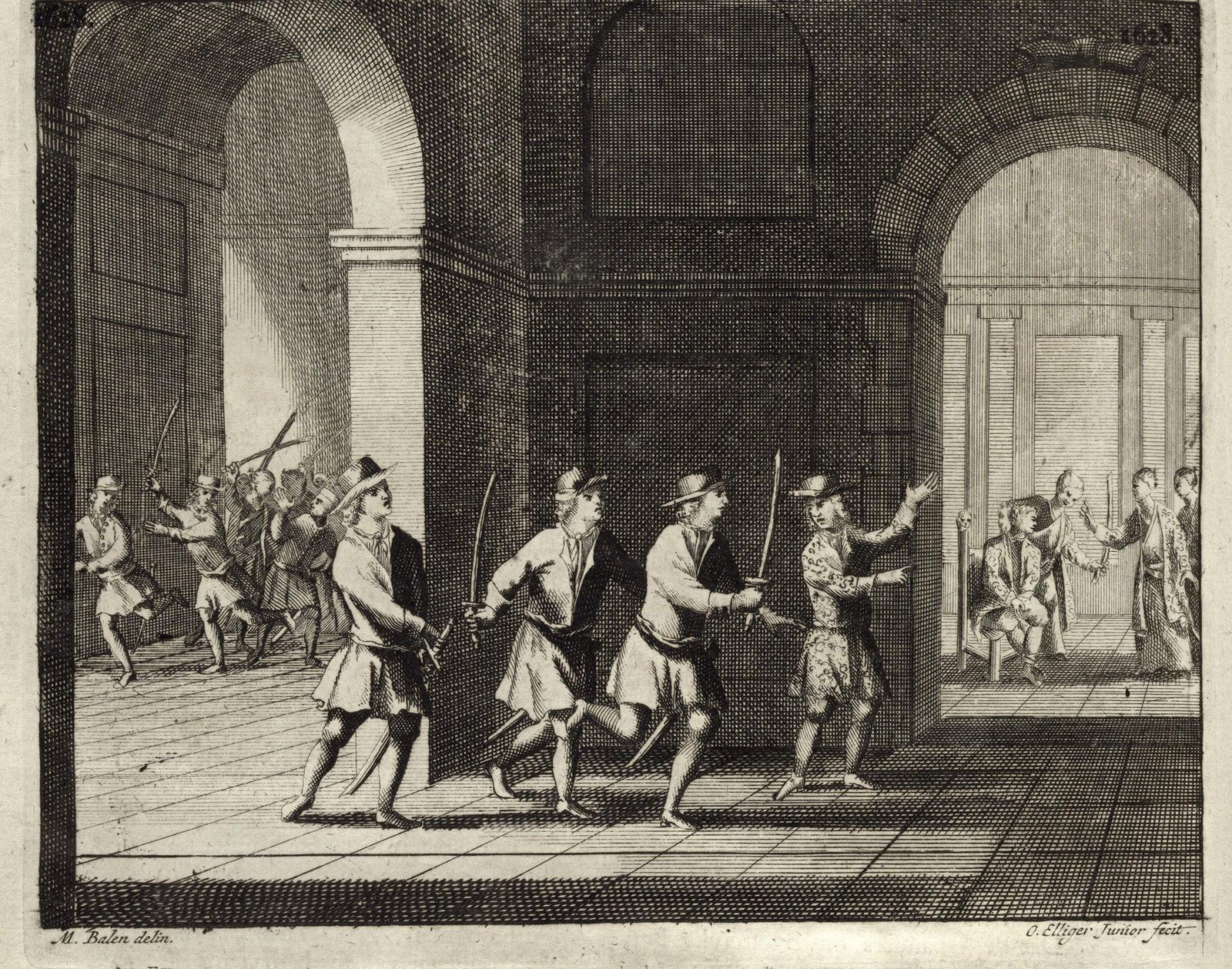
The embargo at Nagasaki held for nearly two years, an extraordinary instrument by the standards of 17th-century commercial disputes, a deliberate economic siege against a European trading partner by an East Asian power, with no end-date and no compromise on the terms for lifting it. The Portuguese merchants in Macau watched their most profitable market vanish into administrative limbo and began, for perhaps the first time, to understand that their presence in Japan was permanently vulnerable.
The Senate of Macau sent petition after petition to the Spanish governor of Manila, begging him to do whatever was necessary to satisfy the Tokugawa. The surviving records convey something close to panic. Macau was not losing a market; it was losing the market, the one that kept the enclave solvent, paid the Jesuit mission, and underwrote the entire Portuguese commercial position in East Asia. The replies from Manila, when they came, were discouraging. The January 1629 council had already refused formal satisfaction, and the governor’s subsequent correspondence elaborated that position at greater length. Alcaraso had been disavowed. The Japanese had been sent their 42 prisoners, on a Chinese junk, and it was not Manila’s fault if the junk never arrived. Beyond that, the Spanish administration did not see why it should finance a settlement that would chiefly benefit a competing Portuguese trade route.
So the Macao Senate resolved to do the work itself. In 1630 the newly arrived Captain-General of Macao dispatched his own envoys to Nagasaki to disavow Alcaraso’s actions, plead for the release of the detained ships, and offer whatever restitution the Bakufu might accept. Dom Jerónimo da Silveira was initially selected for the mission, but he faced opposition and delays within the Macau establishment; a change of mind eventually sent his kinsman Dom Gonçalo da Silveira north in his place, carrying formal apologies and a brief that amounted, essentially, to we are not them, please consider unfreezing our cargoes.
By the time Silveira stepped ashore, the Japanese had already begun to relent: the Bakufu had started to relax the embargo before his arrival. Of the five detained galliots, Monteiro Pinto’s three and Aranha’s two, four sailed for Macao on 8 November; one was held back at Nagasaki. Whatever concessions the Macanese envoys had arrived prepared to make served, in the event, to hasten the lifting. Yet the resumption of trade in 1630 was no restoration of Japanese goodwill. It was a Tokugawa decision, arrived at on Tokugawa terms, for reasons the Bakufu did not explain and did not need to explain to the merchants it was releasing.
But release was not forgiveness. Before Aranha could sail home, the Nagasaki magistrate Takenaka Shigeyoshi, a figure who would become notorious in the decade that followed for his ruthless enforcement of Christian persecution, placed him and Dom Gonçalo under house arrest. The two men were to remain in Nagasaki as sureties. Not for Alcaraso’s attack this time, but for an entirely separate problem that had been accumulating in the Macao-Nagasaki accounts for years: enormous unpaid debts owed by Macanese merchants to their Japanese creditors. The Ayutthaya embargo had been lifted, but the Japanese were no longer willing to let Portuguese captains sail away from Nagasaki while their home city’s ledgers remained so flagrantly in the red. One crisis had been resolved; another, riding alongside it all along, now came fully into view.
And then came Takenaka’s most revealing move of all.
The Factor Who Carried the Shogun’s Bill
When the 1631 Portuguese fleet arrived at Nagasaki, commanded, after a tangled internal argument in Macao, by Captain-Major Lourenço de Lis Velho rather than the rival candidate Lopo Sarmento de Carvalho who had actually purchased the voyage’s contract, the feitor aboard was a 44-year-old Lisbon-born merchant named Simão Vaz de Paiva. A married resident of Macao and veteran of the Japan run, Paiva was the kind of seasoned commercial figure who sat just below the line of formal diplomatic authority and did much of the actual work of making the trade function, chief commercial representative of the Portuguese merchants on the voyage, handler of cargo, sales, disputes, and accounts.
Takenaka Shigeyoshi had already added a new line to his job description.
The Nagasaki magistrate, having watched Manila refuse to offer proper redress for Alcaraso’s outrage, did something that in the annals of early modern diplomacy has few clear precedents. He conscripted a Portuguese commercial officer as his personal emissary to the Spanish colonial government. In 1630, Paiva was ordered to sail from Nagasaki to Manila and to formally demand, in the magistrate’s name and alongside Japanese envoys, reparations from the Spanish for the Ayutthaya attack. It was not a Macanese diplomatic initiative. It was a Japanese one, executed through a Portuguese body. A feitor of Macao became, for the length of one voyage, the mouthpiece of the Shogun’s magistrate, sent to demand, from a governor who had already refused to give it, restitution for an attack on a Japanese ship two years earlier.
The move was telling. It confirmed, in the bluntest possible form, the Tokugawa position that the Iberians were a single commercial organism with two heads. It treated the Portuguese not as wronged third parties but as agents of the Spanish crown, obliged to deliver Tokugawa demands to their own sovereign. It also spared the Japanese government the awkwardness of direct communication with a regime they had formally broken off relations with in 1624; Paiva, sailing with Japanese envoys on a voyage the Bakufu seems never to have authorized, could say things in Nagasaki’s name that Edo could no longer say directly.
The sources do not record the exact sum demanded, nor the specific response from Manila. Paiva carried out his commission and disappears from the reparations file after 1631, though, as we shall see, he does not disappear from the Nanban story. What is recorded is that during the same 1631 season he wrote to Portuguese authorities exposing a separate scandal: the Macanese merchant Jerónimo de Macedo de Carvalho had been operating ships under Dutch flags and Dutch passes, exploiting the VOC’s freedom of movement while nominally remaining a Portuguese subject.
The 1631 season did not, however, end the crisis. Even as Paiva was back at Nagasaki as feitor, a second detention fell on the Portuguese fleet, entirely unrelated to Ayutthaya. The Japanese impounded large portions of Lis Velho’s cargo and seized the galliot São Jorge, on the grounds that Macanese merchants still owed substantial debts to Japanese creditors and that the ships would be held until the defaulters were sent to Nagasaki to face their creditors in person. The São Jorge remained under seal for over a year, released only in December 1632. The commercial relationship that had looked permanently broken in 1628 and then permanently saved in 1630 was, by 1632, permanently precarious. Every fleet arrived under the shadow of whatever grievance the Bakufu chose to assert that season.
Ayutthaya had shifted the tectonics. Before 1628, the Portuguese at Nagasaki had been the trusted commercial partners of a Japanese government that tolerated their religion as the unavoidable cost of their silk. After 1628, they were a liability, a foreign presence entangled in distant wars they could not control, whose continued access to Japanese markets was contingent on the conduct of Spanish officers they had never met, in operations they could not influence. The Portuguese merchants in Nagasaki were hostages to every future act of aggression committed by any Iberian anywhere in Asia. It was not a sustainable position, and both sides knew it.
The Road to Closure
The two-year embargo was the beginning, not the end. In the years that followed the reopening of trade in 1630, the Tokugawa moved steadily to dismantle the system that had allowed a Spanish officer in the Gulf of Siam to humiliate the Shogunate in the first place.
The shuinsen system itself was the first casualty. In 1631 the Bakufu introduced a new category of permit, the hōsho, countersigned by the senior council of elders (rōjū) and the Nagasaki magistrate, designed to supplement and increasingly supplant the traditional red seal. The sakoku edicts that followed, 1633, 1635, 1636, 1639, did not arise from a single decision. They accumulated, year by year, as the Bakufu worked through the logical consequences of its own 1628 conclusion: if Japan cannot protect its ships abroad, Japan will no longer have ships abroad. By 1635, outside a few tightly controlled channels such as Tsushima’s crossing to Korea, no Japanese vessel was permitted to leave Japanese waters, and any Japanese subject who had lived abroad was forbidden from returning on pain of execution.
The Portuguese, the last Iberians still tolerated in Japan, spent the 1630s losing ground. They were confined to the artificial island of Deshima in 1636. The Shimabara Rebellion of 1637–38 confirmed every Tokugawa suspicion about Catholic influence. In 1639 the final sakoku edict expelled the Portuguese from Japan entirely. The embassy that Macau sent in 1640 to plead for reinstatement ended with the beheading of most of its members at Nishizaka, their heads displayed on stakes. The follow-up embassy of 1644–1647, dispatched by the restored Portuguese Crown after the Braganza Restoration had ended the Iberian Union, found itself navigating a Nagasaki that was already irreversibly closed.
It is possible, though unprovable, that the closure would have come anyway. The ideological and religious pressures pushing the Tokugawa toward isolation were deep and structural. The Ayutthaya incident did not create those pressures. But it supplied, at exactly the right moment, a commercial and logistical argument for closure that complemented the ideological one. After May 1628, it was no longer enough to argue that Christianity was dangerous. One could now argue, with equal force, that the shuinsen system had failed in its core task of guaranteeing the safety of Japanese merchants abroad, and that continued engagement with the Iberian world meant continued exposure to insults that the Shogun could not prevent and could not punish.
Alcaraso, somewhere along his return voyage to Manila, had handed the advocates of closure an argument they had not previously possessed. It was not a decisive argument on its own. But in combination with Shimabara, with the 1614 edict, with three decades of Christian resistance, with the Dutch alternative at Hirado, and with the collapse of any Tokugawa confidence in the reliability of European partners, it was the push that mattered.
The Factor Returns
The feitor who had carried Takenaka’s reparations demand to Manila in 1630 did not disappear from the Japan run after his unusual diplomatic commission. He returned to Nagasaki as feitor again in 1637, during the opening months of what would become the Shimabara Rebellion, one of the last Portuguese voyages to reach Japan on something resembling ordinary commercial terms. By 1639 the final expulsion edict had closed the door. By 1640 the Senate of Macao had grown desperate enough to try to push it back open.
They selected, as one of the four principal ambassadors of a suicide mission, the man who had spent a third of his career as the commercial and diplomatic bridge between Nagasaki and Macao. Paiva, then in his mid-fifties, accepted. The embassy and its extermination are told in full elsewhere; the short version is that the 74-strong delegation reached Nagasaki in July 1640, was immediately impounded and confined to Deshima, and was offered the choice between apostasy and death. No one apostatized.
On the third of August 1640, Simão Vaz de Paiva, Lisbon-born, Macao-resident, former feitor, former courier of Nagasaki’s reparations demand, was beheaded on the hill at Nishizaka, along with three co-ambassadors and 57 other members of the delegation. 13 survivors, mostly lower-class crew, were deliberately spared and sent back to Macao on a small leaking boat as eyewitnesses to the terror the Shogunate was now prepared to inflict on any Iberian who attempted to revisit the forbidden archipelago.
What matters here is the symmetry of Paiva’s arc. In 1630 the Shogun’s magistrate had used him as a Portuguese body carrying a Japanese demand to the Spanish. In 1640 the Shogun’s executioners used him as a Portuguese body carrying a Japanese message to Macao. Both times, Tokugawa officials treated him as a diplomatic instrument, an Iberian through whom Japan could speak to Iberians. The first commission had ended with a confused negotiation in a Manila council chamber. The second ended on Nishizaka with his severed head on a spike.
What the Smoke Said
The Ayutthaya incident does not get the attention that Shimabara does. It does not feature in the cinematic narratives of the Nanban century. The names, Alcaraso, Takagi, Silveira, Vaz de Paiva, do not echo in the way that Ieyasu or Ferreira or Hideyoshi echo. It was a brief, ugly, fundamentally bureaucratic affair: a freelancing commander, a destroyed junk, an embargo, a resumption. By 1630, Portuguese silk was moving through Nagasaki again, and Alcaraso had disappeared into the obscure career of a Spanish naval officer.
But it mattered. It mattered because it exposed the most important fragility in the Tokugawa world, the dependence of Japan’s licensed trade on the goodwill of European powers whose internal quarrels the Shogun could neither understand nor control. It mattered because it proved, in the most humiliating way possible, that the Iberian Union was not a European legal fiction; it was a diplomatic reality that would land its consequences wherever it pleased, regardless of which crown had actually committed the offense. And it mattered because it nudged the entire trajectory of Japanese foreign policy away from managed engagement and toward withdrawal behind a few tightly controlled channels.
Sources & Further Reading
Boxer, C.R. The Christian Century in Japan, 1549–1650. University of California Press, 1951. Still the foundational English-language treatment of the Portuguese-Japanese encounter, with incisive analysis of the Ayutthaya incident’s place in the broader arc of the sakoku transition.
Boxer, C.R. Fidalgos in the Far East, 1550–1770. Martinus Nijhoff, 1948. Contains the most detailed English-language treatment of the Manila council proceedings, though its chapters present conflicting accounts of the July 1628 and January 1629 councils, the principal source of the timeline confusion that still dogs the incident in secondary literature.
Boxer, C.R. The Great Ship from Amacon: Annals of Macao and the Old Japan Trade, 1555–1640. Centro de Estudos Históricos Ultramarinos, 1959. The definitive study of the Macau-Nagasaki trade, including detailed coverage of the 1628–1630 embargo, the detention of the Monteiro Pinto and Oliveira de Aranha fleets, the Macanese diplomatic response, and the subsequent debt-related detention of the São Jorge in 1631–32.
Cieslik, Hubert. Hoppō tankenki: Gen-na nenkan ni okeru gaikokujin no Ezo hōkokusho. Yoshikawa Kōbunkan, 1962. Contains useful material on the Tokugawa administrative response to foreign incidents in the 1620s.
Clulow, Adam. The Company and the Shogun: The Dutch Encounter with Tokugawa Japan. Columbia University Press, 2014. Indispensable on the Nuyts–Hamada Yahei affair and the broader question of how the Tokugawa enforced sovereignty over Japanese merchants abroad; the analytical framework extends naturally to the Ayutthaya case.
Cooper, Michael. Rodrigues the Interpreter: An Early Jesuit in Japan and China. Weatherhill, 1974. Provides essential context on the diplomatic machinery that Macau deployed in attempting to manage Tokugawa relations during the crisis years.
Elison, George. Deus Destroyed: The Image of Christianity in Early Modern Japan. Harvard University Press, 1973. The classic study of the ideological dimensions of the sakoku transition; essential for understanding the Bakufu’s reasoning in 1628 and after.
Hesselink, Reinier H. The Dream of Christian Nagasaki: World Trade and the Clash of Cultures, 1560–1640. McFarland, 2016. Detailed coverage of the Nagasaki merchant oligarchy, including the Takagi house, and the city’s diplomatic and commercial machinery during the embargo years.
Iwao Seiichi. Shuinsen bōeki-shi no kenkyū [Studies in the History of the Red-Seal Ship Trade]. Kōbundō, 1958. The definitive Japanese-language study of the shuinsen system, with exhaustive archival material on individual voyages including those of the Takagi house to Ayutthaya.
Iwao Seiichi. Nanyō Nihon-machi no kenkyū [Studies on the Japanese Communities in Southeast Asia]. Nan’a Bunka Kenkyūjo, 1940. The foundational study of the Japanese quarter at Ayutthaya and the rōnin mercenaries whose presence in Siam supplied the context for both the 1624 de Silva incident and Alcaraso’s subsequent vendetta.
Knauth, Lothar. Confrontación Transpacífica: El Japón y el Nuevo Mundo Hispánico, 1542–1639. UNAM, 1972. The most thorough study of Spanish-Japanese relations, with extensive documentation of the Manila council proceedings of July 1628 and January 1629 and the subsequent Macanese correspondence.
Massarella, Derek. A World Elsewhere: Europe’s Encounter with Japan in the Sixteenth and Seventeenth Centuries. Yale University Press, 1990. A broad synthesis situating the Ayutthaya incident within the larger pattern of European-Japanese miscommunication and the drift toward closure.
Oliveira e Costa, João Paulo. O Cristianismo no Japão e o Episcopado de D. Luís Cerqueira. PhD thesis (unpublished, 2 vols.), Universidade Nova de Lisboa, 1998. Contains important material on the Portuguese diplomatic response in Macau and the envoys dispatched to Nagasaki during the embargo.
Pinto, Paulo Jorge de Sousa. No Extremo da Redonda Esfera: Relações luso-castelhanas na Ásia, 1565–1640. PhD thesis, Universidade Católica Portuguesa, 2012. Essential on the practical consequences of the Iberian Union for Portuguese commerce in Asia, including the transfer of Spanish diplomatic debts to Portuguese account holders.
Polónia, Amélia, and Cátia Antunes, eds. Mechanisms of Global Empire Building. CITCEM, 2017. Useful comparative material on the collapse of the separation-of-empires principle under the Iberian Union.
Ribeiro, Madalena. “The Christian Nobility of Kyūshū: A Perusal of Jesuit Sources.” Bulletin of Portuguese/Japanese Studies 13 (2006): 45–64. Valuable context on the network of Macanese feitores and envoys, Simão Vaz de Paiva among them, who bridged the commercial and diplomatic machinery of the late Nanban trade.
Schurz, William Lytle. The Manila Galleon. E. P. Dutton, 1939. Contains the fullest account of the January 1629 Manila council’s refusal of satisfaction, including the “elaborate indictment” of Japanese conduct, citing the 1596 San Felipe confiscation, the Nagasaki martyrdoms, and Japan’s refusal to receive Spanish ambassadors, by which Manila justified withholding indemnification from the Tokugawa.
Videira Pires, Benjamim. A Viagem de Comércio Macau-Manila nos Séculos XVI a XIX. Centro de Estudos Marítimos de Macau, 1987. Essential Portuguese-language source on the Macao-Manila-Nagasaki commercial triangle, including the 1640 embassy and its Nishizaka aftermath.
Cite this page
Nanban.pt. “The Ayutthaya Incident: How a Spanish Freelancer Burned a Japanese Ship and Cost Portugal Two Years of Silver.” Last modified 25 September 2026. https://nanban.pt/articles/1628-ayutthaya-incident/.
@misc{nanban-1628-ayutthaya-incident,
  author = {Nanban.pt},
  title = {The Ayutthaya Incident: How a Spanish Freelancer Burned a Japanese Ship and Cost Portugal Two Years of Silver},
  year = {2026},
  url = "https://nanban.pt/articles/1628-ayutthaya-incident/",
  note = {Last modified 2026-09-25}
}