Born to Rule: Tokugawa Iemitsu and the Perfection of Control
He never won a battle, never earned his legitimacy on a battlefield, and never once doubted that he was born to command. The third Tokugawa shōgun turned his grandfather’s military conquest into an airtight bureaucracy, all but sealed the country shut, and built a system so rigid it lasted 200 years without him
Tokugawa Iemitsu (1604 to 1651) was the third Tokugawa shōgun, who never won a battle yet turned his grandfather's conquest into an airtight bureaucracy through the sankin kōtai, the gilded shrine at Nikkō, and the sakoku edicts. His persecution of Christianity was so morbid that it drove the faith underground for over two centuries.
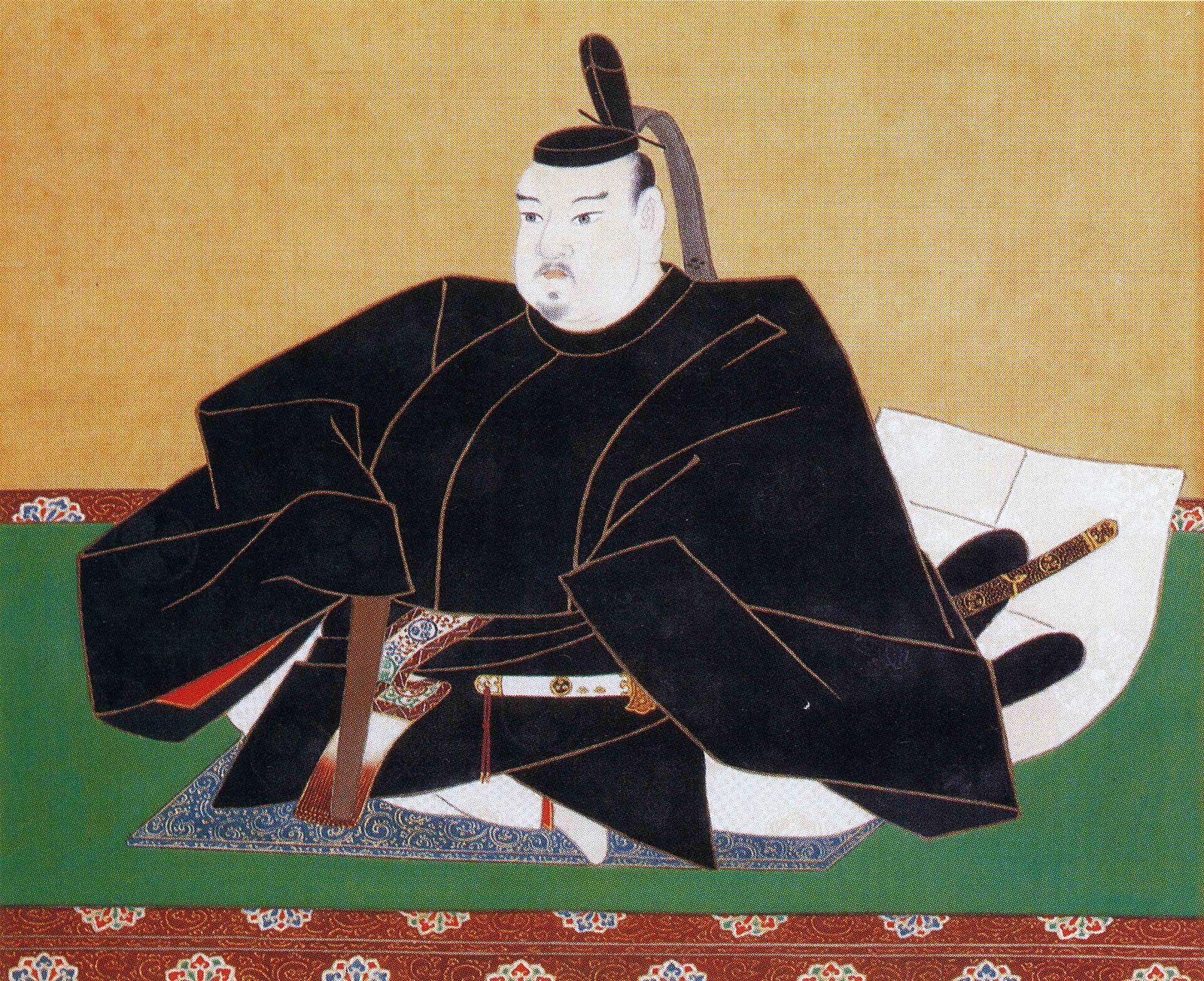
Sometime in the early 1630s, the exact date is lost, but the scene is not, Tokugawa Iemitsu summoned the feudal lords of Japan to Edo Castle and told them how things were going to be.
His grandfather, the great Ieyasu, had treated them as partners. His father, Hidetada, had treated them as colleagues. Iemitsu intended to do neither. He was not their partner or their colleague. He was their master. He had been born into supremacy, and they had been born into obedience, and if any of them found this arrangement disagreeable, they were welcome to go home, gather their armies, and see what happened.
Nobody gathered their armies.
The speech, reported by later chroniclers and consistent enough across sources to be accepted as broadly authentic, captures something essential about the third Tokugawa shōgun. Iemitsu was 29 years old. He had never commanded troops in combat. He had never faced a rival on a battlefield. He had never done any of the things that, in the warrior culture of early 17th-century Japan, were supposed to earn a man the right to speak to other warriors this way. Iemitsu had inherited a pacified country and a functioning bureaucracy, and he had the absolute confidence of a man who believed that inheriting power was the same thing as deserving it.
Who Was Tokugawa Iemitsu?
The Grandson Problem
Tokugawa Iemitsu was born in 1604, into the most powerful family in Japan and into a problem that no amount of power could easily solve.
Iemitsu carried no authority earned on a battlefield. He was not yet born when Sekigahara was fought. He was 10 when Osaka Castle fell. By the time he was old enough to hold a sword in anything other than a ceremonial capacity, the wars were over and the realm was pacified. He was, in the judgment of one historian, more than exceedingly lucky to have had the brilliant Ieyasu as his grandfather, a formulation that contains, beneath its politeness, a fairly devastating assessment.
The grandson problem was not unique to Iemitsu. Every dynasty faces it eventually: the moment when the conqueror’s heirs must govern without the conqueror’s credentials. What made Iemitsu’s case unusual was the speed of the transition. In just three generations, the Tokugawa had moved from desperate civil war to unchallenged dominion, and the third-generation heir had to find a way to wield absolute power without ever having been tested by adversity.
His solution was direct. If he could not earn authority through conquest, he would manufacture it through spectacle, bureaucracy, and sheer intimidating force of personality, and he would do it so thoroughly that the question of whether he deserved his position would become irrelevant.
Iemitsu Under His Father, 1623–1632
The Shadow of the Retired Shōgun
The formal transfer of power happened in 1623, when Hidetada abdicated the shogunate in favor of his son. Iemitsu was 19. But the transfer was a formality. Hidetada, following the precedent established by Ieyasu himself, retained effective political authority as the retired shōgun, the Ōgosho, and continued to make the decisions that mattered.
For nine years, Iemitsu held the title but not the power. He sat through councils where his father’s advisors deferred to his father. He received the submission of daimyō who understood perfectly well that the real authority resided one room away, in the chambers of the retired shōgun. He was, in effect, an understudy waiting in the wings while the lead actor refused to leave the stage.
What he did during those nine years was watch. And what he watched was how power actually worked, not the theory of governance taught by Confucian scholars, but the mechanics of dominance as practiced by a man who had spent his career in his own father’s shadow and understood the machinery intimately. Hidetada had been overshadowed by Ieyasu for decades. He knew what it felt like to hold a title without substance, and he also knew how to use the waiting period to prepare. Whether he intended to teach his son this lesson or whether Iemitsu simply absorbed it by observation, the result was the same: when Hidetada finally died in January 1632, Iemitsu was ready.
He was not merely ready. He was impatient.
What Iemitsu Did After His Father Died
Unleashed
Hidetada’s death freed a man who had been coiled for nearly a decade. The speed with which Iemitsu asserted himself suggests that the plans had been drawn up long before the opportunity arrived.
Within months, he ordered the attainder, the confiscation, of the domain of Katō Tadahiro, one of the outside lords. The seizure stunned the daimyō class. Under Ieyasu and Hidetada, attainders had happened, but they had generally been accompanied by at least a pretense of legal justification and a careful calculation of the political fallout. Iemitsu’s message was blunter: he could take what he wanted, when he wanted, and the reasons were his own business.
That same year, he sent a shogunal envoy with a retinue of 10,000 men into Kyūshū, the first time a bakufu emissary had penetrated the predominantly tozama (outside lord) territory of the island with such a display of force. Kyūshū was where the powerful western clans had their domains, the clans whose grandfathers had fought against Ieyasu at Sekigahara and who owed their survival to the first shōgun’s calculated mercy rather than to any genuine loyalty. Iemitsu was reminding them that mercy could be revoked.
He dispatched inspectors across the country to examine the daimyō and report on the conditions of the common people, a system of surveillance that would become one of the defining features of his regime. He issued the Shoshi hatto, the Regulations for Retainers, bringing his own bannermen and housemen under strict legal control. And he began, with methodical thoroughness, to reconstruct the relationship between the shogunate and the feudal aristocracy on terms that left no ambiguity about who was in charge.
The March on Kyoto, 1634
The March on Kyoto
The most dramatic demonstration came in 1634, two years after Hidetada’s death, when Iemitsu led a procession to Kyoto that was designed to make a single point and make it unforgettably.
307,000 soldiers accompanied the shōgun on the road from Edo to the imperial capital. The number was not an accident. It was larger than the combined forces at Sekigahara. It was larger than the army that had destroyed Osaka Castle. It was, by a comfortable margin, the largest military force ever assembled in peacetime Japan, and its purpose was not to fight anyone but to ensure that no one would ever think about fighting the Tokugawa.
The procession wound through the countryside for weeks, a serpentine column of armored men, banners, horses, palanquins, baggage trains, and the accumulated panoply of a regime demonstrating that it possessed more military capacity than all its potential enemies combined. When it arrived in Kyoto, the emperor and his court, the ancient, impoverished, ceremonially revered but politically powerless center of Japanese legitimacy, received the shōgun with the deference owed to a man who could have replaced them with a wave of his hand.
Iemitsu held audiences. He distributed gifts. He received the formal acknowledgment of his supremacy from the court aristocracy. And then he went home, leaving behind 300,000 impressed, exhausted, and substantially poorer soldiers, because the daimyō, naturally, had been required to fund and provision their own contingents for the march. The procession had drained their treasuries for the privilege of demonstrating their own subordination.
It was a masterpiece of political theater, and it foreshadowed the institutional innovation that would become Iemitsu’s most enduring legacy.
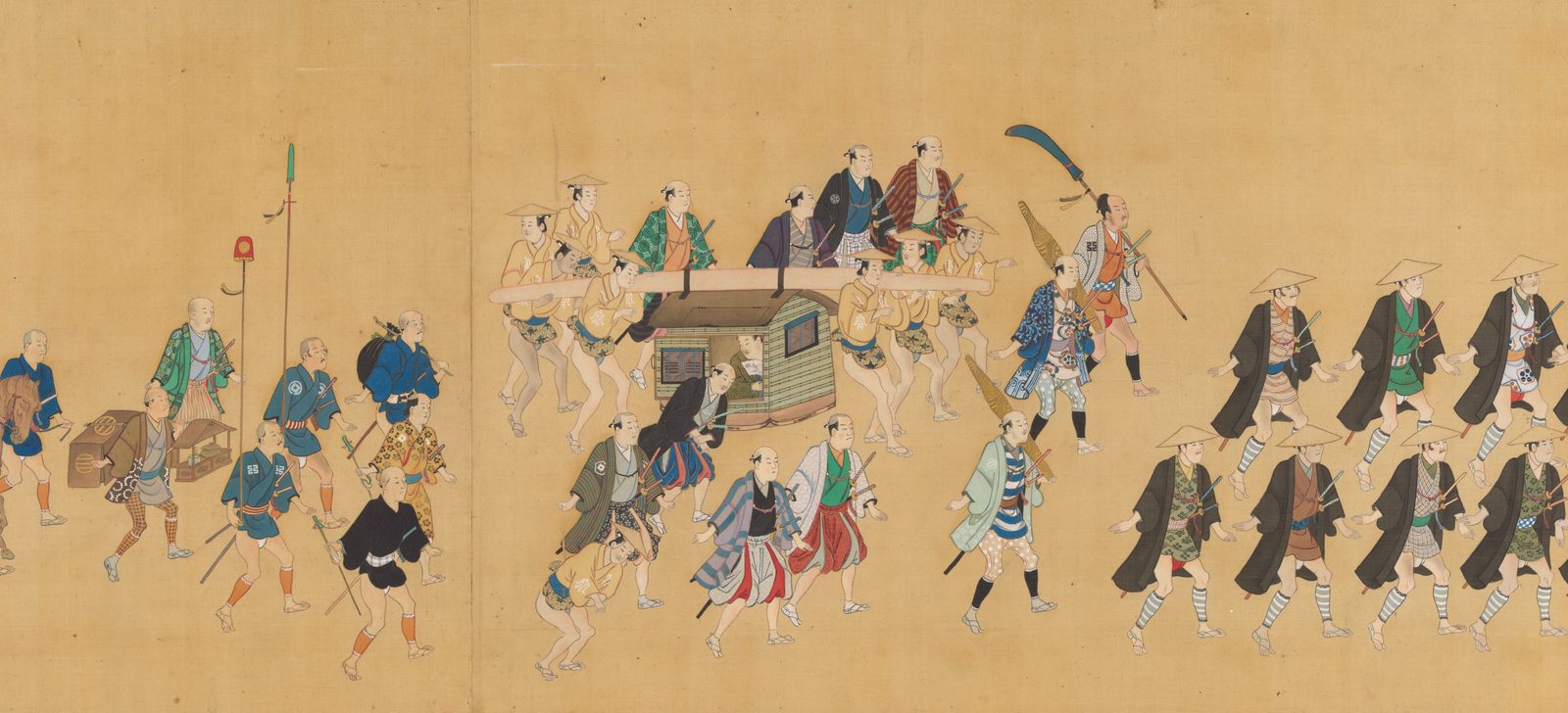
Sankin Kōtai: The Alternate Attendance System
The Gilded Cage
In 1634–35, Iemitsu formalized the sankin kōtai, the alternate attendance system, and in doing so created one of the most elegant instruments of political control ever devised.
The concept was not entirely new. Ieyasu and Hidetada had both expected the daimyō to spend time at the shogunal court in Edo, and the practice of retaining hostages as guarantees of loyalty was as old as Japanese feudalism itself. What Iemitsu did was systematize it, codify it, and make it inescapable.
Under the sankin kōtai, every daimyō in Japan was required to maintain two residences: one in his home domain and one in Edo. He was required to spend alternate years at each, shuttling back and forth in elaborate processions whose size and expense were dictated by his rank. When he left Edo for his domain, he was required to leave his wife and children behind, not as guests, but as hostages. Their comfortable confinement in the capital guaranteed his continued loyalty and good behavior during his absence. When he returned to Edo, the cycle repeated.
The system was devastatingly effective for reasons that went beyond simple hostage-taking. The cost of maintaining a grand residence in Edo, staffed, furnished, and provisioned to a standard befitting a feudal lord, consumed a staggering proportion of each domain’s revenue. The cost of the biannual processions, with their hundreds or thousands of retainers, their pack animals, their provisions, their gifts for shogunal officials along the route, consumed much of the rest. A daimyō who might have spent his surplus revenue building fortifications, stockpiling weapons, or financing conspiracies was instead spending it on road maintenance, Edo real estate, and the wages of the small army of servants required to keep his metropolitan household running.
The beauty of the arrangement was that it did not look punitive. The daimyō were not being fined or taxed. They were being honored. Their presence at the shogunal court was framed as a privilege, their grand processions as demonstrations of their own importance. The fact that this privilege happened to bankrupt them and render military resistance financially impossible was, from the shogunate’s perspective, an entirely happy coincidence.
Edo itself was transformed. What had been a modest castle town swelled into one of the largest cities in the world as hundreds of daimyō households established permanent residences, attracting merchants, artisans, entertainers, and service workers. The alternate attendance system did not merely control the feudal lords, it created an entire urban civilization.
How Iemitsu Enlarged the Cult of the Deified Ieyasu at Nikkō
Making Grandfather God
Alongside the bureaucratic machinery, Iemitsu pursued a parallel project of legitimation that was as spiritual as the sankin kōtai was financial: the deification of Tokugawa Ieyasu.
Ieyasu had been posthumously deified in 1617, a year after his death, as Tōshō Daigongen, the Great Gongen Who Illuminates the East. A shrine had been established at Nikkō, in the mountains north of Edo, where the founder’s remains were interred. But under Hidetada, the shrine had been modest, dignified, appropriate, but nothing that would stop traffic.
Iemitsu changed that. Beginning in 1634, he ordered the reconstruction of the Tōshōgū shrine at Nikkō on a scale so extravagant that it remains, nearly four centuries later, one of the most lavishly decorated religious buildings in Japan. The project mobilized thousands of craftsmen and consumed resources that a less confident ruler would have spent on fortifications. Carved and gilded and lacquered and painted in every color available to 17th-century Japanese artisans, the shrine was designed to overwhelm the senses, to make visitors feel, physically and viscerally, that they were standing in the presence of something divine.
The theology was straightforward. If Ieyasu was a god, then the Tokugawa line was a divine dynasty, and to defy the shōgun was not merely treason but sacrilege. Iemitsu mandated that the daimyō make regular pilgrimages to Nikkō to pay their respects, another expense, another demonstration of submission, another thread in the web of obligations that bound the feudal aristocracy to the Tokugawa center. Even the Dutch trading factors at Dejima, those resolutely Protestant merchants of the VOC, were required to make the pilgrimage, offering their respects to a Shinto deity in whom they did not believe, at the command of a shōgun whose authority they could not afford to question.
For Iemitsu, the Nikkō project served a more personal function as well. It anchored his legitimacy in something beyond his own biography. He had not won Sekigahara. He had not conquered Osaka. But he was the grandson of a god, the blood heir of a divine founder, and the man who had built the temple that proved it.
What Iemitsu Was Like
The Man Behind the Machinery
The institutional achievements were formidable. The man who produced them was, by nearly every contemporary account, deeply unpleasant.
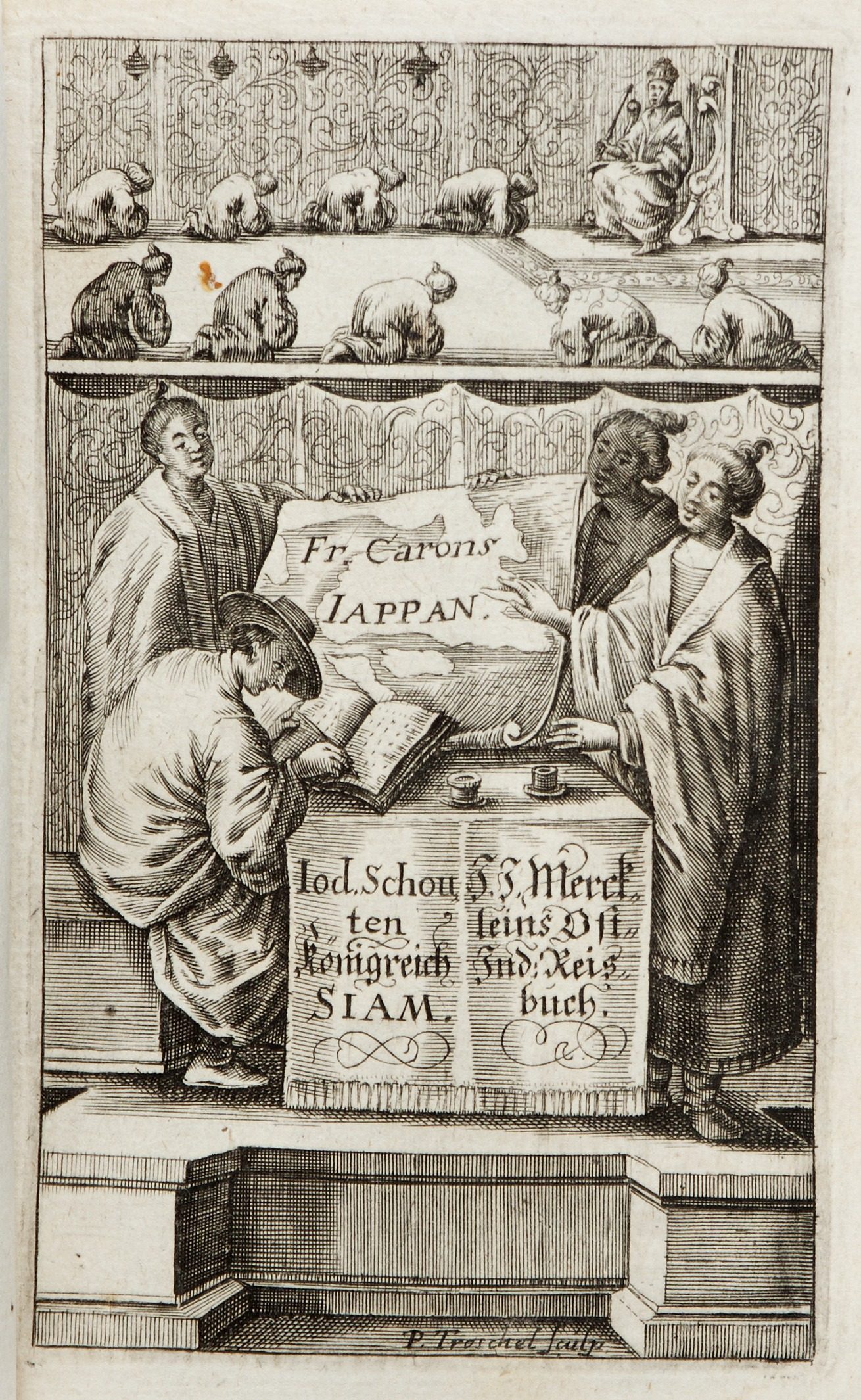
François Caron, the French-born chief of the Dutch trading factory at Hirado, had direct contact with the shogunal court and left one of the most detailed European assessments of Iemitsu’s character. He found the shōgun vain, capricious, and neurotic, a man of quick intelligence and quicker temper, whose moods could shift from charm to menace in the time it took to pour a cup of sake. Caron’s assessment was not colored by personal hostility; he was a pragmatic businessman who needed the shogunate’s goodwill to maintain Dutch trading privileges and had no incentive to exaggerate. If anything, his account is diplomatically understated.
The drinking was legendary. Observers noted that Iemitsu could drain 60 cups of sake in an evening, though historians have pointed out that a sake cup held roughly a thimbleful, so the total volume, while impressive, was less astonishing than it sounds. The real issue was not quantity but behavior. Iemitsu drunk was Iemitsu uninhibited, and Iemitsu uninhibited was a man whose cruelties lost whatever veneer of political calculation normally restrained them.
His sexual appetites were, by the standards of the European observers who documented them, notable primarily for their breadth. Caron and other Dutch sources recorded his addiction to lechery and pederasty, and contemporary Japanese accounts independently confirmed the latter. His relationship with his lawful wife was unsatisfactory, he fathered no children by her, and his successors came from secondary consorts. None of this was particularly unusual in the context of 17th-century Japanese elite culture, where male-male relationships carried no inherent stigma, but the European chroniclers found it worth noting, and the pattern of erratic personal behavior reinforced an impression of a man governed as much by impulse as by policy.
Then there were the night excursions.
Even Iemitsu’s admirers did not deny that the shōgun engaged in tameshi-giri, sword-testing, on the streets of Edo after dark. The practice involved using corpses, typically those of executed criminals, to test the cutting quality of a blade. It was an accepted, if macabre, custom among the warrior class. What made Iemitsu’s version of it disturbing was the enthusiasm. The supreme ruler of Japan going out into the streets, to do work that any swordsmith’s apprentice could have handled. His detractors alleged something worse: that Iemitsu did not always confine his sword-testing to the already dead.
Yet the same sources that describe Iemitsu’s cruelty also acknowledge something more complicated. He possessed a genuine curiosity about the world beyond Japan. He studied European globes, maps, and charts with an attention that went beyond casual interest, working to understand Japan’s geographical position relative to the rest of the world. He was fascinated by foreign technology and foreign knowledge even as he systematically severed Japan’s connections to the foreigners who produced it. And his governance, for all its autocratic ferocity, was surprisingly stable. Once Iemitsu found competent officials, men who could translate his vision into administrative reality, he kept them.
The contradiction is the man. Iemitsu was simultaneously a sadist and an administrator, a drunk and a strategist, a man who tested swords on corpses at midnight and built institutions that governed a nation for two centuries.
Iemitsu’s Obsession with Christianity
The Morbid Obsession
Of all Iemitsu’s preoccupations, none consumed him more thoroughly than Christianity.
His grandfather had tolerated the faith as a cost of doing business. His father had persecuted it with increasing severity but without personal relish. Iemitsu pursued the destruction of Japanese Christianity with a fervor that contemporaries described as morbid, a preoccupation that went beyond policy into something closer to fixation.
The machinery was comprehensive. The terauke system required every household in Japan to register with a local Buddhist temple, whose priests were obligated to inspect their parishioners annually and certify that none were Christians. The fumi-e, picture-treading, forced suspected believers to step on images of Christ or the Virgin Mary, with refusal treated as proof of faith and punished accordingly. After Iemitsu’s death, the Kirishitan ruizoku chō, the registers of apostates, would track not only former Christians but their children and grandchildren, maintaining surveillance across generations. The Office of the Inquisition, established in 1640 under the shrewd Inoue Chikugo-no-kami Masashige, centralized the entire apparatus into a nationwide operation coordinated from Edo.
The bounty system that Iemitsu formalized turned informing into a profession. 500 pieces of silver for a bateren, a priest. 300 for an iruman, a brother. 100 for a dojuku, a catechist, or a lay believer. These were substantial sums, enough to transform a peasant’s life, and they achieved exactly what they were designed to achieve: they made every neighbor a potential informant and every community a place of suspicion. The existing articles on this site, on the Cristóvão Ferreira apostasy, on the Great Martyrdom of 1622, on the machinery of sakoku, trace these systems in detail. What matters here is the man behind them.
Iemitsu took a personal interest in the interrogation and torture of captured missionaries that neither his father nor his successors ever displayed. He was reported to be present, or to demand detailed accounts, when priests were subjected to the ana-tsurushi, the pit torture that had broken Ferreira in 1633. When the second Rubino group of 10 missionaries was captured in 1643, Iemitsu had them brought to Edo and personally supervised their interrogation before they were tortured into apostasy. This was not a head of state reviewing intelligence reports. This was a man who wanted to watch.
The Great Edo Martyrdoms of December 1623, 50 Christians burned at Fuda no Tsuji in the weeks following Iemitsu’s formal accession to the shogunate, set the tone from the very beginning. Where Hidetada had persecuted Christians as a political necessity, Iemitsu persecuted them as a vocation. By 1644, when the Japanese Jesuit Konishi Mancio was martyred, not a single Catholic priest remained at liberty in Japan. The faith was not dead, the Kakure Kirishitan, the Hidden Christians, would keep it alive in secret for over two centuries, but the institutional Church had been obliterated with a thoroughness that no European inquisition ever achieved.
How Shimabara Changed Iemitsu’s Policy
Shimabara
The event that sealed everything, the rebellion that transformed Iemitsu’s anti-Christian obsession from a policy preference into an existential imperative, erupted in December 1637 on the Shimabara Peninsula and the Amakusa Islands of western Kyūshū.
The causes were economic as well as religious. The daimyō of Shimabara, Matsukura Katsuie, had assessed his domain at twice its actual yield and extracted over half of the inflated figure from peasants who were already starving. His methods of enforcement included the mino odori, wrapping tax defaulters in straw and setting them on fire. But because the region was heavily Catholic, former territory of the Christian daimyō Arima Harunobu and Konishi Yukinaga, the uprising assumed a messianic character. 37,000 men, women, and children, rallying behind a charismatic teenager named Amakusa Shirō, fortified the abandoned fortress of Hara Castle and prepared to die. The full story of the rebellion is told elsewhere on this site. What belongs here is what it did to Iemitsu.
He mobilized over 120,000 troops, the largest army the Tokugawa had sent to war since Osaka. The initial commander was killed in a catastrophic frontal assault. The rebels held out for months. When Hara Castle finally fell in April 1638, almost every defender was killed. The shogunate’s own casualties, an estimated 13,000, exceeded those of any other domestic conflict in the entire Tokugawa period.
For Iemitsu, Shimabara was proof of everything he had always believed. Christianity was not merely a foreign superstition. It was a military force capable of inspiring tens of thousands of people to fortify a castle and fight a professional army to a standstill for three months. The fact that the rebellion had been caused by taxation as much as by theology was irrelevant to a man who had already decided that the faith was an existential threat. The Christian banners at Hara Castle gave him the justification he needed for the final act.
The Sakoku Edicts of 1633–1639
Sealing the Country
The sakoku edicts, the series of maritime directives issued between 1633 and 1639 that narrowed Japan’s contact with the outside world to a few tightly controlled channels, were Iemitsu’s defining legislative achievement. They are covered in comprehensive detail in the article on sakoku on this site.
The final edict, issued in August 1639 in the direct aftermath of Shimabara, banned all Portuguese ships from Japan on pain of the destruction of the vessel and the execution of its crew. The century-long Nau do Trato, the Great Ship trade between Macau and Nagasaki, the commercial engine of the entire Nanban encounter, was over.
When the Portuguese city of Macau, facing financial ruin, sent a diplomatic embassy to Nagasaki in 1640 to plead for the restoration of trade, Iemitsu ordered 61 delegates beheaded. Their ship was burned. 13 low-ranking sailors were sent back to deliver the message.
The Dutch, who had demonstrated their reliability by shelling the Christian rebels at Hara Castle, were rewarded with the status of sole European trading partner, relocated from Hirado to the tiny artificial island of Dejima in Nagasaki harbor. They were stripped of their Bibles, forbidden from practicing their religion publicly, and required to submit annual intelligence reports that kept the officially closed shogunate remarkably well-informed about global affairs.
The irony was exquisite. Iemitsu all but sealed Japan from the world, then used the Dutch as a window through which he could observe it. The globes and maps he studied with such fascination were delivered by the very merchants he kept confined on a man-made island smaller than a city block. He wanted to know everything about the outside world. He did not want the outside world to have access to Japan.
The System Iemitsu Left in Place
The Frozen World
The system Iemitsu built was not merely a collection of policies. It was an architecture of control so comprehensive that it governed nearly every aspect of Japanese life, and it was designed, above all, to prevent change.
The Buke shohatto, the Laws for the Military Houses, originally issued by Ieyasu in 1615, were amended under Iemitsu to make alternate attendance compulsory and to tighten restrictions on the daimyō. Castle construction required shogunal permission. Marriages between daimyō families required approval from Edo. The social hierarchy, warrior, farmer, townsman, was enforced with a rigidity that made movement between classes rare and difficult.
The inspection system that Iemitsu had initiated in 1632 became permanent, with emissaries dispatched annually between 1635 and 1638, and again in 1641 and 1650, to examine local governance and ensure that no domain was drifting beyond the bakufu’s control. The inspectors reported directly to Edo, bypassing local authority entirely.
The result was a society of extraordinary stability and extraordinary rigidity. The Tokugawa peace, two and a half centuries without major warfare, was purchased at the price of a social order that resisted innovation, discouraged initiative, and treated deviation from established practice as a threat.
The Death of Tokugawa Iemitsu, 1651
The End
Tokugawa Iemitsu died of illness in 1651, at the age of 48. His death was sudden enough to create a brief political crisis, the Keian Uprising, an abortive conspiracy led by the rōnin Yui Shōsetsu, who saw in the transition of power an opportunity that the government quickly and efficiently closed.
He was succeeded by his young son, Ietsuna, born to a secondary consort. The succession was smooth. It was smooth because Iemitsu had built a system that did not require a strong shōgun to function, a bureaucratic apparatus so well-designed that it could be operated by anyone who sat in the correct chair and issued the correct orders. The fourth shōgun was a child. The machine did not notice.
Iemitsu was buried with the extravagance he had shown his grandfather. His mausoleum at Nikkō, the Taiyūin, was constructed adjacent to the Tōshōgū shrine, close enough to honor the divine founder, positioned slightly lower to demonstrate filial piety. It was, like everything Iemitsu built, both a personal monument and a political statement: a grandson keeping vigil beside a god, claiming proximity to divinity even in death.
Sources & Further Reading
Boxer, C.R. The Christian Century in Japan, 1549–1650. University of California Press, 1951. The foundational English-language study of the Portuguese-Japanese encounter, with extensive treatment of the Tokugawa persecution and the sakoku edicts under Iemitsu.
Caron, François. A True Description of the Mighty Kingdoms of Japan and Siam. Written c. 1636, first published 1645. Caron’s firsthand account of Japan under Iemitsu, including vivid character assessments of the shōgun and detailed descriptions of the Dutch trading relationship.
Elison, George. Deus Destroyed: The Image of Christianity in Early Modern Japan. Harvard University Press, 1973. Essential for understanding the ideological framework of the anti-Christian persecution, including the development of the Inquisition under Iemitsu.
Hall, John Whitney. “The Bakuhan System.” In The Cambridge History of Japan, Vol. 4: Early Modern Japan, ed. John Whitney Hall. Cambridge University Press, 1991. The authoritative account of the institutional structure of the Tokugawa state, including the sankin kōtai system and the legislative framework that Iemitsu formalized.
Hesselink, Reinier. The Dream of Christian Nagasaki: World Trade and the Clash of Cultures, 1560–1640. McFarland, 2016. Covers the final decades of the Portuguese presence in Nagasaki, including the 1640 Macau Embassy massacre ordered by Iemitsu.
Laver, Michael S. The Sakoku Edicts and the Politics of Tokugawa Hegemony. Cambria Press, 2011. A focused study of the maritime directives and their political context, with detailed analysis of Iemitsu’s role in their formulation.
Murdoch, James. A History of Japan, Vol. II: During the Century of Early Foreign Intercourse (1542–1651). Kobe: Office of the “Chronicle”, 1903. Despite its age, Murdoch’s account of Iemitsu’s character, including the assessment of his autocratic temperament, remains one of the most vivid in English.
Sansom, George. A History of Japan, 1615–1867. Stanford University Press, 1963. The third volume of Sansom’s magisterial trilogy, covering Iemitsu’s consolidation of power, the sankin kōtai, and the Shimabara Rebellion.
Screech, Timon. The Shogun’s Silver Telescope: God, Art, and Money in the English Quest for Japan, 1600–1625. Oxford University Press, 2020. Illuminates the European perspective on the early Tokugawa court, including the transition from Hidetada to Iemitsu.
Toby, Ronald P. State and Diplomacy in Early Modern Japan: Asia in the Development of the Tokugawa Bakufu. Princeton University Press, 1984. A revisionist study that reframes sakoku not as total isolation but as a managed system of controlled foreign contact, essential context for evaluating Iemitsu’s maritime policies.
Totman, Conrad. Politics in the Tokugawa Bakufu, 1600–1843. Harvard University Press, 1967. A detailed analysis of the internal politics of the shogunate, including the factional dynamics that shaped Iemitsu’s consolidation of power after Hidetada’s death.
Vaporis, Constantine Nomikos. Tour of Duty: Samurai, Military Service in Edo, and the Culture of Early Modern Japan. University of Hawai‘i Press, 2008. The definitive study of the sankin kōtai system, its economic impact on the daimyō, and its role in shaping Edo-period culture.
Recent scholarship
- Hesselink, Reinier H. (2026). “The Jesuit Experience in Sixteenth- and Seventeenth-Century Japan: Francis Xavier’s Prophecy”, The Journal of Ecclesiastical History. — This concise article reframes the failure of the Jesuit mission in Japan as a direct collision between Catholic morality and the institutionalized male-male sexual customs of the samurai class, offering a sharp, evidence-driven explanation for the persecution that followed.Free full text ↗ (opens in a new tab)
Cite this page
Nanban.pt. “Born to Rule: Tokugawa Iemitsu and the Perfection of Control.” Last modified 4 October 2026. https://nanban.pt/articles/tokugawa-iemitsu-born-to-rule/.
@misc{nanban-tokugawa-iemitsu-born-to-rule,
  author = {Nanban.pt},
  title = {Born to Rule: Tokugawa Iemitsu and the Perfection of Control},
  year = {2026},
  url = "https://nanban.pt/articles/tokugawa-iemitsu-born-to-rule/",
  note = {Last modified 2026-10-04}
}