The Dutiful Son: Tokugawa Hidetada and the Machinery of Persecution
How the most boring man in Japan built the most effective authoritarian state in the early modern world, and drove Christianity underground in the process
Tokugawa Hidetada (1579 to 1632) was the second Tokugawa shōgun, the dutiful son of Ieyasu who built the most effective authoritarian state in the early modern world. Often dismissed as the most boring man in Japan, he drove Japanese Christianity underground one bureaucratic edict at a time.
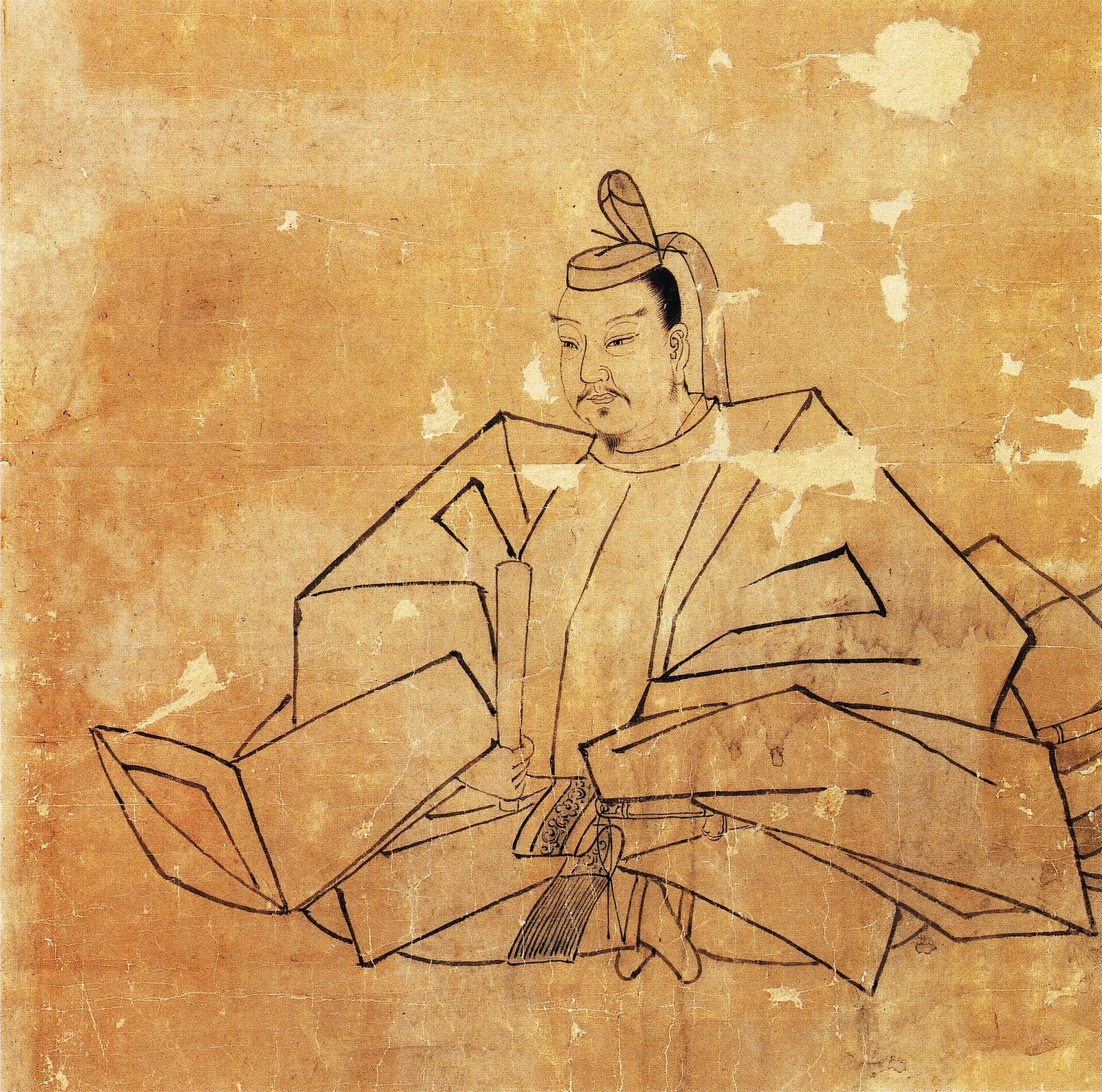
In 1605, a 26-year-old man marched from Edo to Kyoto at the head of 100,000 soldiers to receive a promotion. The soldiers were not there because anyone was planning to object. They were there because the man’s father wanted to make a point. The point was that the Tokugawa family now owned Japan, and that ownership was hereditary.
The man was Tokugawa Hidetada. His father, Tokugawa Ieyasu, the most patient, calculating, and ruthless political mind of his generation, had held the title of shōgun for exactly two years before handing it to his son, not because he was tired of the job, but because he wanted to establish a precedent more durable than any single lifespan. The shogunate would pass from father to son. It would not be contested. It would not be negotiated. 100,000 men on the Tōkaidō highway was the visual aid.
Hidetada accepted the title, returned to Edo, and spent the next 18 years doing exactly what his father told him to do. When Ieyasu died in 1616, Hidetada continued doing what his father would have told him to do. And when Hidetada himself abdicated in 1623, he made certain his own son would do the same. Between them, these three men, Ieyasu, Hidetada, and Iemitsu, would transform a fragile military hegemony into the most durable authoritarian state in early modern history, a government so stable it would endure for 265 years.
Hidetada’s contribution to this achievement was, by every contemporary account, spectacularly unglamorous. He was not brilliant. He was not charismatic. He was not a gifted military commander. What he was, and what his father correctly identified as more valuable than any of those things, was reliable.
The consequences of that reliability, for the Portuguese, for the Jesuits, for the 300,000 Japanese Christians who had staked their lives on a foreign god, would prove catastrophic.
Who Was Tokugawa Hidetada?
The Third Son
Tokugawa Hidetada was born in 1579, or possibly 1581, depending on which source you trust, the third son of Tokugawa Ieyasu and his consort Saigō-no-Tsubone. Third sons in the Sengoku period did not, as a rule, expect to inherit anything. But the Tokugawa succession was shaped less by birth order than by political utility, and Ieyasu was a man who evaluated his children the way a general evaluates terrain: not for beauty, but for advantage.
His eldest surviving son, Nobuyasu, had been forced to commit suicide in 1579, a consequence of tangled alliances with Oda Nobunaga that required the sacrifice. His second son, Hideyasu, was a brilliant soldier: fiery, intrepid, and possessed of exactly the kind of aggressive charisma that makes warriors follow a man into the dark. Ieyasu gave Hideyasu away. He adopted him out to Toyotomi Hideyoshi, then later installed him as lord of the vast Echizen domain, positioning him as a powerful vassal rather than a potential successor. A brilliant son was a dangerous successor. A brilliant son might have ideas of his own.
Hidetada had no such defect. He was, in the words of historians who have tried to be kind about it, a “hard-working, painstaking, and highly conscientious plodder”. The historian James Murdoch called him a “stodgy mediocrity”. Ieyasu, with the eye of a man who had survived 40 years of civil war by reading character more accurately than anyone alive, looked at his earnest, diligent, somewhat dull third son and saw exactly what the Tokugawa dynasty needed: a man who would not improvise.
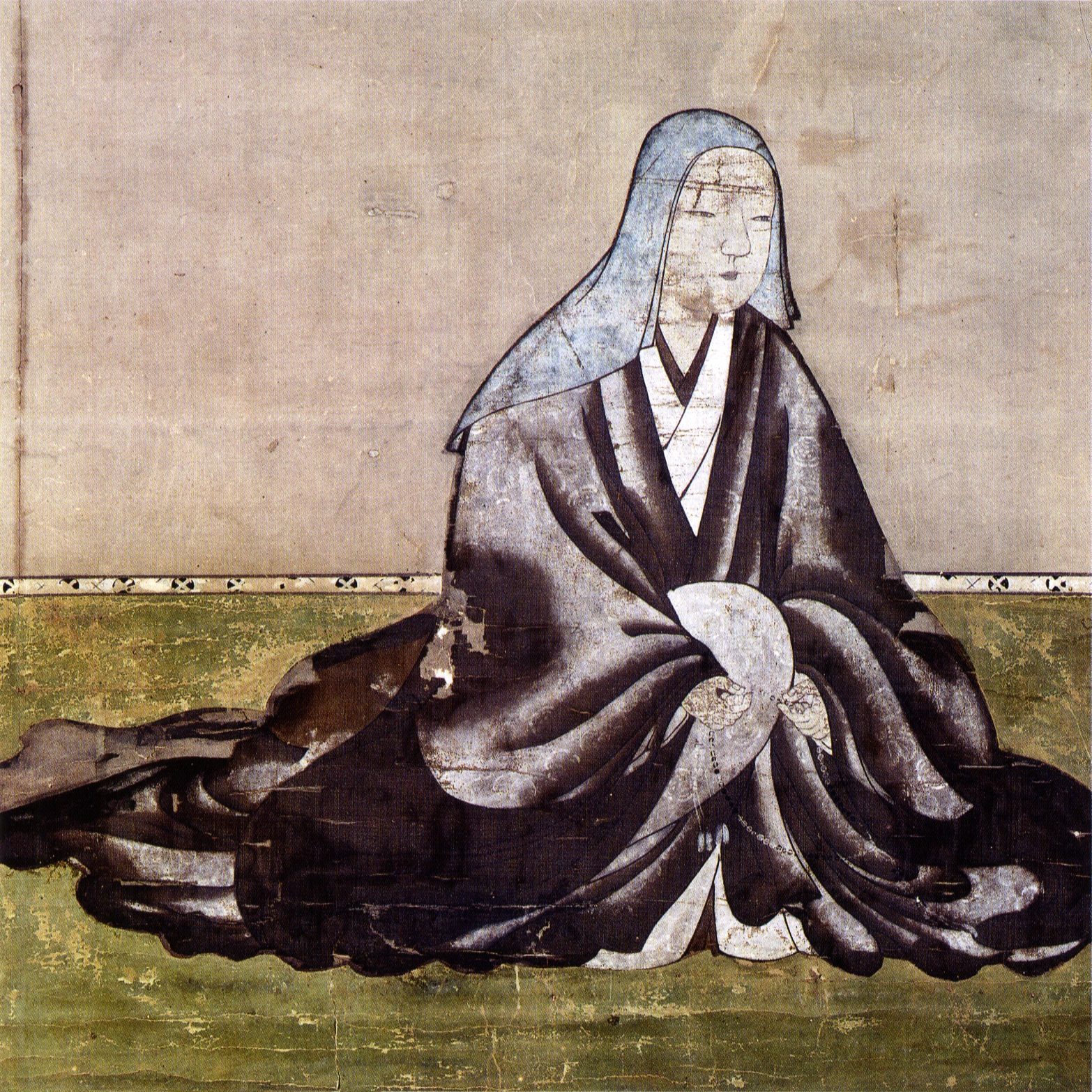
In 1595, at the age of 16, Hidetada was married to Oeyo, also known as Gō, the 23-year-old niece of Oda Nobunaga and sister of Yodogimi, the most powerful woman in Japan. The marriage was arranged by Toyotomi Hideyoshi himself, and its political geometry was dizzying: it connected the Tokugawa bloodline directly to both preceding hegemons, Nobunaga and Hideyoshi, weaving a genealogical web so dense that any future Tokugawa claim to supremacy would carry the implicit endorsement of every power that had come before.
The marriage also introduced Hidetada to the most formidable force he would encounter in his entire life, including the armies of Osaka: His wife.
Hidetada’s Unusual Marriage
The Phoenix of Monogamy
In a world where the sexual appetite of a Japanese warlord was measured in concubines the way a European king’s was measured in mistresses, Hidetada was an astonishing anomaly. He kept company with one woman. The English merchant Arthur Hatch, struggling to process this information, called Hidetada the “Phoenix of all these parts of the world”, a creature so rare as to be effectively mythological.
The explanation was less romantic than the compliment suggested. Oeyo was the daughter of Oichi, Nobunaga’s sister and one of the great tragic beauties of the Sengoku era, and the sister of Yodogimi, the woman who would hold Osaka Castle against the entire Tokugawa army. The women of this family did not defer. Oeyo ran the household with an authority that contemporaries described, with varying degrees of amusement, as “petticoat government”. Hidetada existed in what one source delicately termed “salutary dread” of her.
His single departure from marital fidelity, an affair with a serving woman that produced a son, Hoshina Masayuki, was conducted with such elaborate secrecy that it resembled a covert intelligence operation. The child was spirited out of the household and raised in hiding. Hidetada did not dare acknowledge the boy’s existence until after Oeyo’s death, which tells you everything you need to know about the domestic power dynamics at Edo Castle. The future shōgun of Japan, commander of armies, lord of a million samurai, was terrified of his wife finding out he had slept with a servant.
Together, Hidetada and Oeyo had eight children: five daughters and three sons. The eldest surviving son, Iemitsu, would become the third shōgun. The younger son, Tadanaga, was the parents’ open favorite, a preference that would, in a different family, have triggered a succession crisis. That it did not was thanks to the intervention of Iemitsu’s wet nurse, the formidable Kasuga-no-Tsubone, who had gone over Hidetada’s head directly to Ieyasu and secured the old man’s unambiguous declaration that the eldest son would inherit. Even from beyond the grave, Ieyasu’s decisions controlled his son’s household.
Why Hidetada Missed the Battle of Sekigahara
The Man Who Arrived Late
In October 1600, the greatest battle in Japanese history was fought at a crossroads in the mountains of Mino Province, and Tokugawa Hidetada missed it.
The facts are straightforward. Ieyasu had divided his army for the Sekigahara campaign, sending Hidetada with a major force down the Nakasendō highway, the mountain route through central Honshu, while he himself advanced along the coastal Tōkaidō. Hidetada’s job was simple: march, arrive, fight. Instead, he became entangled in a siege against the Sanada clan at Ueda Castle, a small but superbly defended fortress held by Sanada Masayuki, one of the finest defensive tacticians in Japan, and arrived at the battlefield after the fighting was over.
The full story of Sekigahara is told elsewhere in this series. What matters here is what the disaster revealed about Hidetada’s character, and what it revealed about Ieyasu’s.
Hidetada’s failure was not one of courage but of rigidity. He had been ordered to proceed along the Nakasendō and subdue resistance along the way. The Sanada were resisting. His instinct, the instinct of a man who had been raised on rules, procedures, and the literal execution of orders, was to finish the task in front of him rather than recalculate the strategic picture and bypass the obstacle. By the time he realized that Ueda Castle was a trap designed to do exactly what it was doing, delay him until the main battle was decided, it was too late.
Ieyasu was furious. He reportedly refused to see his son for several days after the battle, a public humiliation that sent shockwaves through the Tokugawa camp. But the anger, however genuine, was also short-lived. Because Ieyasu understood something that most fathers, and most generals, do not: that the qualities which had made Hidetada fail at Sekigahara, his conscientiousness, his rule-following, his reluctance to improvise, were precisely the qualities that would make him succeed at the far more important task of governing Japan in peacetime.
Shogun in Name: Hidetada Under Ieyasu, 1605–1616
The Architecture of Control
Between 1605 and 1616, Hidetada served as shōgun in name while Ieyasu, retired to Sunpu as Ōgosho, made every decision that mattered. It was an apprenticeship disguised as a government. Hidetada managed the construction of Edo Castle, supervised the daily administration of the realm, received audiences, and issued orders, all of them, on any matter of strategic significance, dictated by his father.
When Ieyasu died in June 1616, the apprenticeship ended. What emerged was not the cautious puppet the court had expected, but something more formidable: a bureaucrat with absolute power and a taste for using it.
The legal infrastructure had been laid in the final year of Ieyasu’s life. In the summer of 1615, fresh from the destruction of Osaka Castle, the Tokugawa regime had promulgated two landmark codes. The Buke Shohatto, the Laws for the Military Houses, delivered at Fushimi, imposed 13 articles of regulation on every feudal lord in Japan: no castle repairs without permission, no unauthorized marriages, no harboring of rebels, no grumbling. The Kinchu Narabini Kuge Shohatto, the Laws for the Court and Nobility, delivered at Nijō Castle, relegated the emperor and the entire Kyoto aristocracy to the study of poetry and the performance of ceremonies. The court could confer no title, approve no appointment, make no political decision without Edo’s consent.
These laws bore Ieyasu’s fingerprints. Their enforcement bore Hidetada’s.
In 1619, the powerful tozama lord Fukushima Masanori, a veteran of Sekigahara who had fought on the Tokugawa side and held the vast Hiroshima domain, repaired his castle walls without requesting permission. It was a minor infraction. The walls had been damaged by flooding. The repair was practical, not military. Any reasonable government might have issued a reprimand.
Hidetada stripped him of everything. Masanori lost Hiroshima, lost his status, and was relocated to a minor domain so small it amounted to house arrest. The message was not subtle. The Buke Shohatto was not a suggestion. The rules applied to allies and enemies alike, to powerful lords and minor vassals, to men who had bled for the Tokugawa and men who had merely submitted to them. No one was exempt. No exception would be made. The mediocrity had teeth.
The same iron hand reached into the imperial court. In 1620, Hidetada forced the marriage of his daughter Kazuko to Emperor Go-Mizunoo, the first time in centuries that a shōgun’s daughter had entered the imperial household. The union made Hidetada the father-in-law of the reigning emperor and, in 1629, the grandfather of Empress Meishō. The Tokugawa had planted themselves inside the bloodline of the gods.
When, in 1627, Emperor Go-Mizunoo had the temerity to grant prestigious purple robes to the abbots of two Kyoto temples without seeking Edo’s approval first, Hidetada’s government simply annulled the grants. The shie jiken, the Purple Robe Incident, was a direct and deliberate humiliation of the throne, a declaration that even the emperor’s ceremonial prerogatives existed at the shōgun’s pleasure. Go-Mizunoo, who understood the implications perfectly, abdicated in protest in 1629. His successor was Meishō, Hidetada’s granddaughter. The protest had been absorbed, processed, and turned into another brick in the wall.
Hidetada’s Persecution of Christians
The Machinery of Terror
If Hidetada’s domestic governance was methodical, his approach to Christianity was something closer to obsessive.
His father had banned the religion in 1614, and the full story of that edict, Konchiin Sūden’s overnight manifesto, the intellectual case against Christianity, the expulsion of Takayama Ukon and the missionaries, is told in other articles on this page. Ieyasu’s enforcement had been selective, strategic, calibrated to the needs of diplomacy and trade. Priests were expelled but not systematically hunted. Converts were pressured but not massacred. The Portuguese carrack still arrived every year. The system leaked by design.
Hidetada sealed the leaks.
The catalyst was Osaka. During the siege of 1614–15, the Tokugawa had discovered seven Catholic clergymen embedded inside the rebel fortress, ministering to an army that marched under banners bearing crosses and images of saints. The Christian dimension of the Osaka campaigns, the crosses at Tennōji, Akashi Teruzumi’s flanking march, the priests in the burning castle, is covered in the article on the Siege of Osaka. For Hidetada, the lesson was existential: Christianity was not merely a theological nuisance. It was a military threat, a network of allegiance that cut across the feudal hierarchy and owed its ultimate loyalty to a foreign sovereign in Rome.
In September 1616, three months after his father’s death, Hidetada issued the Bateren Shūmon Goseikin, the Decree Against the Christian Religion. The decree renewed the prohibition and added a mechanism that transformed policy into terror: anyone found harboring a foreign priest would be executed, along with their entire household. Daimyō were explicitly commanded to purge Christians from their retainers. European shipping, the Dutch and English included, was confined to Nagasaki and Hirado.
The conscientious plodder had found his vocation. And unlike his Machiavellian father, who bent rules when it suited him and tolerated ambiguity as a tool of statecraft, Hidetada enforced his own edicts with the same rigid literalism he had brought to the siege of Ueda Castle. This time, the rigidity worked.
The executions began in 1617. On May 21, the Franciscan Pedro de la Asunción and the Jesuit João Baptista Machado were beheaded in Ōmura, the first foreign missionaries put to death under Tokugawa authority. Within months, a Dominican and an Augustinian had followed them. On October 1, the first Japanese laymen were executed specifically for the crime of sheltering priests: Gaspar Ueda Hikojirō and André Yoshida, decapitated on a small island in Nagasaki Bay. The following year, the Nagasaki governor Hasegawa Gonroku enforced the harboring decree with mechanical thoroughness. On November 25, 1618, 12 people who had sheltered missionaries were put to death. Seven of them were children.
The killing of children was not an aberration. It was policy. The logic was collective punishment, the same logic that would later underpin the gonin-gumi neighborhood surveillance system. Christianity was a family affair: parents converted children, households sheltered priests, communities protected their own. The Tokugawa response targeted the network, not the individual. If sheltering a priest meant the death of your children, the calculus of faith became unbearable.
In the summer of 1619, Hidetada visited Kyoto. He was informed that a clandestine Christian community was still operating in the capital, concentrated in a neighborhood called Daiusu-machi, literally “Deus block”, a district of Christian warriors whose very street name advertised their allegiance. On October 7, 52 Christians were burned alive at Rokujō-gawara on the banks of the Kamo River. The victims included women and six young children. The site was public, the method was spectacular, and the audience was the entire imperial capital.
The persecution climaxed in 1622, a year that produced over 120 martyrdoms across Japan. The details of the Great Martyrdom of Nagasaki, the mass execution of 55 Christians at Nishizaka Hill on September 10, are covered in the dedicated article on that event. What bears emphasis here is the scale of Hidetada’s personal involvement. These were not the actions of local governors acting on vague instructions. They were the product of a centralized campaign, directed from Edo, coordinated across multiple provinces, and driven by a shōgun who had concluded, after sending an envoy named Ibi Masayoshi to Europe for seven years to study the religion firsthand, that Christianity was incompatible with the Tokugawa order.
The envoy’s return is one of the stranger episodes in the story. Ibi Masayoshi traveled to Europe, studied the principles of Christianity in some depth, and returned to Edo with a comprehensive report. Hidetada listened to the report, according to sources, “day and night without interval”. He then concluded that the religion was detrimental to Japan, and renewed the interdicts with finality. It was a characteristically Hidetada approach to genocide: thorough, procedural, and informed.
How Hidetada Handled the European Traders
The Foreigner Problem
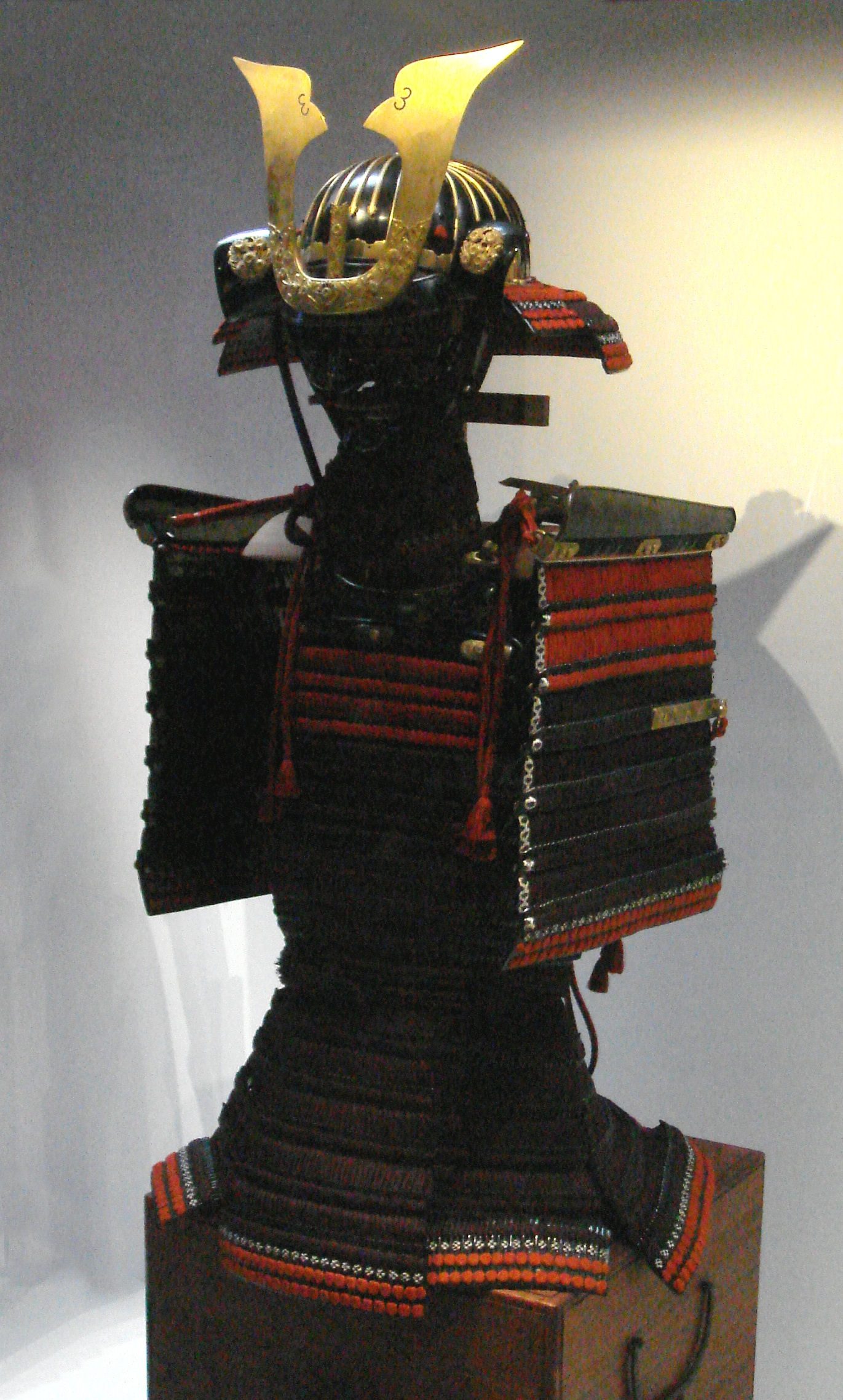
Hidetada’s management of European traders was, if anything, even more revealing of his character than his management of the Church.
His father had been a pragmatist about foreign commerce. Ieyasu had cultivated William Adams as a diplomatic advisor, granted trading privileges to the Dutch and the English, maintained relations with the Portuguese and Spanish, and generally treated European merchants as useful instruments whose religious baggage could be managed through selective enforcement. Trade was profit. Profit funded the state. The state tolerated a certain amount of ideological contamination in exchange for Chinese silk, European firearms, and the intelligence that foreign merchants brought about the wider world.
Hidetada saw no such value. The English Cape-Merchant Richard Cocks, who traveled to Edo in 1616 seeking confirmation of his factory’s trading privileges, received an audience so brief and so silent that it constituted a diplomatic insult. When Cocks protested the new trade restrictions, which confined English and Dutch commerce to Hirado and Nagasaki, shutting down the subfactories in Edo, Osaka, and Kyoto, Tokugawa officials warned him that the shōgun was “so furious and tyrannical that no one dared speak to him of any matter that might cause discontent”. This was not Ieyasu’s studied openness. This was a closed door.
The snubs escalated. When Cocks presented a letter from King James I of England, which had been addressed to Ieyasu and was intended as a reply to previous correspondence, Hidetada refused to answer it. His reasoning was that responding to a letter addressed to a dead man was an inauspicious act. It was a perfectly logical position within the framework of Japanese court etiquette. It was also a masterly piece of diplomatic rudeness, the kind of refusal that cannot be protested because it rests on impeccable cultural logic.
Hidetada’s treatment of William Adams was equally cold. Adams, who had been Ieyasu’s trusted foreign advisor, a man who had risen from shipwrecked castaway to landed samurai, found himself abruptly frozen out. Hidetada initially refused Adams an audience, reportedly because he harbored suspicions about the conversion of Adams’s Japanese wife to Catholicism. He eventually relented, met Adams, and even granted him a personal red-seal permit for overseas trade. But the warmth was gone. The pilot who had reshaped Japanese foreign policy under Ieyasu was, under Hidetada, a tolerated relic.
The Dutch survived. Not because Hidetada liked them, there is no evidence that Hidetada liked any foreigner, but because they were Protestants who did not proselytize, and because they served a useful function as a counterweight to the Iberian powers. When the Portuguese, Spanish, and English all petitioned Hidetada to expel the Dutch, branding them as violent pirates who attacked Catholic shipping throughout Asian waters, Hidetada consistently refused. His position was elegant in its cynicism: the shogunate would not interfere in disputes that occurred outside Japanese territorial waters. What Europeans did to each other on the open sea was their own affair. What mattered was that the Dutch came to Hirado, sold their goods, bought their silk, and left without attempting to save anyone’s soul.
It was a policy that Adams, in his long-dead way, would have recognized. The difference was that where Ieyasu had played European factions against each other with the pleasure of a chess master, Hidetada simply endured them with the patience of a man waiting for the lease to expire.
Hidetada’s Abdication of 1623
The Abdication That Wasn’t
In the summer of 1623, following the precedent his father had established 18 years earlier, Hidetada formally abdicated the office of shōgun in favor of his eldest surviving son, Tokugawa Iemitsu. He took the title of Ōgosho, retired shōgun, and moved behind the scenes.
The move was a mirror of 1605. The abdication was real. The retirement was theater. From 1623 until his death in 1632, Hidetada continued to exercise absolute authority over the government, directing national policy, managing daimyō relations, and, most consequentially, supervising the final escalation of the anti-Christian campaign.
The Great Edo Martyrdoms of December 1623, staged on the busy Tōkaidō highway for maximum public impact, bore all the hallmarks of Hidetada’s administration. On December 4, 50 Christians were burned at the stake at Fuda-no-Tsuji in Edo, among them a Jesuit father, a Franciscan father, and 48 Japanese lay leaders. On December 29, another 37 were executed. This second group included 13 people who had not themselves been Christians but had been punished simply for having Christians in their households. One of them was a member of the shōgun’s own bodyguard, a man named Matsura Sannosuke, who had been entirely unaware that he was sheltering believers. The collective punishment principle had reached the point where ignorance was no defense.
The Edo martyrdoms were not acts of passion. They were demonstrations, carefully timed, precisely located on the nation’s busiest road during the season when every daimyō in Japan was traveling to or from Edo for their New Year’s attendance. Every feudal lord in the country would either witness the burning or hear about it from someone who had. The message was addressed not to the Christians but to the lords who might be tempted to protect them.
Hidetada had, in effect, completed the work his father had begun. The 1614 edict had made Christianity illegal. The 1616 decree had made sheltering priests a capital crime. The systematic executions of 1617–1623 had demonstrated that the law would be enforced without mercy, without exception, and without regard for age, sex, or social standing. What remained, the fumi-e trampling images, the ana-tsurushi pit torture, the establishment of a permanent Inquisition office, the final expulsion of the Portuguese after the Shimabara Rebellion, would be Iemitsu’s work. But the machine that Iemitsu operated had been built, tested, and calibrated by his father.
What Hidetada Left Behind
The Competent Man
Tokugawa Hidetada died in 1632, leaving behind a government so thoroughly institutionalized that it would continue to function on essentially the same principles for another 236 years. The Buke Shohatto would be reissued by every subsequent shōgun. The sankin-kōtai system, the compulsory alternate attendance that Hidetada had begun formalizing in 1609 by ordering all daimyō to spend the New Year in Edo, would be refined into the most effective instrument of feudal control ever devised. The subordination of the imperial court would persist until the Meiji Restoration in 1868. The exclusion of Christianity would endure until 1873, long after American warships forced the question in the 1850s.
Sources & Further Reading
Boxer, C.R. The Christian Century in Japan, 1549–1650. University of California Press, 1951. The foundational English-language study of the Nanban period, with extensive coverage of Hidetada’s anti-Christian policies and European diplomatic encounters.
Cocks, Richard. Diary of Richard Cocks, Cape-Merchant in the English Factory in Japan, 1615–1622. Ed. Edward Maunde Thompson. Hakluyt Society, 1883. 2 vols. The primary English source for Hidetada’s trade restrictions, diplomatic snubs, and the atmosphere at the Edo court after Ieyasu’s death.
Cooper, Michael, S.J. They Came to Japan: An Anthology of European Reports on Japan, 1543–1640. University of California Press, 1965. A superb anthology of primary sources including Jesuit, Franciscan, and lay European accounts of Hidetada’s persecutions.
Elison, George. Deus Destroyed: The Image of Christianity in Early Modern Japan. Harvard University Press, 1973. Essential for the intellectual and theological arguments that shaped Tokugawa anti-Christian policy, including Hidetada’s engagement with Ibi Masayoshi’s report.
Hall, John Whitney. “The Bakuhan System.” In The Cambridge History of Japan, Vol. 4: Early Modern Japan, ed. John Whitney Hall. Cambridge University Press, 1991. The standard institutional analysis of the governance structures, Buke Shohatto, sankin-kōtai, court regulations, that Hidetada implemented and enforced.
Hesselink, Reinier. The Dream of Christian Nagasaki: World Trade and the Clash of Cultures, 1560–1640. McFarland, 2016. Detailed treatment of the Nagasaki martyrdoms under Hidetada and the intersection of trade policy with religious persecution.
Massarella, Derek. A World Elsewhere: Europe’s Encounter with Japan in the Sixteenth and Seventeenth Centuries. Yale University Press, 1990. Comprehensive coverage of English and Dutch relations with the Tokugawa shogunate, including Hidetada’s diplomatic posture.
Murdoch, James. A History of Japan, Vol. 2: During the Century of Early Foreign Intercourse, 1542–1651. Kobe: Office of the “Chronicle”, 1903. The source of several colorful characterizations of Hidetada, including “stodgy mediocrity” and the assessment of his domestic and military temperament.
Sansom, George. A History of Japan, 1615–1867. Stanford University Press, 1963. The third volume of Sansom’s trilogy, opening with the post-Osaka settlement and covering the full arc of Hidetada’s governance, the Buke Shohatto, and the Purple Robe Incident.
Screech, Timon. “The English and the Control of Christianity in the Early Edo Period.” Japan Review 24 (2012): 3–40. Examines the English factory’s interactions with Hidetada and the broader role of Protestant powers in the anti-Christian turn.
Totman, Conrad. Tokugawa Ieyasu: Shogun. Heian International, 1983. A concise biography of the father that illuminates the son, particularly the succession decision, the Sekigahara humiliation, and the 1605 abdication.
Turnbull, Stephen. The Samurai and the Sacred. Osprey Publishing, 2006. Useful for the religious dimensions of the Osaka campaigns and the Christian military presence that catalyzed Hidetada’s persecution.
Recent scholarship
- Pitelka, Morgan (2026). “Deifying Warlords: Mythologizing Samurai Leaders in Early Modern and Modern Japan”, Japan Review, 41, pp. 57–82. — This article argues that Japan’s “Three Heroes” were transformed from historical figures into mythologized icons to serve shifting political and commercial needs.Free full text ↗ (opens in a new tab)
- Galindo García, Arturo (2026). “Tools and regalia: a short survey of the presence of firearms in Edo Japan”, International Journal of Asian Studies. — This concise 16-page survey reframes the Edo period’s so-called gun ban not as a disarmament but as a clever social redefinition where firearms became farming tools for commoners and ritual regalia for the elite.Free full text ↗ (opens in a new tab)
- Hesselink, Reinier H. (2026). “The Jesuit Experience in Sixteenth- and Seventeenth-Century Japan: Francis Xavier’s Prophecy”, The Journal of Ecclesiastical History. — This concise article reframes the failure of the Jesuit mission in Japan as a direct collision between Catholic morality and the institutionalized male-male sexual customs of the samurai class, offering a sharp, evidence-driven explanation for the persecution that followed.Free full text ↗ (opens in a new tab)
Cite this page
Nanban.pt. “The Dutiful Son: Tokugawa Hidetada and the Machinery of Persecution.” Last modified 6 October 2026. https://nanban.pt/articles/tokugawa-hidetada/.
@misc{nanban-tokugawa-hidetada,
  author = {Nanban.pt},
  title = {The Dutiful Son: Tokugawa Hidetada and the Machinery of Persecution},
  year = {2026},
  url = "https://nanban.pt/articles/tokugawa-hidetada/",
  note = {Last modified 2026-10-06}
}