Hideyoshi’s Edict: The Night Japan Turned Against the Church
On a July night in 1587, the most powerful man in Japan issued an order that gave the missionaries 20 days to leave. They didn’t leave. He didn’t enforce it. The consequences took a century to play out.
Hideyoshi's edict of 1587 was an order issued on a July night by Toyotomi Hideyoshi, the most powerful man in Japan, giving the Christian missionaries 20 days to leave the country. The missionaries did not leave and Hideyoshi did not enforce it, yet its consequences took a century to fully play out.
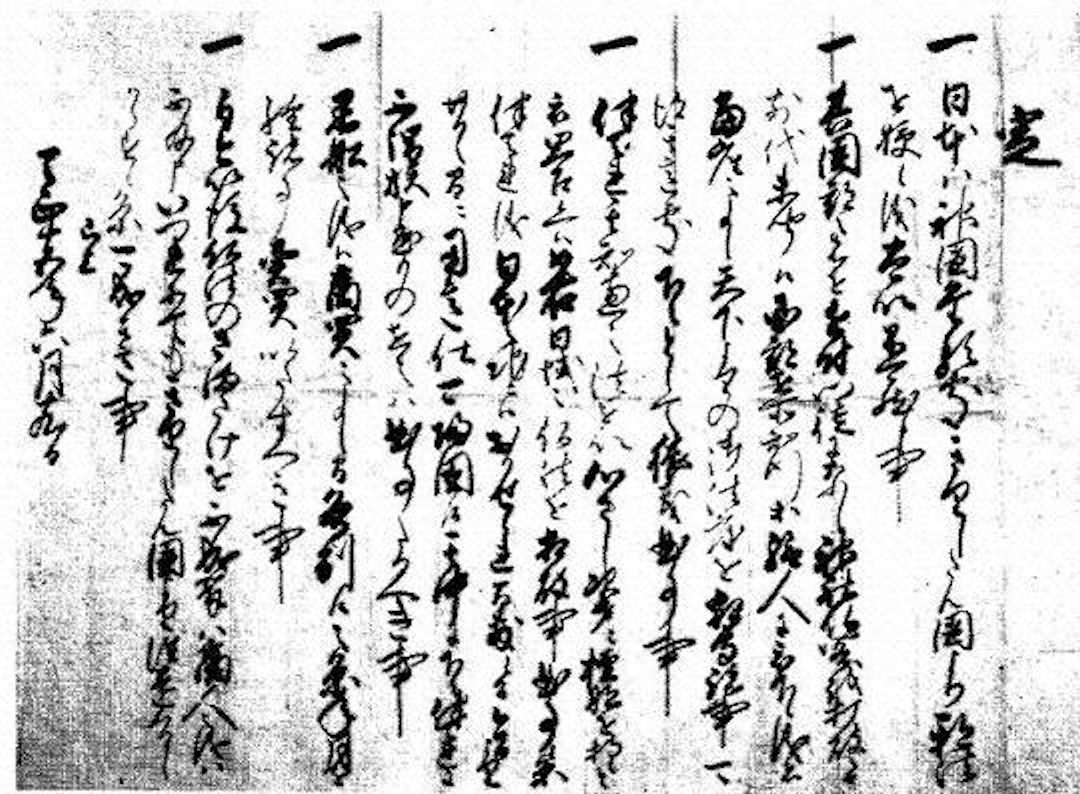
The Night of 23–24 July 1587: Two Documents
Two Documents, One Night
On the night of July 23–24, 1587, in a military camp on the conquered island of Kyushu, Toyotomi Hideyoshi, peasant’s son, military genius, and the second of Japan’s three great unifiers, sat down and wrote two documents that would reshape the next three centuries of Japanese history.
The first was an 11-article memorandum, addressed to his own lords and samurai, regulating the practice of Christianity within Japan. The second was a five-article edict of expulsion, the Bateren Tsuihō Rei, addressed directly to the Jesuit missionaries and Portuguese merchants, ordering the priests to leave Japanese soil within 20 days.
The documents were related but distinct. The memorandum was internal policy, a set of rules governing how the Christian religion would be managed within the Japanese political system. The edict was an ultimatum, a declaration that the foreign priests had outstayed their welcome. Together, they constituted Japan’s first major government action against Christianity, and they established the precedents that the Tokugawa shoguns would later invoke when they dismantled the Church entirely.
The expulsion order was also, in its immediate practical effect, almost completely unenforced. The missionaries did not leave. Hideyoshi did not make them leave. And the gap between the severity of the edict’s language and the laxity of its execution reveals something important about the man who wrote it: he was not an ideologue. He was a calculator. The edict was not a policy of extermination. It was an instrument of control.
What Hideyoshi Saw During the Kyushu Campaign
What Hideyoshi Saw in Kyushu
To understand the edict, you have to understand the month that preceded it. In the summer of 1587, Hideyoshi marched south into Kyushu at the head of a vast army to carry the unification of Japan through its last great region by subduing the Shimazu clan, the last power on the island still outside his authority. The campaign was swift and successful, the Shimazu submitted without the prolonged siege Hideyoshi had feared, but it was what he observed along the way that changed everything.
Kyushu was the heartland of Japanese Christianity. The Jesuits had been operating there since Xavier’s arrival in 1549. Christian daimyō controlled substantial territories. By the 1580s, the faith claimed somewhere between 150,000 and 200,000 converts on the island. Hideyoshi had seen all of this, in a similar way to his predecessor Nobunaga embracing it, as a useful counterweight to Buddhist institutional power, as a component of the profitable Portuguese trade.
Now he was seeing it up close, and what he saw alarmed him. He saw Christian daimyō who had compelled their subjects to accept baptism under threat of exile, tens of thousands of peasants forcibly converted by lords who wanted Portuguese trade badly enough to baptize entire provinces to get it. He saw the wreckage of Buddhist temples and Shinto shrines, ancient, venerated sites systematically demolished by converts who regarded them as idolatrous abominations. Ōtomo Sōrin, the lord of Bungo, had razed the sanctuaries of Hyūga province during a military campaign, intending to build a model Christian settlement governed by European laws. His own samurai had turned on him, blaming the subsequent military defeat on the wrath of the gods he had desecrated.
He saw Nagasaki, and Nagasaki was the worst of it. The port city that the Jesuits had developed from a fishing village into Japan’s premier international harbor had been formally ceded to the Society of Jesus in 1580 by the Christian daimyō Ōmura Sumitada. The conveyance was sweeping: the Jesuits held the government of the town, including the power to appoint captains and “to kill and exercise all the justice necessary for the good government of the land”. The Jesuit Visitor Valignano had accepted the donation and immediately ordered the enclave fortified “in a manner to withstand any attack”. A foreign religious order, headquartered in Rome, was administering a Japanese city, dispensing justice, collecting fees, and building fortifications on Japanese soil.
For a man in the business of unifying Japan under a single authority, this was not a curiosity. It was an intolerable affront. And then there was the matter of the slaves.
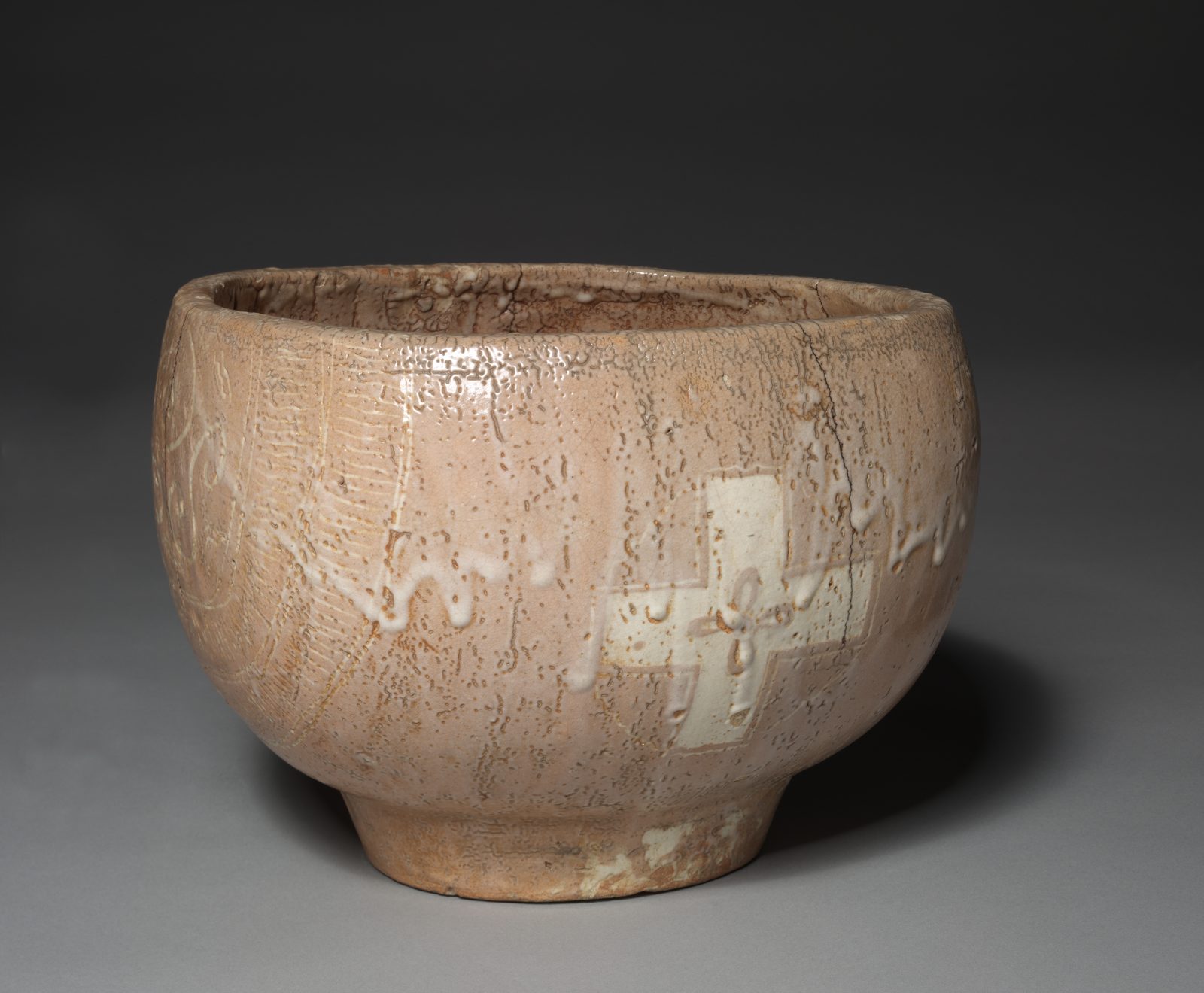
The Portuguese Slave Trade That Horrified Hideyoshi
The Holds of the Ships
During his Kyushu campaign, Hideyoshi witnessed the Portuguese slave trade in Japanese people. The scale horrified him.
Iberian merchants were purchasing Japanese men and women, often peasants captured during the civil wars, or debtors, or simply the poor, chaining them in the holds of their ships, and exporting them to Macau, the Philippines, India, and beyond. Japanese sources described the conditions aboard the slave ships as “far beyond the punishment in Hell”. Some estimates suggest that at least 50,000 Japanese were sold overseas during the Nanban period. During the Shimazu clan’s invasion of Bungo province, Fróis reported roughly 3,000 women and children carried off from Usuki alone; Bungo captives were later resold at cut-rate prices in Shimabara. The Jesuit António López described the China ship of 1588 loaded with Japanese until more than 1,000 souls were aboard her.
The Jesuits’ role in this commerce was deeply compromised. Individual missionaries acted as intermediaries, issuing licenses to Portuguese merchants that provided a veneer of theological justification for the enslavement, arguing that the slaves were being saved from a worse fate by being placed with Christian masters who would baptize them, or that the purchases fell under the European legal concept of “just war”. The institutional Church eventually condemned the practice, the Jesuit Superior General Acquaviva ordered an end to Jesuit involvement in 1590, and Bishop Cerqueira convened a council in 1598 that threatened excommunication for buyers, but in 1587, the trade was still flourishing.
Hideyoshi put it to the Jesuit Vice-Provincial, Gaspar Coelho, through his envoys. He demanded to know why the Portuguese were permitted to buy Japanese people and tear them from their homeland. He issued an ultimatum: all Japanese slaves currently held on ships in Japanese harbors were to be freed immediately, and all those previously exported to India and other lands were to be brought home wherever that was still possible. He offered silver for what they had cost. His officials boarded the Portuguese vessels and took the slaves off them. In Nagasaki, at least one slave broker was crucified at the pier where the merchants embarked.
The sale of Japanese to China, South Barbary, and Korea is outrageous… In Japan trade in human beings is prohibited.
11-article memorandum, July 1587
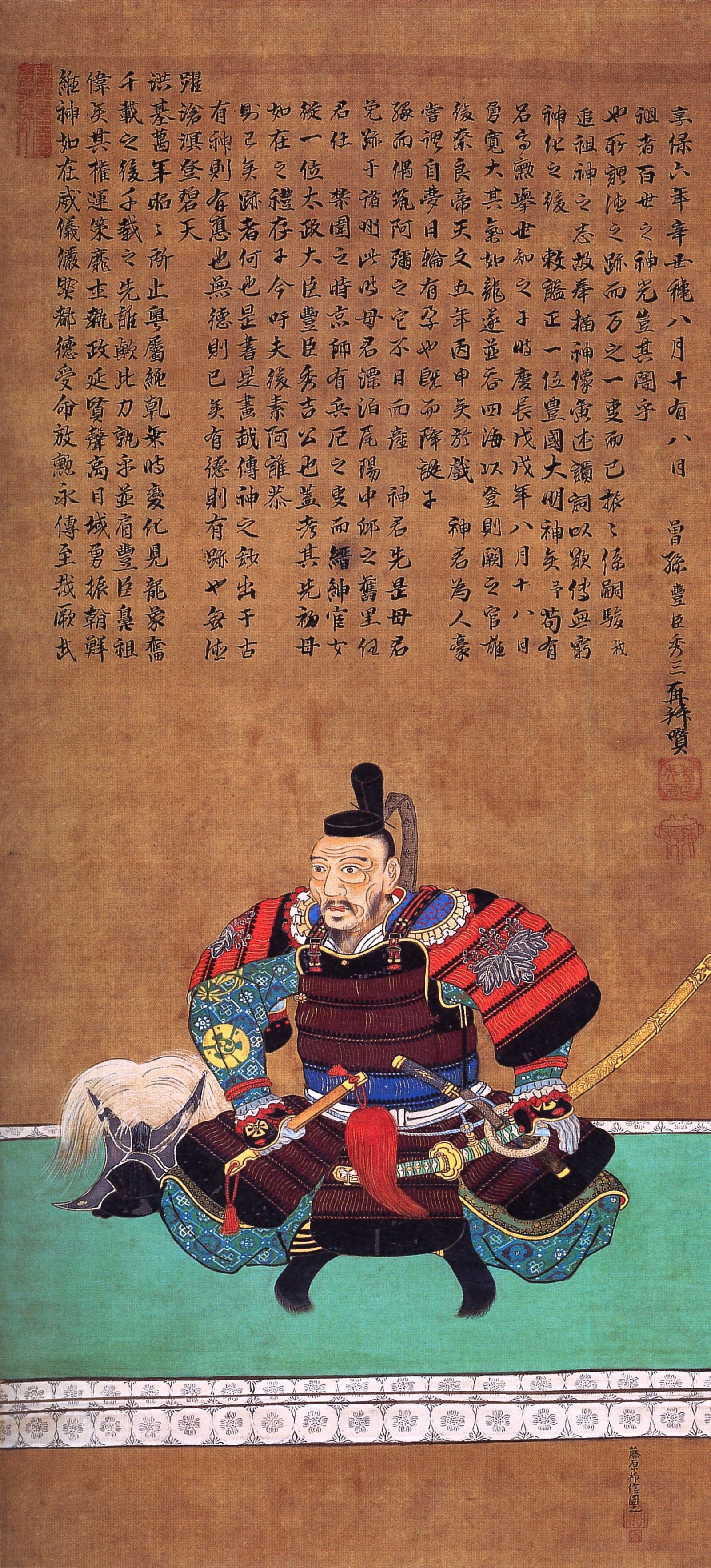
What the Bateren Tsuihō Rei Declared
The Land of the Gods
The five-article edict of expulsion, the Bateren Tsuihō Rei, opened with a declaration that would echo through the next two and a half centuries of Japanese policy: “Japan is the Land of the Gods.”
The Shinkoku, “Land of the Gods,” was an ideological assertion that Japan’s spiritual order, its native gods and the Buddhist law alike, defined the realm, and that the diffusion of a “pernicious doctrine” from Christian countries was an outrage that could not be tolerated. The edict condemned the missionaries for illegally converting the populace and inciting them to destroy Shinto shrines and Buddhist temples. All padres were ordered to leave Japanese soil within 20 days.
And then, in the same document, in the same breath, Hideyoshi exempted the Portuguese merchants from the ban and encouraged them to continue trading freely with Japan, so long as they did not interfere with Japanese laws or religious traditions.
The contradiction was deliberate. Hideyoshi wanted the priests gone and the merchants to stay. He wanted the religion contained and the silk trade to continue. He wanted the Jesuits stripped of political power but available as commercial intermediaries. The edict drew a line between faith and commerce that he knew was fictitious, the Jesuits were the silk trade, the silk trade was the Jesuits, but that served his purposes precisely because it was fictitious. It gave him leverage. The missionaries could stay, unofficially, so long as they understood that they stayed at his pleasure, stripped of their fortifications, their judicial powers, their territorial sovereignty, and their military pretensions. The sword of Damocles hung above them. Whether it fell was his decision alone.
Takayama Ukon, the Christian Daimyō Who Refused to Recant
The Daimyō Who Refused
The edict’s most immediate domestic consequence was a test of loyalty imposed on the Christian daimyō. Hideyoshi demanded that his elite Christian commanders renounce their faith or face ruin.
Most found a way to comply. The calculation was straightforward: faith was valuable, but fiefs were more valuable, and a landless Christian lord was a contradiction in terms in a feudal society where power flowed from territory. They recanted in public or let the demand pass in silence, preserved their domains, and in many cases went on protecting the missionaries discreetly.
One man refused. Takayama Ukon, Dom Justo, was an elite samurai from the Kansai region whose conversion was driven by genuine spiritual conviction rather than commercial calculation. He had actively proselytized among the highest-ranking generals in Hideyoshi’s entourage, converting powerful figures like Kuroda Josui and Gamō Ujisato. His Christian samurai rode into battle with crosses on their helmets and banners.
When Hideyoshi demanded his apostasy, Takayama refused. He was stripped of Akashi, the fief Hideyoshi had moved him to from Takatsuki two years earlier, and reduced to poverty. He spent the next 27 years a lord of nothing, sheltered by the Maeda of Kanazawa and serving them as a plain samurai, until the Tokugawa expulsion edict of 1614 finally drove him from Japan entirely. He died in Manila in February 1615, six weeks after arriving. He was beatified by Pope Francis in 2017. Takayama’s refusal was both heroic and strategically insignificant. He lost his lands. Hideyoshi lost nothing.
Why the 1587 Edict Was Barely Enforced
The Edict That Wasn’t Enforced
Here is the paradox at the center of the 1587 edict: almost nothing happened. The missionaries did not leave. A handful departed for form’s sake. The vast majority adopted Japanese dress, dispersed into the domains of sympathetic Christian lords, and continued their work. The Jesuits closed some churches, maintained a lower profile, and waited.
Hideyoshi let them. He had confiscated Nagasaki, converting it into a directly administered government city on par with Kyoto, Osaka, and Sakai, and that was the structural achievement he cared about. The foreign colony on Japanese soil was dismantled. The Jesuits’ judicial and administrative powers were revoked. The territorial threat was neutralized. The missionaries, individually, were useful, as interpreters, as commercial brokers, for holding the Macao silk trade together. Expelling them would have disrupted the trade. Keeping them on a leash was preferable.
The Christian community actually grew during the years of nominal prohibition. By the early 1600s, the number of converts had risen from roughly 200,000 to perhaps 300,000, the peak of the Christian Century. The edict’s non-enforcement was not a sign of weakness. It was a deliberate strategic choice: Hideyoshi had demonstrated that he could destroy the Church if he wished, and then chosen not to, so long as the Church remembered who held the power.
Sources & Further Reading
Boxer, C.R. The Christian Century in Japan, 1549–1650. University of California Press, 1951. The foundational study, with detailed analysis of the 1587 edict and its consequences.
Cooper, Michael. They Came to Japan: An Anthology of European Reports on Japan, 1543–1640. University of California Press, 1965. Includes translated Jesuit accounts of the edict and its aftermath.
Elison, George. Deus Destroyed: The Image of Christianity in Early Modern Japan. Harvard University Press, 1973. Essential for the ideological framework of the “Land of the Gods” declaration and the Ikkō-ikki analogy.
Fróis, Luís. Historia de Japam. 5 vols., ed. Josef Wicki. Biblioteca Nacional de Lisboa, 1976–1984. The Jesuit eyewitness chronicle, providing the most detailed contemporary account of the events surrounding the edict.
Hesselink, Reinier H. The Dream of Christian Nagasaki: World Trade and the Clash of Cultures, 1560–1640. McFarland, 2016. Detailed treatment of the Nagasaki cession and its confiscation under the 1587 edict.
Massarella, Derek. A World Elsewhere: Europe’s Encounter with Japan in the Sixteenth and Seventeenth Centuries. Yale University Press, 1990. Situates the edict within the broader diplomatic context.
McMullin, Neil. Buddhism and the State in Sixteenth-Century Japan. Princeton University Press, 1984. Essential for understanding the Ikkō-ikki precedent that shaped Hideyoshi’s perception of Christianity.
Moran, J.F. The Japanese and the Jesuits: Alessandro Valignano in Sixteenth-Century Japan. Routledge, 1993. Detailed treatment of Valignano’s response to the edict and his diplomatic management of its aftermath.
Nelson, Thomas. “Slavery in Medieval Japan.” Monumenta Nipponica 59, no. 4 (2004): 463–492. Provides context for the Japanese slave trade within broader patterns of unfree labor in the period.
Schurhammer, Georg. Francis Xavier: His Life, His Times. 4 vols. Jesuit Historical Institute, 1973–1982. Background on the mission that the 1587 edict disrupted.
Cite this page
Nanban.pt. “Hideyoshi’s Edict: The Night Japan Turned Against the Church.” Last modified 25 September 2026. https://nanban.pt/articles/hideyoshi-1587-edict/.
@misc{nanban-hideyoshi-1587-edict,
  author = {Nanban.pt},
  title = {Hideyoshi’s Edict: The Night Japan Turned Against the Church},
  year = {2026},
  url = "https://nanban.pt/articles/hideyoshi-1587-edict/",
  note = {Last modified 2026-09-25}
}