Dom Francisco of Bungo: The Life of Ōtomo Sōrin, 1530–1587
Ōtomo Sōrin received Francis Xavier in 1551 and protected the Jesuits for decades before accepting baptism in 1578. His last years brought the rout at Mimikawa, a journey to beg Hideyoshi for help and a death at Tsukumi in the weeks before the expulsion edict.
Ōtomo Sōrin (Yoshishige, 1530 to 1587) was the lord of Bungo in Kyūshū who protected the Jesuit mission from Francis Xavier's visit to Funai in 1551 and was baptized Dom Francisco by Francisco Cabral at Usuki on 28 August 1578. Later that year his army was routed by the Shimazu at Mimikawa; he went to Osaka in 1586 to appeal to Hideyoshi for help and died at Tsukumi in 1587, a few weeks before the edict expelling the missionaries.
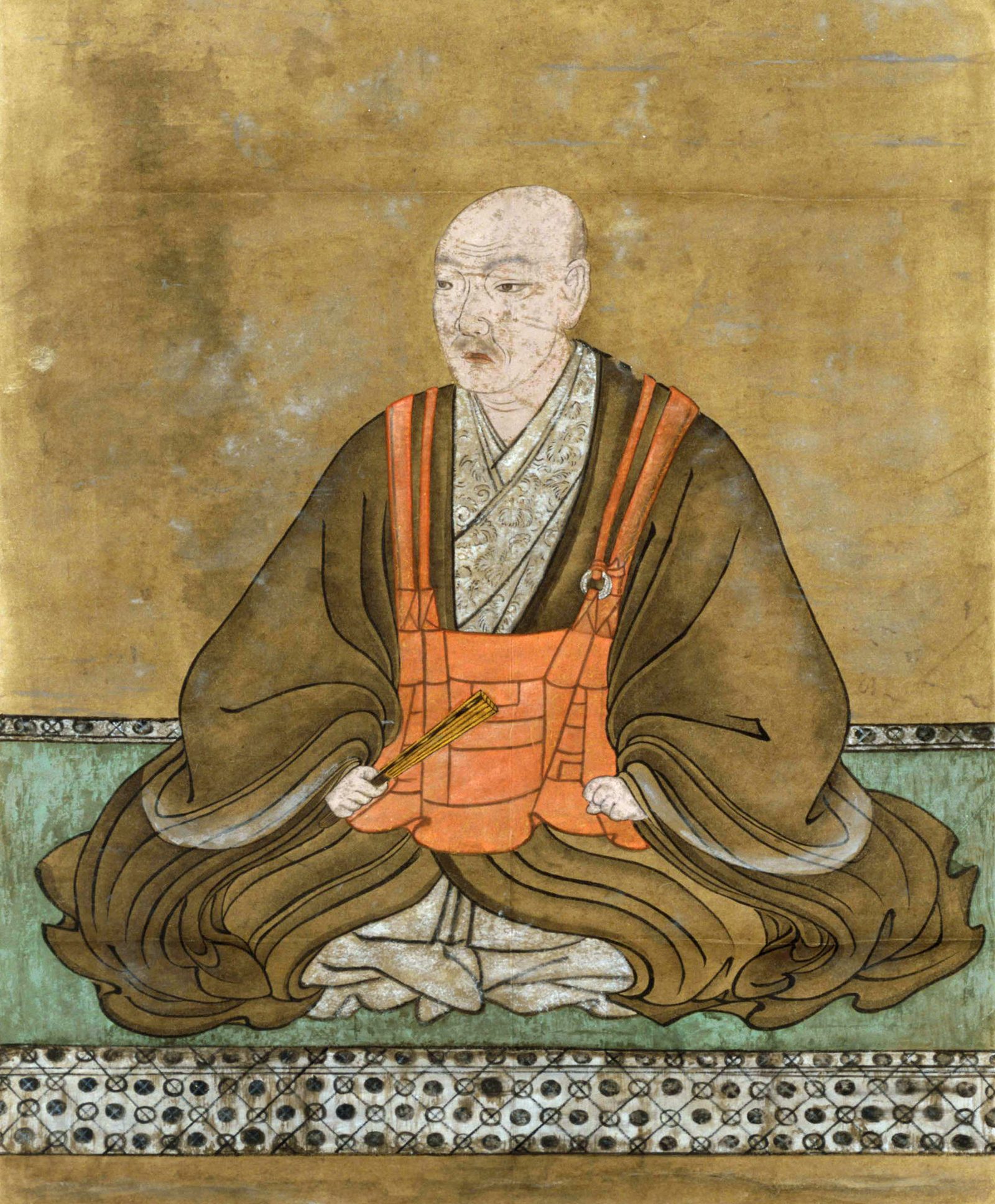
A Guest in the Golden Tea Room
Ōtomo Sōrin's Audience at Osaka Castle, 23 May 1586
On the fifth day of the fourth month of Tenshō 14 (23 May 1586), Toyotomi Hideyoshi received a visitor from Kyūshū at Osaka Castle. The guest was Ōtomo Sōrin, retired head of a house that traced its authority in Bungo, on the eastern coast of the island, to an appointment made in the 1190s. He had sailed east the previous month because Bungo faced invasion by the Shimazu of Satsuma, the house whose army had destroyed his own in Hyūga eight years earlier. He had come to ask the most powerful man in Japan to intervene.
Hideyoshi made the occasion a display. He took Sōrin through the keep and the treasuries, showed him the golden tea room, and served him tea with Sen no Rikyū. The next day Sōrin wrote home. His letter, signed Kyūan Sōteki, carried a piece of practical intelligence for his retainers: confidential business at Hideyoshi's court went through Rikyū, public business through Hideyoshi's brother Hidenaga. Accounts of the visit have Hideyoshi speaking of an army of about 200,000 men for the relief of Kyūshū.
The signature is worth a second look. The man who signed with a Buddhist name in 1586 had been baptized Dom Francisco eight years before, by a Jesuit superior, in a chapel at Usuki. He had first met a Christian missionary 35 years before that letter, when Francis Xavier came to his capital at Funai, and for most of the intervening decades he had protected the Society of Jesus while remaining a tonsured lay follower of Zen. The lordship he brought to Osaka was the remnant of what had been, in the 1560s, the largest power in northern Kyūshū. Hideyoshi did rescue Bungo. In the summer of 1587, a few weeks after Sōrin's death, he also issued the edict ordering the missionaries out of Japan.
The Night of the Second Floor
How Sōrin Became Head of the Ōtomo: The Nikai-kuzure of 1550
Sōrin was born in Kyōroku 3 (1530) at Funai, the Ōtomo seat on Beppu Bay, the eldest legitimate son of Ōtomo Yoshiaki, the 20th head of the house. His childhood name was Shiobōshimaru. Around 1540 the shogun Ashikaga Yoshiharu granted him the character yoshi from his own name, a customary favor to the heirs of great provincial houses, and he became Ōtomo Yoshishige. Sōrin, the name by which he is generally known, came later, with the tonsure.
His succession was settled by killing. Yoshiaki planned to set aside his eldest son in favor of a younger boy, the child of a favored concubine. On the night of the 10th day of the second month of Tenbun 19 (1550), two retainers, Tsukumi and Taguchi, fearing for their lives after Yoshiaki had others killed, broke into the upper story of the Funai residence and killed the boy, his mother and two young daughters. Yoshishige was away at Hamawaki. Yoshiaki, mortally wounded, died two days later, having confirmed Yoshishige as heir. The episode is remembered as the Nikai-kuzure (二階崩れ), the "collapse of the second floor." Letters of commendation in his name survive from the 15th and 21st days of the same month.
Akutagawa Tatsuo reads the coup as the point at which the Ōtomo ceased to be a Muromachi governor's house holding office from the shogun and became a territorial power of the warring-states type. The novelist Endō Shūsaku, in his Sōrin novel Ō no banka (王の挽歌), traced his distrust of others to that night, presenting him as a man marked by that betrayal and searching for an inner salvation.
Governor of Many Provinces
Sōrin's Offices and the Reach of Ōtomo Power in Northern Kyūshū
The decade after 1550 made Yoshishige the dominant lord of northern Kyūshū. In 1550 he drove Kikuchi Yoshitake out of Higo and established Ōtomo control there, and Kikuchi was killed in 1554, the year Yoshishige was named shugo, or provincial governor, of Hizen. In Eiroku 2 (1559) the shogun Ashikaga Yoshiteru added Buzen and Chikuzen, recognizing him as heir to the rights of the extinct Ōuchi in that region. He then received the revived title of Kyūshū tandai (九州探題), the shogun's commissioner for the island.
Those appointments, added to his hereditary Bungo and his hold on Chikugo and Higo, describe the formal frame of Ōtomo power. They do not describe its reach on any given day. Appointment, claimed authority, actual possession and military influence were different things in 16th-century Kyūshū, and the Ōtomo position in each province varied with the loyalty of local lords and the state of the latest campaign. Chronicles later spoke of a lordship of seven provinces, a count that included Hyūga, which Ōtomo armies entered only in 1578. The figure is probably better read as a measure of ambition and influence than as a list of offices.
Revenue is equally hard to state in a single number. Modern writers have offered rice-value totals for the Ōtomo sphere running from 1.5 to more than 2 million koku. Such estimates are retrospective. The Ōtomo assessed their lands in cash, as kandaka, and in other obligations, so a rice-value figure cannot stand in for their own budget or be compared directly with their cash assessments. Ōtomo wealth also came from sources that no land survey captured: port dues at Hakata and Funai, and the foreign trade that passed through Bungo's harbors.
The retainer band that ran this territory had two layers. At the center sat a council of senior elders, the kahanshū (加判衆), who co-signed the lord's documents, among them, over the years, Usuki Akitsugu, Yoshioka Nagamasu, Tawara Chikakata, Bekki Dōsetsu (better known as Tachibana Dōsetsu), Shiga Dōki and Takita Shigekane. Beyond them were regional lords, the kunishū, such as the Saeki, the Akizuki and the Tsuchimochi, who held their own lands and could not simply be commanded. Major decisions required consensus at the center, and distant lords could change sides quickly when an enemy pressed them. Historians who stress this structure treat the Ōtomo state as a coalition, and its later collapse as a coalition's failure.
Funai itself has come back into view through excavation. Digging since 1996 has uncovered the Ōtomo residence, designated a National Historic Site in 2001, together with garden ponds, paved streets, merchant quarters and metalworking furnaces. The finds include Ming porcelain and celadon, Nanban wares and small lead crosses and medals. Funai's outer harbor was Okinohama, where Chinese merchants traded alongside Portuguese visitors near the waterfront.
The Priest from Yamaguchi
How Sōrin Received Francis Xavier at Funai in 1551
At the end of August 1551 news reached Francis Xavier at Yamaguchi that a Portuguese ship under Duarte da Gama had anchored in Bungo. Xavier went to Funai, accompanied by the young convert Bernardo of Kagoshima. Cosme de Torres and Brother Juan Fernández stayed behind. The early mission documents edited by Juan Ruiz-de-Medina place both men in Yamaguchi during the upheaval of September, when the retainer Sue Takafusa (later Harukata) overthrew the Ōuchi lord Yoshitaka; they were not part of the party that reached Funai.
The 21-year-old Yoshishige had invited Xavier, and in Fernão Mendes Pinto's telling the Portuguese present at Funai received the priest with a parade of flutes, trumpets, banners and silk canopies. The lord granted him freedom to preach and a residence. Xavier stayed some two months before sailing from Bungo late in 1551 on da Gama's ship, taking Bernardo with him toward India and Europe. Yoshishige sent a retainer of his own on the same voyage, with letters for the king of Portugal and the viceroy of India offering the king his friendship and asking for missionaries; the man was also to bring back word of Portuguese power. The visit is treated at length in the article on Xavier's Japan mission.
The upheaval at Yamaguchi tied Bungo's politics to the mission in a second way. After overthrowing Ōuchi Yoshitaka, Sue Harukata installed Yoshishige's younger brother Haruhide as head of the Ōuchi house under the name Ōuchi Yoshinaga. For a few years the Ōtomo thus had a brother at the head of their old western neighbor, and the Yamaguchi mission benefited: the critical edition of the mission documents shows Yoshinaga in 1552 confirming the grant of the site of the Yamaguchi temple of Daidōji that Ōuchi Yoshitaka had made to the Jesuits in 1551. It ended badly. Mōri Motonari destroyed Sue at Miyajima in 1555, overran Suō and Nagato, and in 1557 forced Yoshinaga to take his own life at Chōfuku-ji. The contest for Buzen and Chikuzen that followed occupied the Ōtomo for more than a decade.
Funai, meanwhile, became the headquarters of the Jesuit mission. A refuge for abandoned infants opened in 1555, and in 1557 the merchant turned Jesuit Luís de Almeida established the hospital that is often described as the first Western-style hospital in Japan. Yoshishige protected the mission for 27 years before he joined it.
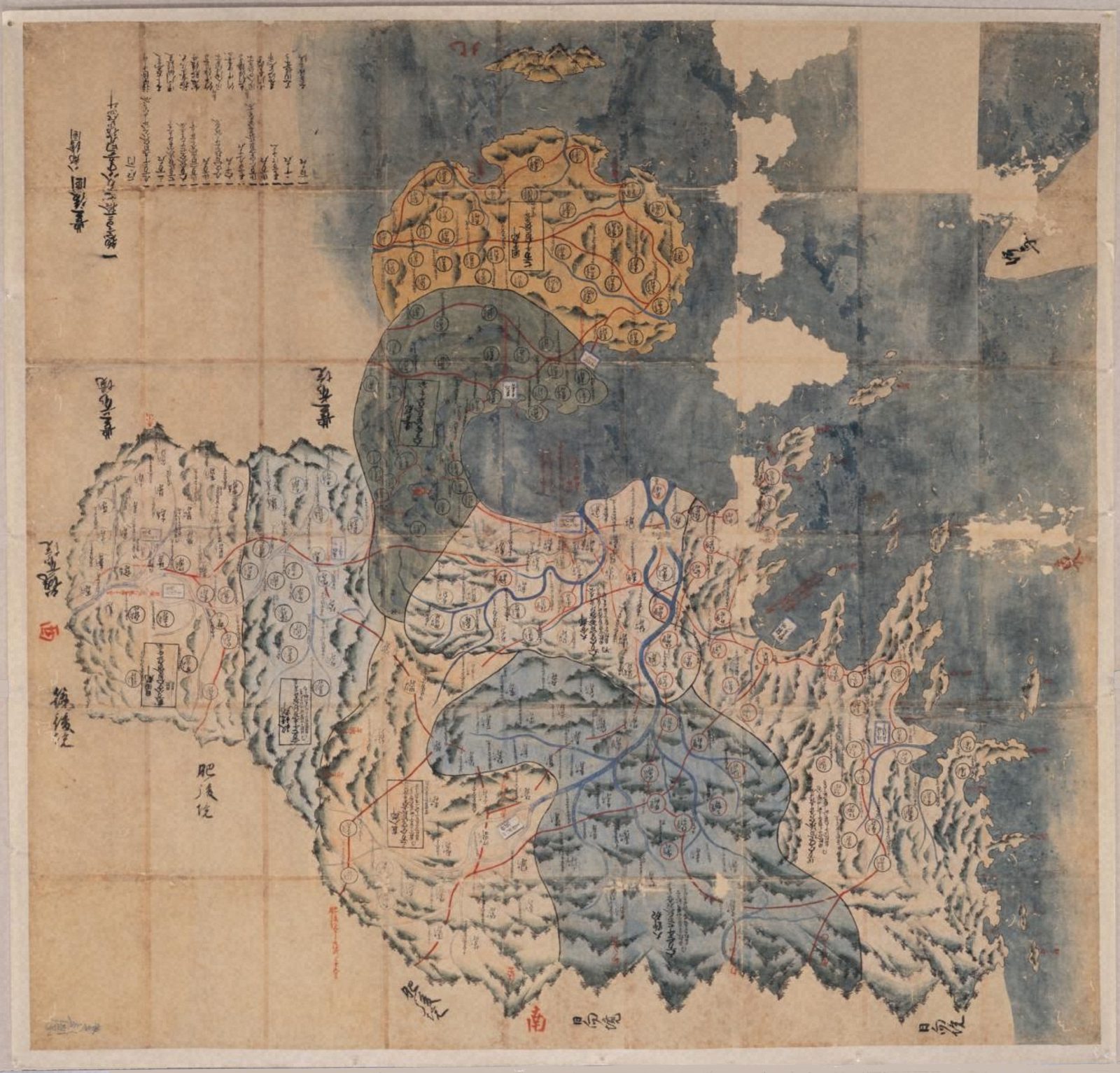
Moji, Imayama and the Price of Saltpeter
Sōrin's Wars with the Mōri, His Request for Saltpeter and the Defeat at Imayama
Mōri Motonari took Moji castle, which commanded the strait between Kyūshū and Honshū, in 1558. Yoshishige retook it briefly in 1559, only for Mōri commanders Kobayakawa Takakage and Ura Munekatsu to win it back. In 1561 he besieged Moji by land and sea, and armed Portuguese ships took part, bombarding the castle from the water. The assault failed. The same year he burned the great shrine of Usa Hachiman, whose head priest had turned against the Ōtomo. In 1563–64 shogunal envoys brokered a peace with the Mōri, which did not last. When Motonari seized Tachibana castle in 1569, Yoshishige answered at Tatarahama and encouraged a revolt behind Mōri lines in Izumo, led by Yamanaka Yukimori in the name of the Amago heir Amago Katsuhisa. Then Ōuchi Teruhiro landed at Yamaguchi in October, and Motonari withdrew from Kyūshū.
The war against the Mōri shaped his dealings with the Portuguese. In a letter dated 17 October 1567 he asked Bishop Belchior Carneiro for 10 piculs of good saltpeter a year, roughly 600 kilograms, explicitly for the war against the Mōri. A letter of 13 September 1568 lamented the loss of a cannon in a shipwreck, apparently off Malacca, and asked for a replacement. By then the great ships no longer came to Bungo. Portuguese merchants had been reaching Funai and Okinohama since the mid-1540s, but direct calls ceased around 1560 as the trade shifted west to the harbors of Hizen; Funai remained a point of transshipment toward Sakai and Kyoto.
He also looked beyond the Portuguese. In 1556, at the height of the wakō pirate crisis on the China coast, two Ming missions reached Bungo. Zheng Shungong stayed about six months and later wrote the Riben yijian, a survey of Japan. Jiang Zhou, who had set out with Chen Keyuan, came on behalf of the Ming commander Hu Zongxian, whose aim was to lure the pirate chief Wang Zhi home. Yoshishige sent the monk Tokuyō back with Jiang, with tribute and a memorial asking for a new tally; his brother at Yamaguchi returned Chinese captives. The Ming authorities, suspicious of the Wang Zhi connection, burned the Japanese ships off Zhoushan. What Bungo had to offer China was silver, swords and Bungo sulfur; what it wanted in return was copper coin, silk and porcelain. Exchanges with King Satha of Cambodia were more cordial. Bungo sent armor and swords; Cambodia sent letters, silk, incense, deer hides, wax, agarwood and an elephant. A local tradition in Ōita derives kabocha, the Japanese word for pumpkin, from "Cambodia" by way of Funai.
The Mōri war was barely over when a new rival rose in the west. In 1570 Yoshishige sent a large army, reckoned at about 60,000 men, under Ōtomo Chikasada, by most accounts his brother, against Ryūzōji Takanobu at Saga, whose garrison was put at about 5,000. Chikasada encamped on Imayama, northwest of the town. Before dawn Nabeshima Naoshige, urged on by Takanobu's mother Keigin-ni, led a raiding party of about 800 men into the camp. Chikasada and some 2,000 of his men were killed, and the siege collapsed. All these figures come from later accounts and are better taken as orders of magnitude than as counts. Imayama made the Ryūzōji a major power in western Kyūshū.
The Zen Robe and the Nata Household
Why Sōrin Waited Until 1578 to Be Baptized: Zen, Concubines and the Nata Wife
In 1562 Yoshishige took the tonsure under Iun Sōetsu of Zuihō-in, a subtemple of Daitoku-ji in Kyoto, and adopted the religious names Sōrin and Kyūan Sōrin. The precise date is not fixed. The Ōtomo genealogy, the Ōtomo keizu, gives the first day of the fifth month of Eiroku 5; the earliest document he signed as Sōrin is dated the 15th day of the sixth month. A later Edo-period story tying the tonsure to the shogun Yoshiteru and a Daitoku-ji monk is rejected by modern scholars as fabrication.
Why a lord who protected the Jesuits from 1551 waited until 1578 to be baptized has no single answer in the sources. Baptism risked alienating the senior retainers, the cadet houses of the Ōtomo and the religious establishments that were woven into the domain's politics. The missionaries objected to his concubines; Cosme de Torres, writing in 1556, named his sexual conduct as the obstacle. Sōrin's ties to the Rinzai Zen houses of Daitoku-ji and Myōshin-ji were real, and he appears to have compared doctrines at length. His principal wife opposed the Christians.
She was a daughter of Nata Akimoto, chief priest of Nata Hachiman, a branch shrine of Usa, and a sister of the senior elder Tawara Chikakata. Over nearly 30 years of marriage she bore him three sons, Yoshimune, Chikaie and Chikamori. The Jesuits called her "Jezebel," and their letters are the main source for her hostility. According to those accounts, she organized shrine priests, miko (shrine maidens) and yamabushi (mountain ascetics) in rituals of chōbuku (調伏), curses directed at the Christians, and warned Yoshimune that the missionaries were the advance guard of a conquest. Haruko Nawata Ward reads the conflict through gender and religious authority: the Nata wife's network of shrine priests and kin set against the Christian household that later formed around her successor.
Christianity entered the family through the second son. Chikaie, born in 1561, refused the Buddhist abbacy intended for him and was baptized Sebastião by Francisco Cabral at Christmas 1575. By 1576 Sōrin had handed the headship of the house to his eldest son Yoshimune. In 1577 Tawara Chikakata's adopted heir was baptized Simão; he was disinherited, and threats against the Jesuits followed.
The same years saw violence against religious sites that predated Sōrin's own baptism. In 1576 Usa Hachiman was attacked again. Kanda Chisato argues that deliberate destruction under Sōrin's own authority was confined to Hyūga. Not every attack on a temple or shrine in Ōtomo territory followed from the lord's conversion, and some of them came before it.
Julia, and a Name Taken from Xavier
Julia and the Baptism of Ōtomo Sōrin as Dom Francisco on 28 August 1578
The marriage to the Nata wife ended before the baptism. Kanda Chisato's study places the separation by 1576, two years or more ahead of the baptism, and finds it unrelated to any interest in Christianity. Sōrin's new wife was a woman of about 40 who had served as chief lady-in-waiting to the Nata wife and was the mother-in-law of Chikaie. Instructed by Brother João de Torres, she was baptized Julia. Her daughter, Chikaie's wife, became Cointa. The marriage to Julia is usually dated to 1578, ahead of Sōrin's own baptism that summer, and Fróis records it as the first in Japan to which the Jesuits applied the Pauline Privilege, the canon-law provision that allows a baptized convert to leave an unbaptized spouse hostile to the faith.
Kanda proposes a reading of what brought each of them to the font. Julia fell ill, and in Kanda's interpretation Sōrin attributed the illness to the curses of the Nata wife; he asked the Jesuits to baptize Julia as a counter-curse, a more powerful protection against a hostile ritual. For Sōrin's own conversion Kanda finds the direct occasion elsewhere, in the appeal of the exiled Hyūga lord Itō Yoshisuke and the plan to take his province, and he emphasizes genze riyaku (現世利益), the expectation of worldly benefit from religious practice, as a motive. This is a historian's reconstruction from particular evidence, and it does not give direct access to Sōrin's private reasoning. It has the merit of placing his decision inside the religious world of Bungo, where curses and protective rites were practical matters.
Fróis's account, which Reinier Hesselink follows, dates the baptism to 28 August 1578, the feast of Saint Augustine. Francisco Cabral, superior of the Japan mission, performed it in the chapel at Usuki. Sōrin took the name Francisco in honor of Xavier. Afterward he sealed some documents with the letters "FRCO" or "IHS FRCO."
Christopher Mayo has drawn attention to what the seals sat beside. Sōrin continued to use his Buddhist names, as the Osaka letter of 1586 shows, and his documents combine Latin monograms, Zen names and oaths sworn to the kami. Mayo reads this as a layered religious identity, one in which the new allegiance was added to older ones without simply replacing them.
A Church Before Walls: Mushika and Mimikawa
Sōrin's Plan for a Christian City at Mushika and the Rout at Mimikawa, 1578
Early in 1578 the Shimazu brothers, Yoshihisa, Yoshihiro, Toshihisa and Iehisa, completed their conquest of Hyūga, the province south of Bungo. Its lord, Itō Yoshisuke, who was related to the Ōtomo by marriage, fled to Bungo. According to the accounts, Sōrin and Yoshimune saw both an obligation to a kinsman and an opportunity to annex the province. Ōtomo forces had already taken the Tsuchimochi lands at Mushika, the site of modern Nobeoka, earlier that year.
On 4 October 1578 Sōrin sailed from Usuki for Mushika with Julia, Cabral, Almeida and a retinue of nobles, his ship flying a white damask flag with a red cross picked out in gold. The missionaries describe his plan for the place in ambitious terms: a city governed by new laws distinct from those of Japan, settled only by baptized residents, with a church raised before any walls. Brother João de Torres, the Japanese Jesuit who had instructed Julia, was put in charge of demolishing the shrines and temples of the district. Pilgrimage centers such as the Yakushi of Yokutake and Tateiwa Myōjin were razed, their statues split for firewood or thrown into rivers. This was the deliberate program that Kanda finds only in Hyūga.
Sōrin himself remained at Mushika while his army advanced south against the Shimazu fortress of Takajō, held by Yamada Arinobu. The nominal commander was Tawara Chikakata, brother of the wife Sōrin had put aside. On the 12th day of the 11th month of Tenshō 6, late in 1578, the Shimazu used the feigned retreat for which they were known, the tsuri-no-fuseba (釣り野伏せ), in which a withdrawing force draws pursuers into ground where hidden troops wait. The Ōtomo commanders Takita Shigekane and Saeki Korenori pursued without orders and were caught between the Omaru and Mimikawa rivers. Accounts describe a running fight over some 25 kilometers, with many of the fleeing men drowned in the flooded Mimikawa. Takita, Saeki and other senior commanders died. Chikakata escaped in disguise. Sōrin and the Jesuits abandoned Mushika.
The numbers in the accounts are estimates and differ widely. The Ōtomo army is put at 40,000 to 60,000 men, the Shimazu at 30,000 to 50,000 with some 3,000 inside Takajō, and Ōtomo dead at 15,000 to 20,000, including more than 3,000 mounted samurai. It is not clear whether these figures include garrisons, followers and men drowned in flight, and repetition by modern writers does not make them independent. What they convey with confidence is a defeat that killed many of the senior Ōtomo commanders in a single engagement.
The baptism had taken place in August; the battle came later that year. The proximity invited explanation at the time and has done so since. Sōrin's Japanese enemies would blame the foreign religion; the Jesuits blamed Tawara Chikakata. The sources support a narrower statement. A campaign launched to annex Hyūga, conducted under a nominal commander who was the brother of the wife Sōrin had set aside, with generals who ignored orders, met an enemy with a well-practiced tactic. The conversion was part of the political setting of that campaign, and the destruction at Mushika gave Sōrin's enemies material. It does not by itself explain the defeat.
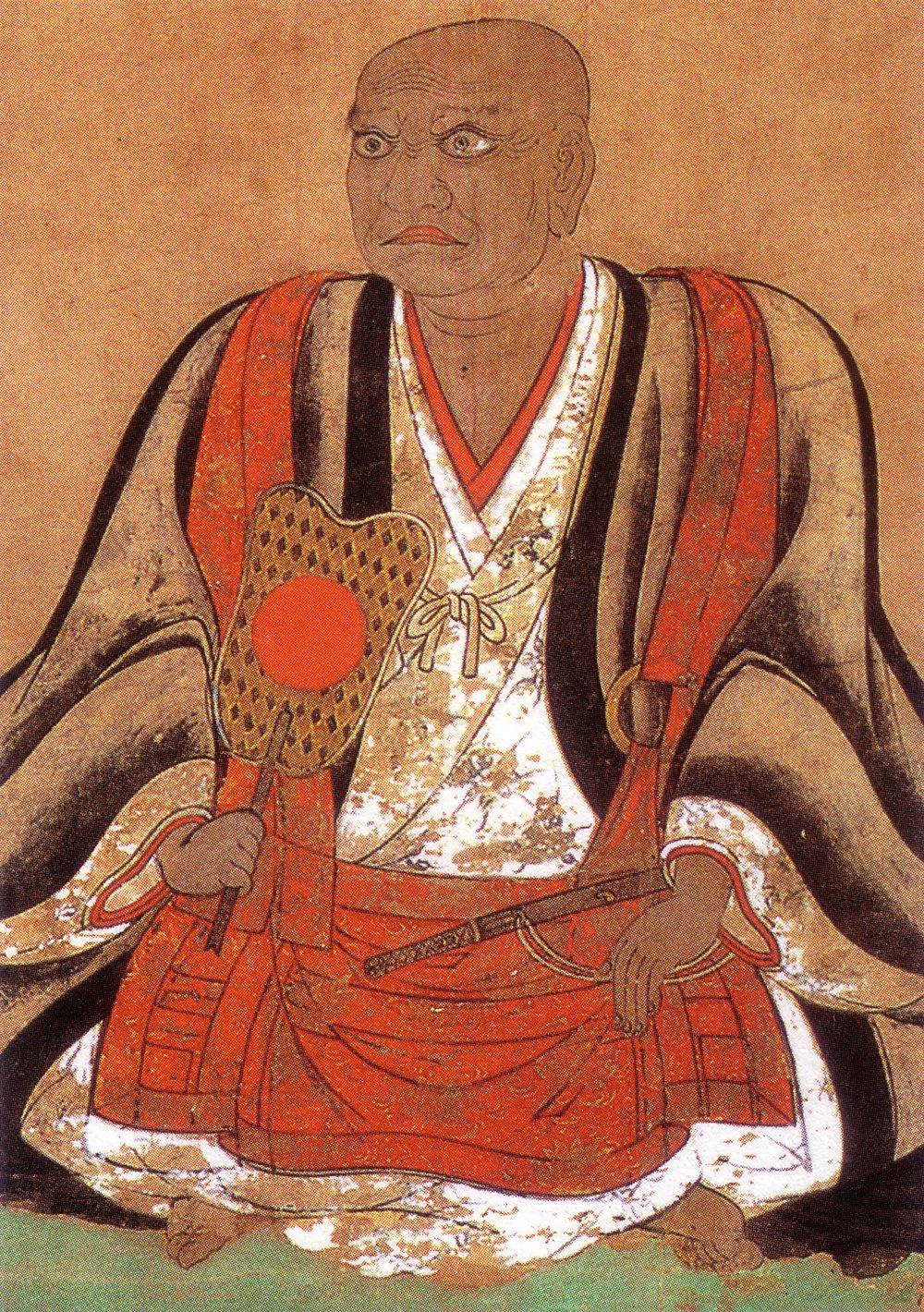
The Remonstrance of Tachibana Dōsetsu
How Ōtomo Power Unraveled After Mimikawa, and Dōsetsu's Letter of 1580
Mimikawa did not end the Ōtomo lordship at a stroke. The unraveling that followed was long and uneven, and it ran province by province, castle by castle, through the 1580s. Hyūga, which the Ōtomo had never secured, stayed with the Shimazu. Elsewhere, regional lords recalculated. Akizuki Tanezane in Chikuzen and Ryūzōji Takanobu in Hizen took Ōtomo lands, and Tsukushi Hirokado went over to the enemy. In Bungo itself, a rebellion by Tawara Chikatsura centered on Aki and Kurakake castles on the Kunisaki peninsula in 1579 and 1580, and Takita Jōtetsu also rose. Ōtomo commanders went on fighting for years in Chikuzen and Chikugo, which is why the losses are better described as a contraction than as a single collapse.
In the second month of Tenshō 8 (1580) Tachibana Dōsetsu wrote to 13 men holding territories in southern Bungo. His letter cited an indictment circulated by Akizuki, which charged that Bungo had gone over to an "Indian sect," destroyed temples and shrines, and burned or drowned the images of gods and buddhas. Dōsetsu did not object to private belief. He treated the desecration both as a cause of divine punishment and as a weapon for the house's enemies.
The attacks did not stop. Chikaie assaulted Usa Hachiman in 1581, Ōtomo forces attacked the mountain center at Hikosan that same year, Yoshimune ordered another attack on Usa in 1583, and temples of the Rokugōsan complex on Kunisaki were attacked in 1578 and again in 1585, with their yamabushi drafted for service. In Bungo, Kaizō-ji, the Yashima shrine and Manju-ji were among the institutions destroyed. The Jesuit tradition remembered Sōrin as the greatest pillar of the church in Japan and blamed the collapse on Tawara Chikakata, the Nata wife and Yoshimune. The Edo chronicles, such as the Ōtomoki, made him a self-indulgent ruler whose foreign religion, shrine burning and domestic scandal ruined an ancient house. Akutagawa Tatsuo, against both, explains the decline through the dynamics of a warring-states coalition that had depended on consensus and success.
Novices at Usuki, Boys for Rome
Sōrin's Patronage After Mimikawa: Valignano at Usuki and the Tenshō Embassy
Defeat did not end Sōrin's patronage of the mission. Alessandro Valignano, the Jesuit Visitor, spent the autumn and winter of 1580–81 in Bungo. Jesuit sources date to his visit the opening of a novitiate at Usuki and of a college at Funai, which taught Latin, the humanities, Japanese and moral theology. The same sources record that Sōrin added land and a church for the novitiate. At Usuki, Valignano's consultation with the missionaries overruled Cabral and adopted a policy of cultural accommodation. The Cerimoniale of 1581, which set Jesuit etiquette in Japan on the model of Zen monastic rank, was reportedly drawn up with Sōrin's advice.
Sōrin was one of the three Kyūshū lords in whose names the Tenshō embassy went to Europe, alongside Ōmura Sumitada and Arima Harunobu. According to the Jesuit accounts, his preferred envoy, his young kinsman Jerónimo Itō, was then at the Jesuit seminary at Azuchi, so the 12-year-old Itō Mancio went in his place, a relative from the Itō of Hyūga, the family whose flight to Bungo in 1578 had preceded the Hyūga campaign. The embassy sailed on 20 February 1582 and reached Rome in March 1585. The letter presented to Pope Gregory XIII in Sōrin's name regretted his long years in "the darkness of paganism" and pledged obedience. Its authorship is disputed: Kage Toshio has argued that the Jesuits prepared it themselves rather than transmitting a text written by Sōrin.
The Christian community in Bungo grew in these years, though the figures are missionary estimates, not counts, and they mix Bungo with the wider Ōtomo sphere. Before 1578 the Jesuits reckoned 2,000 to 2,500 Christians in Bungo. One estimate gives 6,000 for 1579. By 1586–87 Gaspar Coelho put the number at 30,000 or more. Pedro Gómez gave a figure as high as 60,000, but that total included the people of the Shiga family's fief, some 40,000, who were described as prepared for baptism, not as baptized. The 60,000 should not be read as a count of baptisms.
The Province-Breaker at Usuki
The Shimazu Invasion of Bungo in 1586 and the Siege of Usuki
The Shimazu invaded Bungo late in 1586 in two columns, one under Yoshihiro by way of Higo and one under Iehisa through Hyūga. Estimates of their strength run from about 30,000 to 35,000 men to roughly double that. Hideyoshi's first contingent in Bungo included troops under Chōsokabe Motochika and Sengoku Hidehisa, fighting alongside Yoshimune's men. On the 12th day of the 12th month of Tenshō 14 (20 January 1587), at the Hetsugi river, Sengoku forced a crossing against Chōsokabe's advice and was caught by another Shimazu feigned retreat. The allied force, reckoned at 6,000 to 7,000 against anywhere from 10,000 to 20,000 under Iehisa, lost between 1,000 and more than 2,300 dead, among them Chōsokabe Nobuchika and Sogō Masayasu. Yoshimune abandoned Funai and fled to Ryūō in Buzen. The Ōtomo capital burned on 21 and 22 January.
The Jesuits had already left. On 23 December 1586, 33 members of the Society, with sacred vessels, silver and books, escaped to Shimonoseki and Yamaguchi under the protection of Kuroda Yoshitaka; 13 remained hidden in Bungo. The hospital, the college, the novitiate and dozens of churches were looted. Christian refugees, Sōrin's wife Julia and his daughter Maxência among them, crowded into the castles of Nyūjima at Usuki and of Oka.
Sōrin held the island castle at Usuki while Iehisa occupied the town. Here the Ōtomo had a weapon remembered as the Kunikuzushi, "province-breaker" (国崩し). The accounts describe it as a bronze breech-loading gun with detachable chambers, the type known in Japan as furanki-hō. Beyond that they diverge. One account has two such guns reaching Takase in 1576 from Macau or Goa; others speak of a local copy by the gunsmith Watanabe Sōkaku. Reported calibers run from 58 to 97 millimeters. It is not certain that every European gun in the story was the same weapon or even the same type. During the siege, according to the accounts, the gunner Takemiya Musashi-no-kami loaded a Kunikuzushi with powder, ball and grapeshot and fired into the willow groves where Satsuma troops were sheltering, killing dozens and breaking the assault.
Relief came in the spring. Hidenaga led the eastern wing of Hideyoshi's army into Kyūshū in April 1587, and in the third month of Tenshō 15 (late April 1587) the Shimazu evacuated Bungo. Hidenaga beat them at Nejirozaka, relieving Takajō, scene of the Ōtomo disaster nine years earlier, and Shimazu Yoshihisa surrendered at Taiheiji on the eighth day of the fifth month (13 June). The Kyūshū campaign redrew the island. Hideyoshi offered Sōrin Hyūga, which he declined. Yoshimune kept Bungo alone, assessed at 378,000 koku.
The invasion left a further trace in Fróis's history, which reports that Bungo captives sold into Higo were carried on, in that famine year, to Takaku, where at Mie and Shimabara as many as 40 were offered together and women and children went for next to nothing. Hideyoshi's notice of July 1587 condemned the trade explicitly.
"Cruz, Cruz" at Tsukumi
The Death of Ōtomo Sōrin at Tsukumi in 1587, Weeks Before the Expulsion Edict
Sōrin died of illness at Tsukumi, at Akagawauchi on the Bungo coast, in his late fifties. Father Francisco Laguna was with him, and the Jesuit record gives his last words as "cruz, cruz!" He was buried as a Christian at Akagawauchi.
The date is reported differently. Most Japanese records, including the Ōtomo keizu and temple registers, give the 23rd day of the fifth month of Tenshō 15 (28 June 1587), and Fróis's Historia de Japam agrees, placing the death just after midnight on Sunday, 28 June. Fróis's annual letter for 1587, however, gives a date corresponding to the sixth day of the fifth month (11 June), and the Nihon seikyōshi gives the first day (6 June). On any of the dates, Sōrin died a few weeks before Hideyoshi issued his edict expelling the missionaries on the 19th day of the sixth month of Tenshō 15 (24 July 1587).
Yoshimune had been baptized Constantino in April 1587, at the urging of Kuroda Yoshitaka. After the edict he renounced the faith and pulled down churches. He also destroyed his father's Christian grave and reburied him with Zen rites, under the posthumous name Zuihōin-den Kyūan Sōrin; the accounts differ over the temple, naming either Daichi-ji in Funai or Taikyū-ji in Usuki. A Christian tomb has since been re-erected at Tsukumi.
Exile from Bungo
What Became of the Ōtomo: Yoshimune's Disgrace in Korea and the Loss of Bungo
Kanda Chisato concludes that Christianity never unified the Ōtomo domain and survived, at the end, only in the small world of Sōrin's retirement domain at Tsukumi. Kage Toshio emphasizes a different side of the man, describing a maritime statesman who worked through merchant-diplomats such as Shimai Sōshitsu and invested in towns and Inland Sea trade.
Yoshimune led 6,000 men in the third division of Hideyoshi's invasion of Korea in 1592. Early in 1593, when the Ming counteroffensive under Li Rusong broke Konishi Yukinaga's position at P'yŏngyang, Yoshimune abandoned his post, burned his stores and fled, leaving Konishi's retreat exposed. In May 1593 (Bunroku 2) Hideyoshi attainted him and confiscated Bungo, ending the Ōtomo rule that the family traced back to the 1190s. He was placed in the custody of the Mōri. In 1600 he returned to Bungo with Mōri backing on the side of the western army and was defeated at Ishigakibaru by Kuroda Yoshitaka. He was exiled to Hitachi and died there in 1605.
Sources & Further Reading
Akutagawa, Tatsuo (芥川竜男). "Sengoku daimyō e no keiki to shite no Nikai-kuzure no hen: Ōtomo Yoshishige (Sōrin) kenkyū oboegaki" (戦国大名への契機としての二階崩の変:大友義鎮(宗麟)研究覚書). Hōsei shigaku 7 (1955): 38–45. Reads the coup of 1550 as the moment the Ōtomo turned from a Muromachi governor's house into a warring-states power.
An, Jeong-Joo (安瀞珠). "Ōtomo Sōrin no sōshiki ni mirareru Iezusukai no 'tekiō' ni tsuite" (大友宗麟の葬式に見られるイエズス会の「適応」について). Hikaku shakai bunka kenkyū 18 (2005): 45–55. On Sōrin's Christian burial and the Buddhist funeral his son Yoshimune held afterward, with the competing records of the date of his death.
Elison, George. Deus Destroyed: The Image of Christianity in Early Modern Japan. Cambridge, MA: Harvard University Press, 1973. Elison cites Tachibana Dōsetsu's letter of 1580 among the Japanese reactions to Sōrin's conversion.
Hesselink, Reinier H. The Dream of Christian Nagasaki: World Trade and the Clash of Cultures, 1560–1640. Jefferson, NC: McFarland, 2016. Hesselink supplies the date of Sōrin's baptism, 28 August 1578, from the Fróis account he cites.
Kage, Toshio (鹿毛敏夫). Sekaishi no naka no Sengoku daimyō (世界史の中の戦国大名). Tokyo: Kōdansha, 2023. On Ōtomo diplomacy with the Ming and on the letters the Tenshō embassy carried in the names of the Kyūshū lords.
Kanda, Chisato (神田千里). "Ōtomo Sōrin no kaishū: sono jittai to haikei" (大友宗麟の改宗:その実態と背景). Tōyō Daigaku Bungakubu kiyō, Shigakuka-hen 40 (2014): 71–110. A close study of what prompted the baptisms of Julia and of Sōrin himself, and of how far Christianity reached inside the Ōtomo domain.
Mayo, Christopher Michael. Mobilizing Deities: Deus, Gods, Buddhas, and the Warrior Band in Sixteenth-Century Japan. PhD dissertation, Princeton University, 2013. On the Buddhist names Sōrin kept alongside his Christian seals and the layered religious identity they suggest.
Ruiz-de-Medina, Juan G., ed. Documentos del Japón, 1547–1557. Rome: Instituto Histórico de la Compañía de Jesús, 1990. The critical edition of the early mission documents establishes that Torres and Fernández were in Yamaguchi during the crisis of September 1551 when Xavier went to Bungo.
Strathern, Alan. "Immanent Power and Empirical Religiosity: Conversion of the Daimyo of Kyushu, 1560–1580." Japanese Journal of Religious Studies 47, no. 2 (2020): 247–278. On the conversions of the Kyūshū lords and the iconoclasm in Ōtomo lands, with the recipients and arguments of Dōsetsu's letter of 1580.
Ward, Haruko Nawata. Women Religious Leaders in Japan's Christian Century, 1549–1650. Farnham: Ashgate, 2009. Ward reads the conflict between the Nata wife's network and Julia's Christian household as a matter of gender and religious authority within the Ōtomo house.
Cite this page
Nanban.pt. “Dom Francisco of Bungo: The Life of Ōtomo Sōrin, 1530–1587.” Last modified 10 November 2026. https://nanban.pt/articles/otomo-sorin/.
@misc{nanban-otomo-sorin,
  author = {Nanban.pt},
  title = {Dom Francisco of Bungo: The Life of Ōtomo Sōrin, 1530–1587},
  year = {2026},
  url = "https://nanban.pt/articles/otomo-sorin/",
  note = {Last modified 2026-11-10}
}