The Man Who Stayed: Cosme de Torres and the Long Decade of the Japanese Mission
Successor to Francis Xavier and Superior of the Japan mission for 19 years, the Valencian priest Cosme de Torres ran the entire Jesuit operation through the chaos of the Sengoku period. Less famous than his predecessors and successors, he laid the foundations on which Japanese Christianity's apogee would be built.
Cosme de Torres was a Valencian Jesuit priest who succeeded Francis Xavier as Superior of the Japan mission and ran the entire Jesuit operation there for 19 years through the chaos of the Sengoku period. Less renowned than his predecessors and successors, he laid the foundations on which Japanese Christianity's apogee would be built.
Why Cosme de Torres Is the Forgotten Superior
The Gap in the Story
Francis Xavier spent 27 months in Japan. Alessandro Valignano made three brief visits, none longer than three years, and governed the mission from Goa and Macao. Luís Fróis wrote its history. Francisco Cabral ruined its morale. Gaspar Coelho ruined its politics. The men who loom largest in the usual telling of the Christian Century in Japan are, almost without exception, men who either arrived briefly to dazzle, wrote extensively to explain, or blundered catastrophically.
Between them, across decades when nothing was certain and nobody else was paying attention, a quiet Valencian priest with chronic rheumatism ran the entire operation.
Cosme de Torres became Superior of the Japan mission in November 1551, the day Xavier departed for India on what would turn out to be his last journey. He held the office until the summer of 1570 and died on 2 October, at the age of 60, on a small island off the Kyushu coast, exhausted past the point of medical recovery. 19 years. Longer than Xavier, Valignano, Cabral, Coelho, Pasio, or Gómez. When Torres died, the mission he handed over had not yet reached its peak, the seminaries, the printing press, the Tenshō Embassy, the 150,000 converts were all decades away, but the foundations on which every one of those things was built had been laid, tested under pressure, and laid again where they had failed.
Who Was Cosme de Torres?
Valencia to Kagoshima
Torres was born around 1510, probably in the city of Valencia, into circumstances so unremarkable that the documentary record largely gives up on him until he surfaces as a grammar teacher in his twenties. He was ordained a priest in 1535. By the following year he was on the island of Mallorca, teaching Latin and rhetoric at the modest university of Mons Rrendinus. This was not the career path of a man destined for sainthood. It was the career path of a provincial academic, methodical, bookish, mildly ambitious, who would probably have died quietly in the Balearics had the 16th century not been so deeply unreasonable.
In 1538, for reasons the sources never quite explain, he sailed for New Spain. He spent the next four years in Mexico City, functioning as a diocesan priest and teacher to the local Spanish and mestizo population, and then took ship for the further shore, across the Pacific, into the Spice Islands, the sprawling Portuguese-Castilian maritime frontier where a European priest with reasonable Latin could expect to be useful somewhere.
Somewhere, in the mid-1540s, he met Francis Xavier.
The encounter is one of those moments when a whole man's life hinges on a single conversation, and the sources, infuriatingly, do not record what was said. Xavier was in his late thirties then, already worn hard by the Indian mission, already carrying the evangelical charisma that would eventually turn his corpse into a tourist attraction in Goa. Torres, who was about the same age, had spent a decade in provincial teaching posts and colonial parishes. What Xavier offered him, in effect, was the chance to exchange a competent life for one that could make a difference. Torres accepted immediately. He sailed with Xavier to Goa, completed the Spiritual Exercises, joined the Society of Jesus formally in 1548, and spent a brief interlude teaching Latin grammar, again, at the Jesuit college before heading south to the tip of the subcontinent at Kanyakumari, where he worked among the Paravar Christians whom Xavier had baptized in the early 1540s.
When Xavier decided in 1549 to attempt the mission to Japan, he picked Torres as one of his two European companions. The other was a lay brother named Juan Fernández, a former silk merchant from Córdoba who would turn out to have an almost pathological gift for languages. Together with three Japanese converts, Anjirō, most famously, along with two of his household, and some Indian servants, they sailed from Malacca in June 1549 aboard a Chinese junk commanded by a pirate of uncertain temperament. On 15 August, the Feast of the Assumption, they came ashore at Kagoshima.
Everything that follows in the story of Christianity in Japan begins with the three Europeans walking up a beach in Satsuma with barely a word of the local language between them, and a Japanese convert to speak it for them.
The Yamaguchi Debates and the Dainichi Problem
Yamaguchi: The Debate That Changed Everything
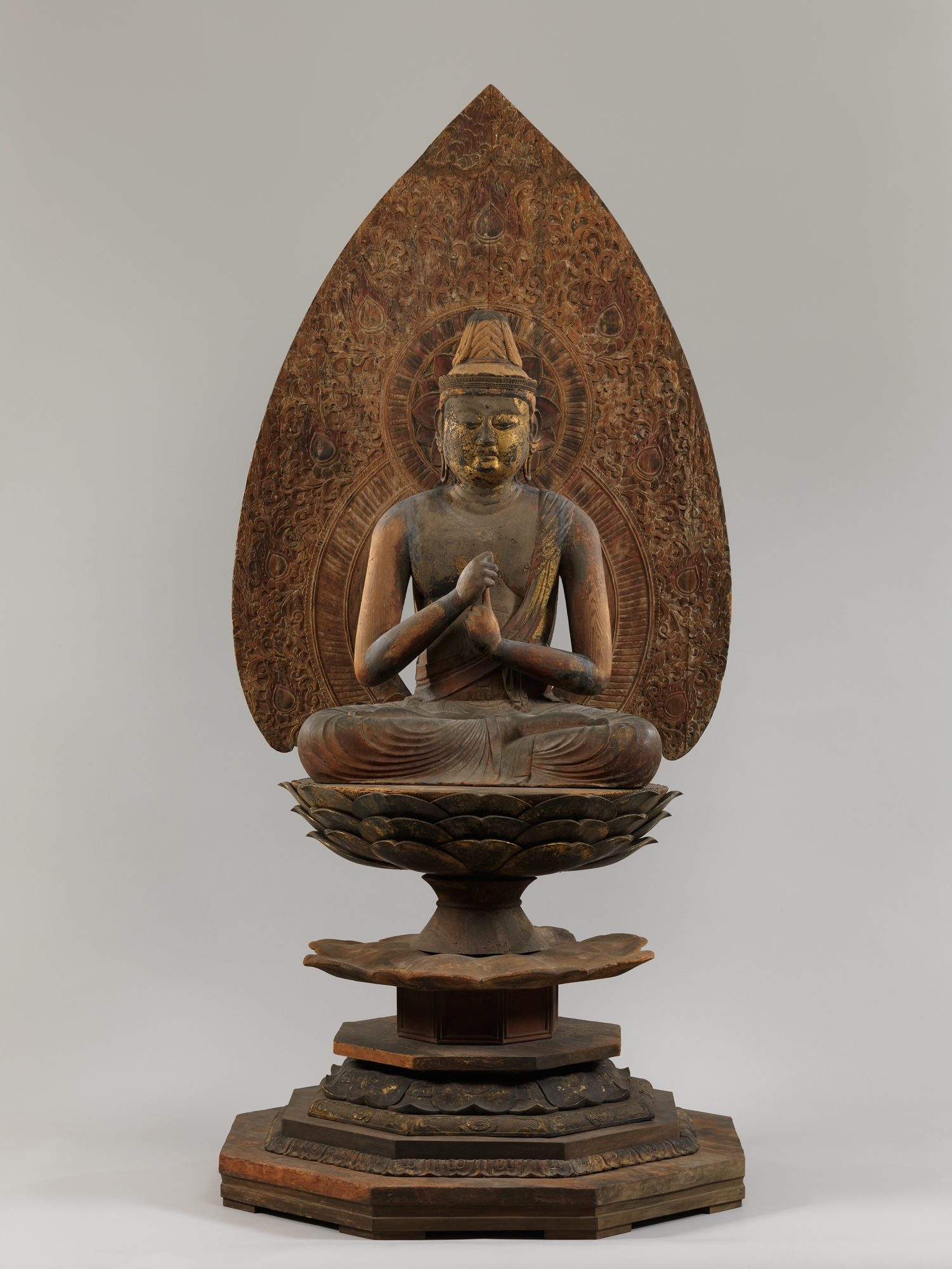
Xavier's own career in Japan is told in full in a dedicated article, and the famous episode of the Dainichi translation, the two-year theological farce in which Xavier unknowingly preached the worship of a Buddhist deity, sits at the center of that piece. What that story usually omits is what happened after the mistake was caught. Because when Xavier finally realized in 1551 that Dainichi was not the God of Abraham but the cosmic Buddha of the Shingon sect, it was Torres who had to pick up the theological pieces.
Xavier left Yamaguchi in September 1551 to return to Bungo and eventually to India. He put Torres in charge of the mission at Yamaguchi, the prosperous castle town of the Ōuchi clan, the single most promising Jesuit station in Japan, with one specific instruction: engage the local Buddhist monks in theological debate. Not to convert them, exactly. To understand them. Xavier had belatedly grasped that everything he thought he knew about Japanese religion had been filtered through Anjirō's well-meaning but uneducated guesswork, and that the foundation of the entire mission needed to be rebuilt on firmer ground.
The monks came in waves. Zen priests first, whose radical doctrines of non-being and cyclical reincarnation struck the Jesuits as the most alien and challenging of the Japanese schools. Then devotees of Amida Buddha from the Pure Land and True Pure Land sects. Then followers of Shaka, the historical Buddha himself, from the Hokke/Nichiren tradition. Then, most baffling of all to the Iberians, ordinary villagers who venerated the sun, the moon, mountain spirits and the spirits of dead relatives, and who saw no particular contradiction in doing so alongside one or another of the organized schools.
The debates ran from morning until late at night. Torres, drawing on his Valencian training in Aristotelian rhetoric, conducted them by a method that would have been familiar to any university master in Salamanca: Socratic question-and-answer designed to lead the interlocutor into contradictions of his own making. Fernández translated. Fernández also took notes, in a shorthand of his own devising, because Torres understood from the first week that they were not merely having conversations. They were compiling a map.
The Zen monks, in particular, floored him. They denied any permanent self. They denied any creator. They argued that what arises from nothing must return to nothing, that the only meaningful goal of human life was satori, the realization that all distinctions are illusory, and that anyone who had achieved it could therefore say, with perfect equanimity, that heaven and hell were equally fictitious. When Torres tried to invoke the existence of a benevolent omnipotent God, the monks pressed him with exactly the questions a Dominican schoolman would have recognized from a thousand European theology disputations: if God created everything good, who made Lucifer? If God is merciful, why do children die? If God is omnipotent, why does evil continue? Torres was being asked to answer the problem of evil by monks he had been warned were philosophical primitives. He came away convinced of exactly the opposite, that the Japanese, as he put it in a letter to Goa, were ‘governed by reason’ and would yield only to rational argument.
The immediate political consequences of the Yamaguchi disputes were catastrophic. The local daimyō, Ōuchi Yoshitaka, had welcomed the Jesuits partly out of curiosity and partly because the prospect of Portuguese trade was more alluring than the objections of his resident Buddhist clergy. But the humiliation of the monks in public debate stirred up a political backlash. In late September 1551, a coup led by one of Ōuchi's senior vassals overthrew him. Yoshitaka committed seppuku. The castle town was put to the torch. The little Christian community Torres and Fernández had spent five months building was scattered, and the small church they had been given on the grounds of a confiscated Buddhist temple burned to the ground. Torres's first major independent project as a missionary had been reduced, within months, to a corpse-strewn ruin.
What he salvaged from Yamaguchi was more important than what he lost. Fernández's notes, expanded, reordered, and annotated by Torres over the next four or five years, became a manual. Around 1556 it circulated among the Jesuits in Japan under the title Sumario de los errores en que los gentios del Japon viven. It was the first systematic European description of Japanese Buddhism, mapping the principal sects, their founders, their texts, their characteristic doctrines, and, crucially, the specific rhetorical points on which each one could be engaged. Every Jesuit who arrived in Japan for the next three decades trained on the Sumario. It shaped how they argued, what they argued about, and what they were prepared to concede.
The Sumario also enshrined, as official mission policy, two decisions that Torres had reached in the smoke of the Yamaguchi debates. The first was that Buddhist terminology could not be used to translate Christian concepts. Dainichi was dead; Deus was now Deusu. Around 50 other Latin and Portuguese words, Kurusu for crux, anima for soul, paraíso for heaven, entered Japanese Catholic vocabulary by straight transliteration, to be learned as loanwords rather than fudged through local equivalents. The second, more fateful decision was that Buddhism itself was not a rival philosophy to be respectfully engaged but, in Torres's formulation, ‘an invention of the Devil’ specifically designed to enslave Japanese souls. That judgment would dominate Jesuit writing about Japanese religion for the next century. Whether or not it was theologically defensible, it closed a door that no one in the Society would reopen until Matteo Ricci tried something similar with Confucianism in China, and was posthumously condemned for it.
The 15 Years Torres Led the Mission Alone
The Wandering Superior
The 15 years that followed Yamaguchi are the strangest period of Torres's life, because almost nothing about them resembles anyone's stereotype of a Jesuit Superior.
A Superior, in the Roman imagination, presided from a central house, read correspondence, issued instructions, administered finances, and rode occasionally into the provinces to inspect his men. Torres did none of these things, because he had no central house to preside from. The Ōuchi collapse forced him out of Yamaguchi. In 1557 the hostile Mōri clan took over the ruined city and he fled south to Bungo, where the great daimyō Ōtomo Yoshishige, later baptized as Dom Francisco, offered him the protection that made Bungo the de facto headquarters of the mission for most of the early 1560s. In 1562 the newly opened port of Yokoseura, on the Ōmura peninsula, became available under the patronage of Ōmura Sumitada, who would be baptized the following year. Torres hurried there, negotiating the establishment of a residence, a hospital, and a Christian cemetery in the space of a year. In 1563 Yokoseura was destroyed in an anti-Christian rebellion. He moved again, in 1564, to Kuchinotsu. There he stayed for four years. And then, in the late 1560s, he sent Luís de Almeida and Gaspar Vilela north along the coast to survey a deep-water inlet that looked promising for Portuguese shipping, attached to an obscure fishing village with a name that meant ‘Long Cape.’
Torres never saw what Nagasaki became. He directed the initial negotiations, recognized the harbor's strategic potential, and pushed hard for the village's development as a refuge for persecuted Christians. The first Portuguese Great Ship dropped anchor there in 1571, one year after his death.
These were not the movements of a man running a stable institution. They were the movements of a man running for his life on behalf of an institution that was reinventing itself every time a daimyō switched sides or a warlord captured a castle. Each relocation cost years of accumulated infrastructure. Each new patron had to be cultivated from scratch. Each transition risked the loss of the small Christian communities the Jesuits had left behind in the previous station. Torres managed them all. He built chapels and hospitals and catechist schools and watched them burn. He buried converts who had been killed by anti-Christian rebels and kept preaching. He begged Goa, by letter, for reinforcements that arrived too late and in insufficient numbers.
His administrative style, by the standards of the Roman curia, was peculiar. He had joined the Society in India rather than in Europe, and he had missed most of the formal Jesuit novitiate training that his successors would take for granted. He did not take his solemn vows until 1563, 12 years into his superiorate. He communicated with his subordinates through letters that read more like those of a worried father than those of a general commanding troops. Gaspar Vilela, who could be fractious, once observed that Torres acted ‘more the brother than the father,’ and suggested that future Superiors should cultivate the same quality of gentleness. His younger colleagues, when they later wrote about him, did not describe him as an administrator at all. They described him as a presence.
He was also, by the middle 1560s, visibly dying. When Luís Fróis arrived in Japan in 1563 and met Torres for the first time, the younger man wrote home that the Superior was ‘already very old, and tired,’ and noted with evident shock that Torres had been walking with crutches earlier that week. He was 53 years old. The 15 years of constant travel, poor food, and damp Kyushu winters had wrecked his body. His lungs, his joints, and by all accounts his heart were all giving way at once. He insisted, in a detail that his subordinates reported with a mixture of horror and awe, on celebrating Mass even on days when he could not stand, propping himself against the altar stone and whispering the Canon in a voice that the acolytes had to lean in to hear.
Torres and Accommodation Before Valignano
Living Like a Japanese
What Torres did in those 15 wandering years, almost by accident and long before anyone had a formal name for it, was invent the policy of cultural accommodation that Valignano would later systematize into official Jesuit doctrine and that Cabral would nearly destroy.
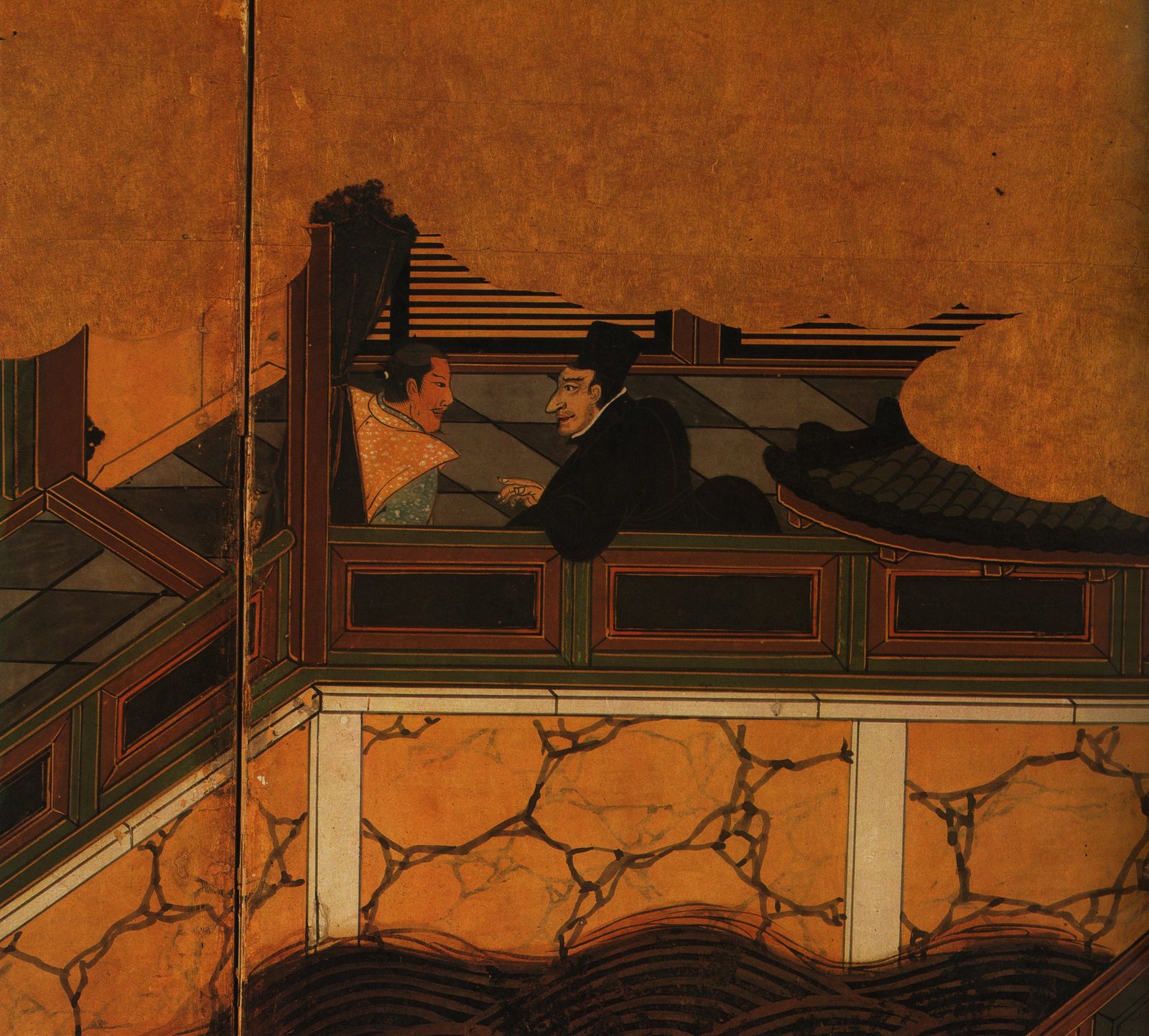
The modern missiological term is inculturation. In the 16th century it had no name. Torres, who had no theory of it, simply did what seemed sensible. He adopted a Japanese kimono and wore nothing else for the remainder of his life. He refused to eat meat, not on any Lenten grounds but because his converts did not eat it and he saw no reason to make a public display of foreign appetites. He learned to sit on tatami mats. He ate with chopsticks. He insisted on the frequent bathing that Japanese custom demanded and that his European colleagues found alarming. He conducted catechism classes for children in the morning and evening, with 40 or 50 boys at a time, teaching them Latin prayers in the Japanese pronunciation that would eventually produce the curious liturgy of the hidden Christians, the Ave Maria rendered as ame maria, the Lord's Prayer stretched into recognizable syllables but drifting by slow corruption into the Buddhist sutra cadence that centuries of concealment would impress upon it.
The distance between this and Cabral, who would succeed him as Superior in 1570 and who would refuse to speak Japanese, refuse to admit Japanese men to the priesthood, and refuse to eat anything not prepared in the European manner, can hardly be overstated. The mission that Cabral would briefly run, and that Valignano would spend the 1580s struggling to repair, was only possible because Torres had spent the 1550s and 1560s quietly establishing the opposite proposition: that European priests could live on rice, sit on the floor, bathe daily, wear the local dress, and still be the instruments of an apostolic faith.
He also, and this is one of the elements of his career that the standard accounts consistently omit, built the Society's first institutional apparatus for dealing with the Portuguese slave trade. By the early 1560s, merchants sailing out of Kyushu had been buying Japanese and Chinese captives in volumes sufficient to alarm the Jesuits on moral and pastoral grounds. Torres responded, with the legalistic instinct of an ex-grammar teacher, by instituting a licensing system: Portuguese merchants who wanted to purchase servants in Jesuit-patronized ports would need to apply for a document from the mission, certifying that the transaction had been examined for coercion and that the purchaser had committed to providing Christian instruction and humane treatment. It was an imperfect instrument. Merchants regularly cheated it. Valignano later tightened it; Bishop Cerqueira's council of 1598 abolished it outright. But Torres's licenses were the Society's earliest formal attempt to regulate the traffic, and the paperwork that let it run under clerical signature for the next 40 years; they circulated out of Kuchinotsu for most of the decade before his death.
His relationships with his converts were, by all accounts, extraordinary. The Japanese Christians of Kyushu adored him. When he finally died, converts from as far away as Yamaguchi and Bungo traveled to Amakusa to attend the funeral. Mourners cut off locks of his hair and carried them home as relics. Pieces of his kimono were preserved in village chapels. Gaspar Vilela, who was not an easy man to impress, wrote that Torres had wept in private on more than one occasion over the state of the mission, saying, as Vilela remembered it, that there was ‘nobody who would help Japan, nor take pity on it.’ The phrase is characteristic. Torres did not weep for himself. He wept because the thing he loved was too large for the men who had been sent to build it, and he knew it.
Torres’ Last Years and Death at Shiki
Shiki
By 1568 Torres was no longer physically capable of running the mission. He wrote to Goa repeatedly asking for a successor. Valignano was still years away from his first Visit; the temporary authority for the appointment rested with the Provincial in India. After long delays the choice fell on Francisco Cabral, a Portuguese nobleman and former soldier who arrived in Japan in the summer of 1570 and who, as the Azuchi Debate article describes in detail, would prove one of the most disastrous appointments in the history of the Society of Jesus. Torres formally handed over the office to him that summer and retreated to the island of Shiki, on the Amakusa archipelago, a Christian community under the protection of the Shiki clan, whose hilltop chapel had been one of the small successes of the 1560s.
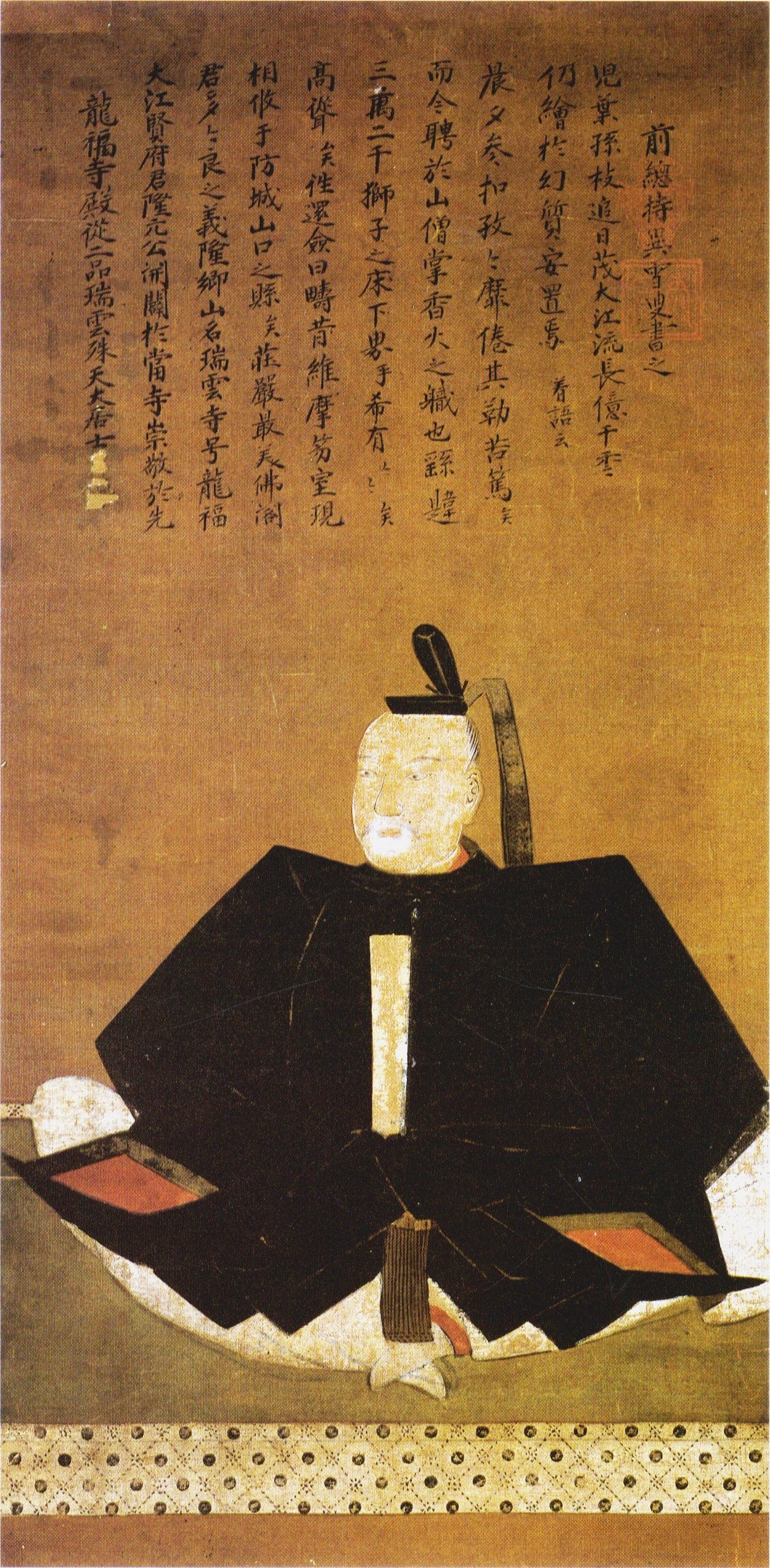
He died there on 2 October 1570. He was 60 years old. Gaspar Vilela preached the funeral oration. The Japanese converts who had traveled to attend the Mass wept openly, in the overflowing way Japanese mourning permitted, and refused to leave the burial ground for days. There is no contemporary portrait of Torres. There is no tomb that can be positively identified today. The hilltop on which his chapel stood has long since been built over.
The mission he left behind, at the moment of his death, counted roughly 30,000 converts and some dozens of functioning churches across Kyushu, Yamaguchi, and the Kinai. By the standards of what the Society would achieve in the next 15 years under Valignano, the numbers were modest. By the standards of what Torres had actually had to work with, a European staff that at its best counted six priests, a handful of Japanese dōjuku catechists, a half-dozen wavering Christian daimyō, and a physical constitution that had been falling apart since 1560, they were miraculous.
What Cosme de Torres Left the Mission
What He Left
There is a pattern in the history of the Japan mission that becomes clearer the longer one stares at it. The men who made the most noise, Xavier's sanctity, Valignano's pageantry, Coelho's arrogance, Cabral's bigotry, all operated in relatively short bursts and left behind institutions that other people had to either salvage or repair. The men who kept the machine running across the long, boring, dangerous middle were almost always less famous and almost always less fashionable in their own time. Torres is the purest example. He did not write a great book. He did not found a seminary. He did not baptize a king or preach in the shōgun's court. He simply showed up every morning for 19 years, in ports that kept burning down and under patrons who kept dying on him, and celebrated Mass against an altar he could no longer stand upright to approach.
The philosophical case for his importance is, in the end, a negative one. Without Torres's Sumario, Cabral and his successors would have been flying blind in their Buddhist polemics through the 1570s and 1580s, and the entire doctrinal framework of Japanese Catholicism, the Deus/Kurusu loanword system, the clean break from Shingon terminology, the characteristically Jesuit argumentation against Zen metaphysics, would have had to be improvised under far worse conditions. Without Torres's cultural practice, Valignano's accommodation policy would have arrived as a genuinely novel imposition on a European community that had spent 20 years doing the opposite, rather than as a formal codification of habits that most of the veteran missionaries had already adopted. Without Torres's patient relationships with the Christian daimyō of Kyushu, Ōmura, Ōtomo, the Arima, the political foundation on which the mission's apogee would be built would simply not have existed.
He was, in the end, the priest the Japanese Christians kept a lock of hair from. That tells you everything that the institutional history doesn't.
Sources & Further Reading
Boxer, Charles Ralph. The Christian Century in Japan, 1549–1650. Berkeley: University of California Press, 1951. The foundational English-language survey of the period, with scattered but essential treatment of Torres's superiorate as the hinge between Xavier and Cabral.
Schurhammer, Georg, SJ. Francis Xavier: His Life, His Times. Volume IV: Japan and China, 1549–1552. Translated by M. Joseph Costelloe. Rome: Jesuit Historical Institute, 1982. The indispensable documentary reconstruction of Xavier's Japanese mission, with extensive material on Torres's early years, the voyage from Malacca, and the initial Kagoshima-Yamaguchi arc.
Ruiz-de-Medina, Juan, SJ. Documentos del Japón, 1547–1557 and 1558–1562. 2 vols. Rome: Instituto Histórico de la Compañía de Jesús, 1990 and 1995. The authoritative critical edition of the primary Jesuit correspondence from Torres's superiorate, including the letters to Goa, his circulars to the European missionaries, and the documentary core of the Sumario de los errores.
Moran, J. F. The Japanese and the Jesuits: Alessandro Valignano in Sixteenth-Century Japan. London: Routledge, 1993. Although centered on Valignano, Moran's study provides the clearest analysis of how Torres's improvised adaptationism was inherited, codified, and contested within the Society.
Elison, George. Deus Destroyed: The Image of Christianity in Early Modern Japan. Cambridge, MA: Harvard University Press, 1973. Elison's opening chapters offer the most searching English-language analysis of the intellectual consequences of the Yamaguchi disputes, including the afterlife of Torres's characterization of Buddhism as diabolic.
Fróis, Luís, SJ. Historia de Japam. 5 vols. Edited by José Wicki, SJ. Lisbon: Biblioteca Nacional, 1976–1984. Fróis's great chronicle contains extended and affectionate portraits of Torres, including the memorable first meeting of 1563 and the funeral at Shiki in 1570.
Schütte, Josef Franz, SJ. Valignano's Mission Principles for Japan. 2 vols. Translated by John J. Coyne. St. Louis: Institute of Jesuit Sources, 1980–1985. Contains the most detailed institutional reconstruction of the Japan mission across its first fifty years, with Torres's superiorate treated at length.
Higashibaba, Ikuo. Christianity in Early Modern Japan: Kirishitan Belief and Practice. Leiden: Brill, 2001. Essential for understanding how Torres's choices about terminology, Deus, Kurusu, anima, shaped Japanese Christian practice over the long term, including among the kakure kirishitan who preserved the vocabulary in modified form through two centuries of persecution.
Ross, Andrew C. A Vision Betrayed: The Jesuits in Japan and China, 1542–1742. Edinburgh: Edinburgh University Press, 1994. Ross's comparative study places Torres in the lineage of Jesuit missionary strategists whose cultural adaptation would later be vindicated by Ricci in China and largely abandoned in Japan after 1614.
Oliveira e Costa, João Paulo. O Cristianismo no Japão e o Episcopado de D. Luís Cerqueira. PhD thesis (unpublished, 2 vols.), Universidade Nova de Lisboa, 1998. Useful Portuguese-language context for the longer arc of the Japan mission, with attention to Torres's institutional legacy as inherited by his successors.
Recent scholarship
- Zampol D'Ortia, Linda (2024). “A Failing Mission? Salvation in the Jesuit Mission in Japan Under Francisco Cabral”, Edizioni Ca' Foscari, Ca' Foscari Japanese Studies 23, 184 pp. — The best study yet of the mission's most reviled superior: Zampol D'Ortia reads Cabral through Jesuit salvation theology rather than caricature, and this open-access monograph turns a stock villain into the key to understanding why Valignano's accommodation policy was needed at all.
Cite this page
Nanban.pt. “The Man Who Stayed: Cosme de Torres and the Long Decade of the Japanese Mission.” Last modified 28 September 2026. https://nanban.pt/articles/cosme-de-torres/.
@misc{nanban-cosme-de-torres,
  author = {Nanban.pt},
  title = {The Man Who Stayed: Cosme de Torres and the Long Decade of the Japanese Mission},
  year = {2026},
  url = "https://nanban.pt/articles/cosme-de-torres/",
  note = {Last modified 2026-09-28}
}