The Reckoning at Nagasaki: The 1598 Jesuit Council on the Slave Trade
On a September morning in 1598, the most senior Jesuits in Japan gathered in a room in Nagasaki to answer a question their institution had spent 50 years explaining away: were they complicit in a crime against humanity?
The Reckoning at Nagasaki was a council held in September 1598 at which the most senior Jesuits in Japan confronted whether their order was complicit in the Portuguese slave trade, a question it had explained away for 50 years. Meeting in one Nagasaki room, the council issued three resolutions and began the trade's slow collapse.
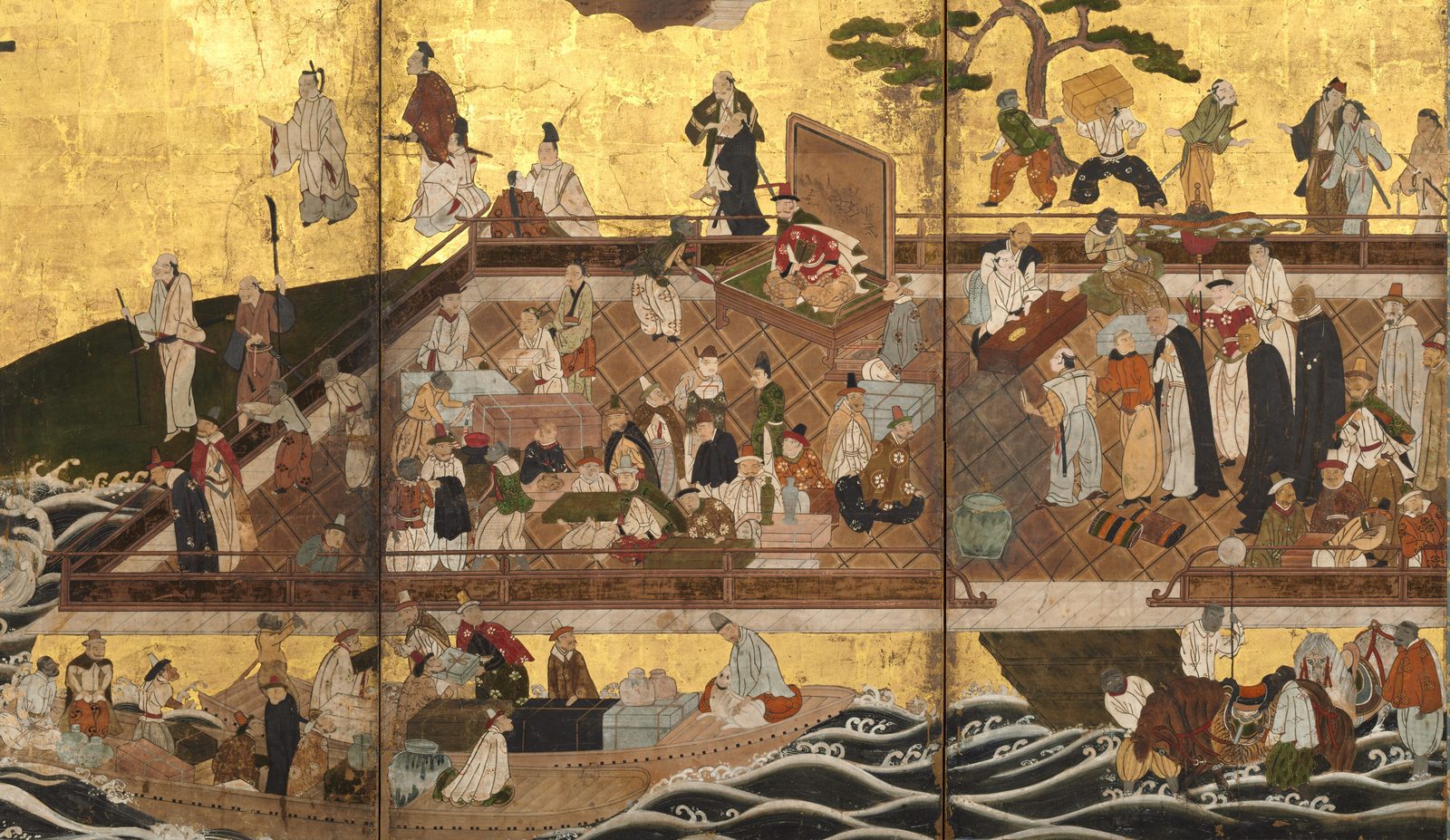
The man who forced the question into the open had been in Japan for barely two years.
Dom Luís de Cerqueira, Bishop of Japan, arrived in Nagasaki carrying a new episcopal seal, a doctorate in theology, and the kind of moral clarity that comes from seeing a problem for the first time. The Jesuits who had been living in Japan for decades had developed elaborate mechanisms for not seeing it, theological arguments, legal fictions, bureaucratic workarounds, and the slow anesthesia of familiarity. Cerqueira had none of these defenses. He stepped off the ship, looked around the harbor, and saw what was happening on the docks.
What was happening on the docks was a slave market.
Portuguese merchants were loading human beings onto the annual carrack bound for Macau, the massive nau do trato whose silk-for-silver commerce was the economic engine of the entire Nanban encounter. But the ship carried more than silk and silver. In its holds, chained and stacked in conditions that one Jesuit observer described as worse than the punishments of hell, were hundreds of Japanese and Korean men, women, and children, purchased from local brokers and bound for sale across the Portuguese empire. Some would end up as domestic servants in Macau. Others would be shipped to Goa, where they would be sold on Direita Street alongside captives from Africa and India. A few would travel all the way to Lisbon, or across the Pacific to Manila and from there to Mexico, joining a global diaspora of human cargo that stretched from the fishing villages of Kyūshū to the silver mines of Potosí.
The mechanics and geography of this trade, its origins, its routes, its staggering human cost, are the subject of a dedicated article elsewhere on this site. What concerns us here is a single day in September 1598 when the Church in Japan was finally compelled to look at what it had done, and decide what it was going to do about it.
The trade had been growing for half a century, but the 1590s had seen it reach an entirely new order of magnitude. In the early decades, by one modern estimate, the annual Portuguese vessels had carried perhaps 200 to 400 enslaved people out of Japan. By the 1580s, as the Portuguese transitioned to the massive carracks of up to 2,000 tons burden, the numbers had surged: a single voyage of the official Macau ship could carry more than 1,000. And these were only the captives aboard the official ship. A vast shadow market of unregistered captives moved alongside the official trade, smuggled aboard Chinese junks, small coastal traders, and private vessels that slipped in and out of Kyūshū’s innumerable harbors without any ecclesiastical oversight at all. The true number of people extracted from Japan during the Nanban period will never be known. The best estimates run into the tens of thousands.
The Bishop’s Predecessor
Bishop Martins and the Weapon of Excommunication
To understand what happened in that room, you have to understand what had happened to the man who should have been in it.
Bishop Pedro Martins had arrived in Japan in 1596, and unlike most of the Jesuits who had preceded him, he was not a man inclined toward theological gymnastics. Where his colleagues had spent years developing sophisticated arguments about whether the enslavement of Japanese captives could be considered “just” under canon law, arguments about prisoners taken in legitimate wars, about voluntary indenture, about the spiritual benefits of servitude under a Christian master, Martins had looked at the slave ships in Nagasaki harbor and concluded that what he was witnessing was evil.
He was not wrong. The elaborate legal framework that Portuguese merchants and their Jesuit intermediaries had constructed to legitimize the trade bore almost no relationship to the reality on the ground. The theoretical basis for “just enslavement” required that captives had been taken in a war recognized as legitimate by both parties, that non-combatants had been spared, and that the captives’ own rulers had consented to their sale. In practice, professional slave hunters called hitokadoi ranged across the war-torn provinces of Kyūshū purchasing people from anyone willing to sell them, warlords offloading prisoners from battles whose “justice” no European was in any position to evaluate, desperate parents selling children to feed surviving family members, and outright kidnappers who snatched villagers from their homes and drove them to the coast in chains.
The Jesuits knew this. The evidence was not subtle. It arrived at the harbor, in manacles, on a regular schedule.
Martins responded with the most severe weapon in his episcopal arsenal. He issued a blanket excommunication: anyone who bought, sold, or transported Japanese or Korean slaves was immediately and automatically cut off from the sacraments of the Catholic Church. No confession, no communion, no absolution, no last rites. In a community where eternal salvation was not a metaphor but a literal expectation, this was devastating. For a Portuguese merchant who planned to spend the next six months at sea, a voyage on which death from disease, shipwreck, or piracy was a statistical likelihood, the threat of dying outside a state of grace was not an abstraction. It was a terror.
The excommunication worked. The slave trade, at least in its most brazen forms, contracted sharply.
And then, in February 1598, Bishop Martins died.
Under canon law, the excommunication died with him. An episcopal decree derived its authority from the living bishop who issued it. When that bishop ceased to be alive, the decree ceased to be binding. The merchants of Nagasaki understood this principle with an immediacy that suggested they had been waiting for exactly this moment. Within weeks of Martins’s death, the slave ships were loading again.
A Flood from Korea
Why 1598: The Flood of Captives from Korea
The timing was catastrophic, because the supply of human beings available for purchase in the summer of 1598 was larger than it had ever been.
Toyotomi Hideyoshi’s invasions of Korea, the first in 1592, the second in 1597, had produced a humanitarian disaster of extraordinary proportions. Japanese armies had swept across the Korean peninsula, and in their wake came the slave traders. An estimated 20,000 to 30,000 Korean men, women, and children had been captured and shipped back to Japan. Some estimates place the figure as high as 50,000 or 60,000. They arrived in Kyūshū in chains, and they flooded the slave markets of the island so completely that the price of a human being collapsed.
The economics were brutal in their simplicity. When the supply of any commodity rises sharply and suddenly, the price falls. Korean captives were available so cheaply that Portuguese merchants could buy them in bulk, pack them into the holds of their ships with no regard for space, ventilation, or basic survival, and still turn a handsome profit in Macau. The Jesuit Antonio López, writing from Nagasaki in 1594, had reported with undisguised horror that in 1588, even before the invasions, a single Portuguese carrack had carried over 1,000 Japanese slaves on a single voyage. The captives were loaded, as the 1598 council’s own record put it, “on top of one another”. The mortality rate during the crossing was appalling. The merchants factored it into their margins and kept buying.
The Korean slave trade is explored in greater detail in the article on Hideyoshi’s invasion of Korea. What matters for the story of the 1598 council is the scale of the crisis that confronted Bishop Cerqueira when he took up his post. He was not inheriting a manageable problem. He was inheriting a catastrophe that was accelerating.
The Room
The Council of 4 September 1598 at Nagasaki
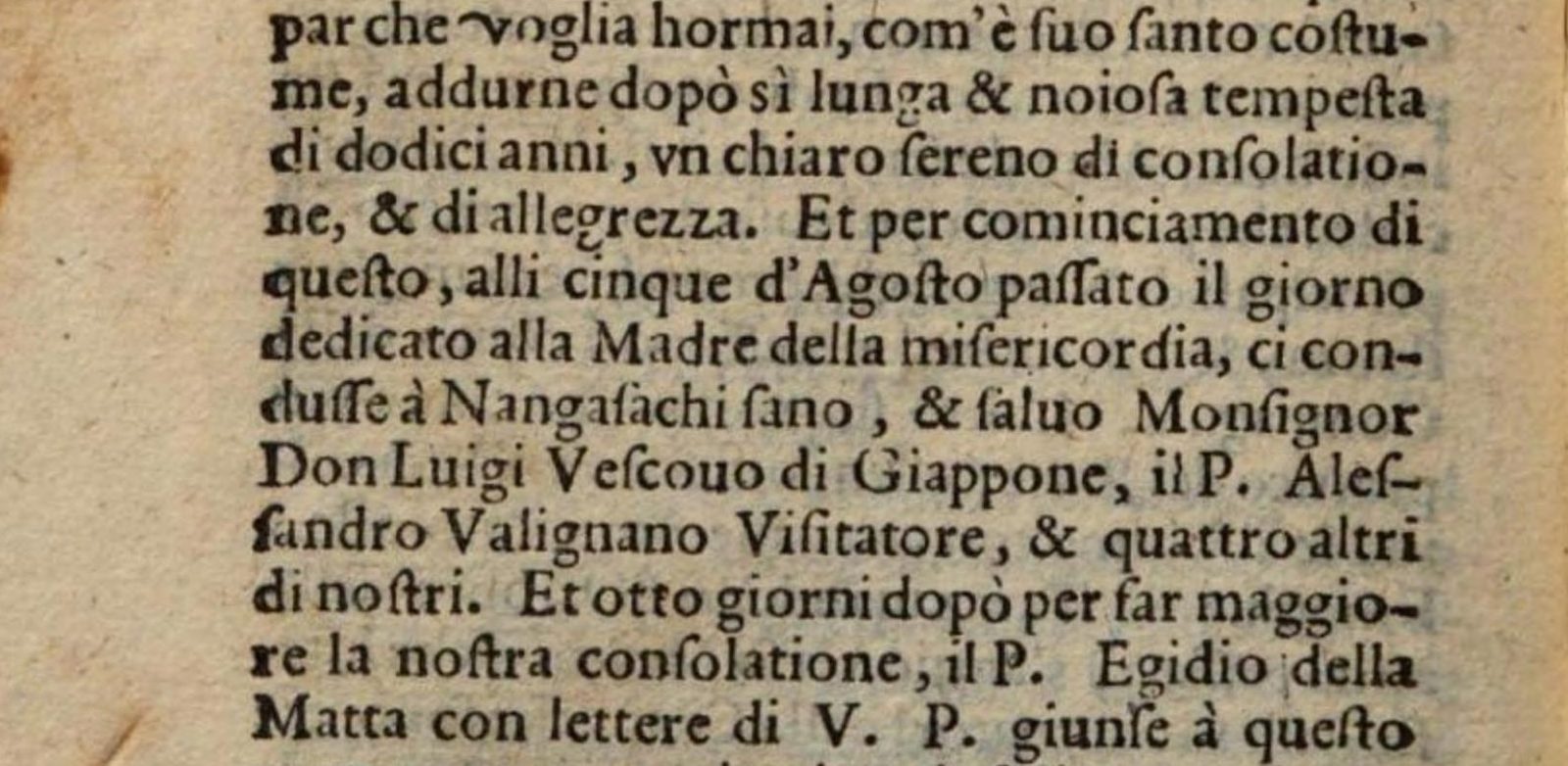
On September 4, 1598, Bishop Cerqueira convened a formal ecclesiastical assembly at the Jesuit headquarters in Nagasaki. The proceedings, recorded by the notary Mateus de Couros, bear no title of their own; one modern study calls them the “First Inquiry on the freedom of the Japanese and Koreans by the bishop and prosecutors of Japan, celebrated in September 1598 in Nagasaki”. The document that resulted from this meeting survives today as the single most important Western primary source on servitude in Japan and the Portuguese slave trade in East Asia.
Cerqueira had chosen his audience with care. He had gathered, as the minutes record, the Jesuits with “so much experience of Japan”, which is to say, the men who had been in the country longest, who understood the trade most intimately, and who could least plausibly claim ignorance of what was happening.
The roster was a roll call of the Jesuit hierarchy in Asia. Alessandro Valignano was there, the Visitor of the East Indies, the single most powerful Jesuit official between Rome and the Pacific, the man who had spent three decades reshaping the entire missionary enterprise in Asia. His career, his reforms, and his extraordinary personality are the subject of a dedicated biography on this site. Pedro Gómez, the Vice-Provincial of the Japan mission, attended. So did Francesco Pasio, Diogo de Mesquita, Organtino Gnecchi-Soldo, the beloved Italian who had served in Japan since the 1570s and was one of the few Europeans whom Japanese Christians genuinely revered, and eight other senior fathers whose combined experience in the field stretched back nearly to the founding of the mission itself.
These were not junior missionaries who could claim they did not understand the system. These were the architects and administrators of the Jesuit enterprise in Japan. Several of them had personally issued the ballots, the permits or licenses by which the Jesuits had evaluated individual slaves and certified their purchase as theologically legitimate. The ballot system had been the Church’s primary mechanism of complicity: a laundering operation that transformed morally dubious enslavement into something that looked, on paper, like a voluntary labor arrangement approved by clerical authority. A merchant who arrived at the harbor with a Jesuit-issued ballot could present it to the ship’s captain as proof that the slave in question had been examined and found to be legitimately held. The ballot was a sacramental stamp on a bill of sale.
The men in the room had inherited that stamp. Some of them had been pressing it for years. Cerqueira wanted every one of these men present when the question was asked.
The Testimony
What the Jesuits Testified About the Slave Trade
The council was structured as a formal ecclesiastical inquiry, and the proceedings followed accordingly. The assembled Jesuits were asked to give their opinions, before their bishop, about the conditions of the slave trade as they had personally witnessed them.
The testimonies confirmed what everyone in the room already knew, stated now formally and for the record: the vast majority of slaves sold to Portuguese merchants in Nagasaki had not been taken in anything resembling a “just war”. They had been kidnapped. They had been deceived. They had been purchased from warlords and bandits who had no legitimate authority to sell them. They had been acquired through the systematic exploitation of a country torn apart by civil war and foreign invasion. The legal fictions that had sustained the trade, that captives were prisoners of legitimate conflict, that parents had sold their children voluntarily, that the enslaved were better off under Christian masters than under their original circumstances, collapsed under the weight of direct testimony from the men who had been issuing the permits.
There was a particular theological embarrassment that Cerqueira pressed hard. The slave trade was not merely a sin in the abstract. It was actively undermining the Jesuit mission. Educated Christians in China, India, and Europe knew about the trade, and they were disgusted by it. In Goa, where enslaved Japanese were sold alongside Africans and Indians on the same streets where Jesuit missionaries preached the Gospel, the contradiction was visible to anyone who cared to look. In Macau, where Japanese and Korean captives worked the docks, served in households, and, in cases that the Jesuits found especially unbearable, were sold into brothels, the spectacle of the Church certifying the sale of human beings while simultaneously claiming to represent a God of universal love had become a source of open mockery among the Chinese population. Educated converts asked pointed questions. Non-Christians drew obvious conclusions. The trade was not just a moral failure. It was a public relations catastrophe that was poisoning the evangelical project across an entire hemisphere.
Cerqueira deployed a theological principle that cut through decades of casuistic evasion: non sunt facienda mala, ut veniant bona, evil must not be done so that good may come of it. The argument that enslaving Japanese and Koreans was acceptable because it brought them into contact with Christianity, or because it was preferable to whatever fate awaited them in a war zone, or because it funded a mission that saved other souls, was simply inadmissible. The Pauline principle did not allow for a moral cost-benefit analysis. The act was wrong. No amount of downstream benefit could make it right.
Three Resolutions
The Three Resolutions the Council Passed
The decision was unanimous. After hearing the testimonies, Bishop Cerqueira and the assembled fathers agreed on three decisive measures to suppress the trade.
The first was the weapon that Martins had wielded and that death had taken from his hand: the excommunication. The council resolved that any person who bought, sold, or transported Japanese or Korean captives out of Japan would incur automatic excommunication. This was not a threat that required episcopal judgment on a case-by-case basis. It was a latae sententiae penalty, incurred automatically by the act itself, without the need for a trial or a declaration. The moment a merchant handed over money for a human being, he was cut off from God.
The second resolution was more radical, and it struck directly at the institutional machinery of Jesuit complicity. Cerqueira abolished the ballot system entirely. No missionary, no priest, no ecclesiastical official in Japan was permitted, under any circumstances, to evaluate the legality of a slave’s captivity or to issue a permit authorizing the purchase. The system of licenses that had provided the trade with its veneer of theological respectability was dismantled in a single sitting. The Jesuits would no longer serve as intermediaries. They would no longer provide the paperwork that allowed merchants to tell themselves, and their confessors, that what they were doing was legal.
This was the resolution that mattered most. The excommunication was a stick. The abolition of the ballot system was a structural reform. It removed the Church from the supply chain of human trafficking, not by punishing individual transactions, but by destroying the institutional mechanism that had made those transactions possible.
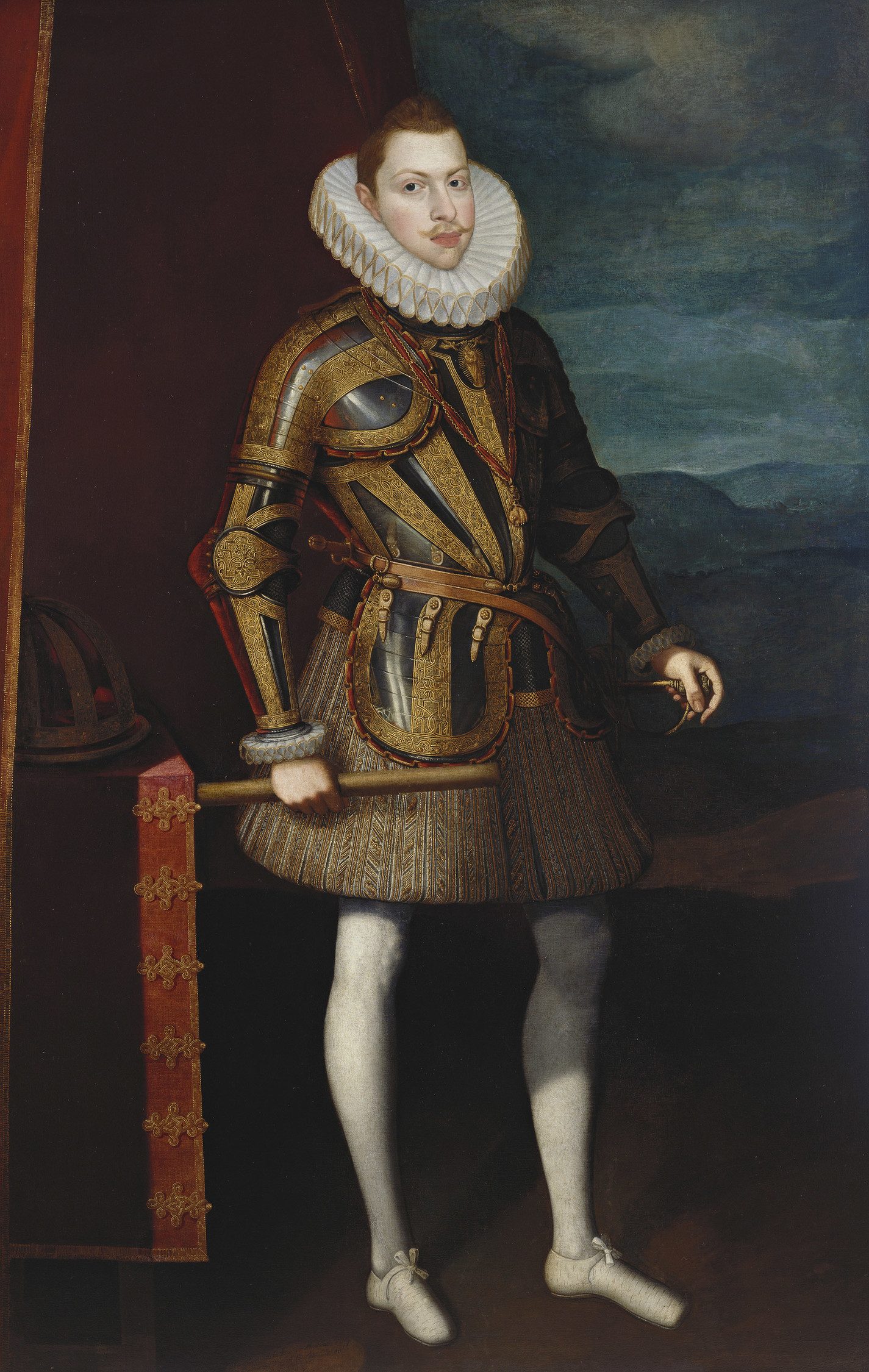
The third resolution acknowledged the limits of spiritual authority. The council recognized that ecclesiastical censures alone might not be sufficient to stop men driven by profit. They therefore resolved to compile the findings of their assembly and send them directly to King Philip, who, through the Iberian Union of 1580, ruled both Spain and Portugal simultaneously, urging the monarch to enforce a law passed in 1570 by the late King Sebastião of Portugal, which had explicitly banned the enslavement of Japanese subjects. The 1570 law had been on the books for nearly 30 years. It had never been meaningfully enforced. The council was asking the secular arm of justice to do what the spiritual arm could not: physically stop the ships.
The Weight of Valignano
Why Valignano’s Agreement Mattered
The presence of Alessandro Valignano at the council deserves particular attention, because his agreement to the resolutions was not a foregone conclusion.
Valignano had spent his entire career navigating the treacherous intersection of Jesuit evangelism and Portuguese commerce. He understood, better than perhaps anyone alive, that the Japan mission depended on the goodwill of the Portuguese merchants who carried the Jesuits on their ships, funded the mission through donations and trade profits, and maintained the fragile logistical chain that connected Nagasaki to Macau to Goa to Rome. The nau do trato was not just a trading vessel. It was the Jesuits’ lifeline. Alienating the merchant class that controlled it was an existential risk.
And yet Valignano signed the resolutions. He agreed to excommunicate the merchants, to strip the Jesuits of their intermediary role, and to appeal over the merchants’ heads to the King. This was not a man given to reckless gestures; his entire career had been defined by pragmatic calculation, by the art of achieving long-term goals through strategic compromise. When Valignano agreed that the trade had to stop, it meant that the moral and strategic calculus had finally tipped. The slave trade had become a greater threat to the mission than the merchants’ displeasure.
Part of this was theological conviction. Part of it was strategic realism. The Japanese authorities, first Hideyoshi, and soon the Tokugawa, were watching the Portuguese slavers with mounting fury. Every ship that left Nagasaki packed with Japanese captives was an argument for the expulsion of all Europeans from Japan. Valignano could read a political environment as well as anyone in the 16th century. He understood that the trade was writing the mission’s death warrant.
Aftermath: The Slow Collapse
Did the Council Stop the Slave Trade?
The council’s resolutions did not end the slave trade. They began its slow, uneven, bitterly contested decline.
The appeal to the Crown bore fruit, but it took years. In December 1603 the Viceroy in Goa, Aires de Saldanha, published King Sebastião’s 1570 anti-slavery law, the same law that had been gathering dust for more than three decades. Goa’s slaveholders and its High Court protested at once, and by 1605 the King had ruled that Japanese held under legitimate titles could still be kept as slaves. The long-distance slave route that had connected Nagasaki to Macau to Malacca to Kochi to Goa, the arterial trade route of human suffering that had moved thousands of people across half the planet, was narrowed but never closed: Japanese slaves were still living in Goa in the late 1610s.
But the trade did not die. It adapted.
Portuguese merchants in Macau, facing new scrutiny on the route to Goa, leaned on other outlets. Among them were Manila, Cavite, and the Americas, the Spanish side of the Iberian world, where enforcement of the Portuguese king’s decree was spotty at best and where demand for unfree labor was insatiable. To fill the void left by declining Japanese and Korean captives, the merchants increased their procurement of Chinese slaves, feeding the same networks with a different supply. The machinery of trafficking proved more durable than the machinery of prohibition.
In Nagasaki itself, Portuguese merchants ignored the excommunication and continued to purchase Japanese slaves for local use, albeit in smaller numbers. The spiritual penalty of excommunication was terrifying in theory. In practice, when a merchant was eight months’ sailing from the nearest bishop who might care to enforce it, the terror diminished considerably. Bishop Cerqueira held the line until his death, refusing to issue any permits and viewing the ban as a matter of institutional self-preservation: if the Jesuits were caught facilitating the trade, the Japanese authorities would expel them. After the Jesuits were formally expelled from Japan in 1614, the remaining underground missionaries fought the trade by lobbying Christian converts to free their captives and forbidding Christian brotherhoods from selling Japanese youths.
These were rearguard actions. The Church no longer had the institutional presence to enforce its will.
The Shogun’s Solution
How the Tokugawa Shogunate Ended the Trade
The slave trade was not ended by the Church. It was not ended by the Portuguese Crown. It was ended by the Tokugawa shogunate, through methods that the Jesuits would have recognized as effective and the merchants would have recognized as terrifying.
In 1616, the shogunate imposed severe restrictions on foreign commerce that put significant pressure on the trade. The definitive blow came in 1621, when Shogun Tokugawa Hidetada, a man whose relentless approach to problems that displeased him is the subject of his own biography on this site, explicitly forbade any Japanese person from leaving the country. The Dutch and English traders at Hirado were summoned and informed, in terms that left no room for negotiation, that they were strictly banned from buying any slaves, male or female, or transporting them out of the archipelago on their ships.
The Tokugawa did not issue excommunications. They did not appeal to distant monarchs. They did not convene theological assemblies to debate the morality of the practice. They made it illegal, and they enforced the law with the apparatus of a state that had recently demonstrated, at Osaka Castle and on the execution grounds of Nagasaki, its willingness to kill anyone who defied its authority. The merchants, who had proved entirely capable of ignoring papal censures, proved far less capable of ignoring a shogun.
The Japanese-European slave trade came to an end not because the moral arguments against it finally prevailed, but because a secular government decided to stop it and possessed the coercive power to make that decision stick. It is a conclusion that offers no comfort to anyone who would like the story to be about the triumph of conscience. The conscience was there, in Bishop Martins’s rage, in Cerqueira’s meticulous legal demolition, in the testimony of the assembled fathers who admitted what they had done.
Sources & Further Reading
Nelson, Thomas. “Slavery in Medieval Japan”. Monumenta Nipponica, Vol. 59, No. 4 (2004), pp. 463–492. The foundational English-language study of pre-European slavery systems in Japan.
Sousa, Lúcio de. The Portuguese Slave Trade in Early Modern Japan: Merchants, Jesuits and Japanese, Chinese, and Korean Slaves. Leiden: Brill, 2019. The definitive modern study of the Portuguese slave trade in Japan, drawing extensively on the 1598 council minutes.
Boxer, C.R. The Christian Century in Japan, 1549–1650. Berkeley: University of California Press, 1951. The classic English-language survey of the Jesuit mission in Japan, with significant discussion of the slave trade and Cerqueira’s reforms.
Üçerler, M. Antoni J. “The Jesuit Enterprise in Sixteenth- and Seventeenth-Century Japan”. In Thomas Worcester, ed., The Cambridge Companion to the Jesuits. Cambridge University Press, 2008. Useful overview of the institutional tensions within the Japan mission.
Sousa, Lúcio de, and Mihoko Oka. Daikōkai jidai no Nihon-jin dorei [Japanese Slaves in the Age of Great Navigations]. Tōkyō: Chūō Kōron Shinsha, 2017. A comprehensive Japanese-language study of the global Japanese slave trade.
Cooper, Michael. They Came to Japan: An Anthology of European Reports on Japan, 1543–1640. Berkeley: University of California Press, 1965. Valuable collection of primary source translations, including several Jesuit reports on the slave trade.
Valignano, Alessandro. Sumario de las Cosas de Japón (1583). Valignano’s assessment of the Japan mission, providing context for the institutional dynamics that shaped the 1598 council.
Hesselink, Reinier H. The Dream of Christian Nagasaki: World Trade and the Clash of Cultures, 1560–1640. Jefferson, NC: McFarland, 2016. A study of Nagasaki’s transformation under Portuguese influence, with attention to the slave trade as a dimension of the port’s commerce.
Brockey, Liam Matthew. Journey to the East: The Jesuit Mission to China, 1579–1724. Cambridge, MA: Harvard University Press, 2007. Provides context for the Macau end of the slave route and the distribution of enslaved Japanese and Koreans in China.
Cite this page
Nanban.pt. “The Reckoning at Nagasaki: The 1598 Jesuit Council on the Slave Trade.” Last modified 28 September 2026. https://nanban.pt/articles/jesuit-council-slave-trade-1598/.
@misc{nanban-jesuit-council-slave-trade-1598,
  author = {Nanban.pt},
  title = {The Reckoning at Nagasaki: The 1598 Jesuit Council on the Slave Trade},
  year = {2026},
  url = "https://nanban.pt/articles/jesuit-council-slave-trade-1598/",
  note = {Last modified 2026-09-28}
}