Gaspar Coelho: The Priest Who Thought He Was a Prince
Alessandro Valignano chose him because he seemed docile. For nine years, as Vice-Provincial of Japan, Gaspar Coelho proved he was nothing of the kind, a would-be daimyō who stockpiled weapons, paraded his private warship, and helped bring the 1587 expulsion edict down upon the Church he was meant to shepherd.
Gaspar Coelho was a Jesuit priest whom Alessandro Valignano appointed Vice-Provincial of Japan because he seemed docile, serving from 1581 to 1590. Instead he acted as a would-be daimyō who stockpiled weapons and paraded a private warship, and his conduct helped bring the 1587 expulsion edict down upon the Church he was meant to shepherd.
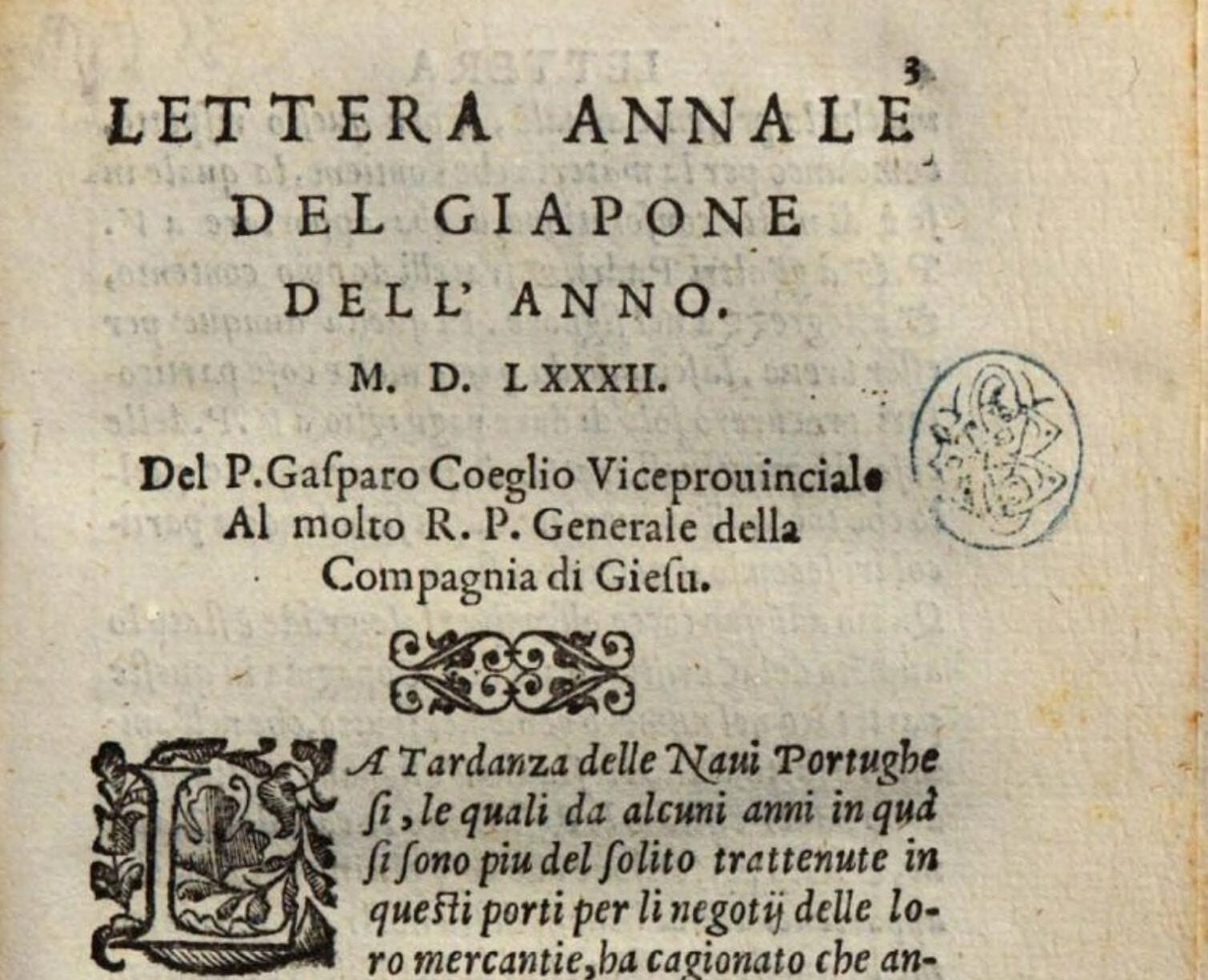
The Man Who Seemed Safe
Why Valignano Chose Gaspar Coelho
In 1581, Alessandro Valignano had a problem: Francisco Cabral.
For 11 years, the Portuguese Superior of the Japan mission had run the operation with a colonial rigidity so extreme it was actively destroying the thing it was meant to build. Cabral refused to learn Japanese. He opposed ordaining Japanese priests. He treated his converts as inferior beings and his European missionaries as colonial subordinates, and the result was that a mission sustaining itself on the indispensable goodwill of Christian daimyō and the labor of Japanese catechists was hemorrhaging morale from every direction. Cabral’s story, and how Valignano came to replace him, is told in full elsewhere on this site. What matters here is the replacement.
Valignano, the Italian Visitor of the East Indies and the architect of the entire Jesuit enterprise in Asia, was a man of formidable judgment. In choosing Cabral’s successor, he wanted above all someone compliant. A priest who would quietly implement the Visitor’s revolutionary program of cultural accommodation, the language requirement, the native seminaries, the Tenshō Embassy to Europe, without second-guessing him. A safe pair of hands. A bureaucrat in a cassock.
He chose Gaspar Coelho. In Valignano’s own appraisal, sent to the Jesuit General in 1584, Coelho was “mature, respected and liked,” but also “old and weak, does not know the language of the country, has little or no theology, and lacks authority and stature.” This was, one must concede, an unusual set of qualifications for promotion. But the Visitor was not looking for a man of stature. Men of stature had opinions. Men of stature disagreed. Coelho would do as he was told.
Within 18 months, the docile administrator had transformed into something Valignano had not anticipated and would never forgive: a priest who behaved like a warlord.
Gaspar Coelho’s Early Career, from Porto to India
From Porto to the Pearl Coast
Gaspar Coelho was born in northern Portugal somewhere between 1527 and 1537, the scholarly consensus settles on around 1531, in either Porto or Chaves. The sources are unable to agree on either date or city, and his early life is otherwise almost entirely opaque. He enters the documentary record only when he joined the Society of Jesus at Goa in 1560, already in his late twenties or early thirties. This was a relatively late vocation; most Jesuits joined as teenagers. Whatever Coelho had been doing in the intervening years in northern Portugal, the Society did not consider it worth recording.
Goa was the administrative heart of the Estado da Índia, the Portuguese overseas empire in Asia, and it was the springboard for every European missionary bound for the East. Coelho was ordained there shortly after entering the Society and made his three solemn vows in 1571. Between these two milestones, he accumulated the kind of experience that should have prepared him for almost anything: a posting to Socotra, the sunbaked island off the Horn of Africa where an ancient, isolated Christian community had survived since antiquity; a stint at Mylapore on the southeastern Indian coast, the traditional site of the martyrdom of the apostle Thomas; and service on the Fishery Coast, the pearling region of southern India where Francis Xavier himself had done some of his most intensive evangelical work a generation earlier.
By the standards of the Portuguese missionary enterprise, this was a solid apprenticeship. Coelho had seen the harsh realities of Goa, the dusty reality of Mylapore, and the back-breaking labor of baptizing fishermen in the surf. What he had not seen, when the Society finally sent him east in 1572, was a civilization capable of looking a European missionary in the eye and finding him wanting.
He arrived in Japan in 1571 or 1572, in the closing years of the Sengoku period, the Warring States era, when the archipelago was still a patchwork of mutually hostile lordships and the Jesuits were still very much a minor curiosity attached to the extraordinarily lucrative Macau–Nagasaki silk trade. Almost immediately, he was appointed Superior of the Shimo district, the Jesuit administrative region covering western Kyūshū, and sent to the Gotō Islands, the very heartland of Japanese Christianity. It was a more senior posting than a fresh arrival would normally receive, and it placed him in direct contact with the Christian daimyō upon whom the mission’s entire survival depended.
The work there was not always gentle. In 1574, Coelho became a central figure in the most notorious coercive conversion of the 16th-century Japanese mission: the forcible Christianization of the entire Ōmura domain. With his encouragement, and with the backing of Portuguese military support, the daimyō Ōmura Sumitada, baptized as Dom Bartolomeu, issued an ultimatum to the non-Christians of his territory. Accept baptism or go into exile. Tens of thousands complied, and Coelho, traveling with a single companion, reportedly baptized over 35,000 people himself. The Jesuit correspondence celebrated it as a triumph of evangelization. It was also, in retrospect, a rehearsal: a priest personally involved in the coercive conversion of an entire province had internalized a particular lesson about how the Japanese political order could be made to serve the Church, through pressure at the top, transmitted downward through the feudal hierarchy, to a population whose consent was assumed rather than asked. When Hideyoshi later cataloged his grievances against the missionaries, the destruction of temples and the forcing of religion upon unwilling subjects featured prominently. He was describing, in substantial measure, the methodology Coelho had helped to pioneer.
Alongside this coercive energy, however, ran a genuinely progressive streak that the historiography has often underweighted. Coelho was no Cabral. Where his predecessor had despised the Japanese and opposed their admission to the priesthood, Coelho embraced Valignano’s reforms with enthusiasm. He championed the ordination of Japanese clergy, actively recruited Japanese novices into the Society, and presided over the opening years of the seminaries the Visitor had established. His support for cultural accommodation was sincere.
When Valignano, surveying the field for a replacement to Cabral, settled on Coelho, he was choosing a man with genuine credentials: a seasoned Kyūshū administrator, an enthusiastic supporter of reform, a proven evangelist. What the Visitor did not yet see, what no one saw until power revealed it, was the man beneath.
How Coelho Changed as Vice-Provincial
The Transformation
The Japan mission was elevated to the status of a Vice-Province in 1581, making Coelho its very first Vice-Provincial, a title he would hold until his death in 1590. Under his early stewardship, the numbers looked splendid. By the close of 1581, he was reporting 150,000 Christians across the archipelago. The machinery of conversion that Xavier had built and Cabral had scaled was running at full tilt, and Coelho was content to let it run.
But power, as the old Jesuit maxim had it, reveals the man. And what power revealed about Gaspar Coelho was something his superiors had entirely failed to detect in the quiet, compliant priest of the 1570s.
He loved grandeur. He loved display. He loved, most disastrously, the trappings of secular lordship in a country where lordship was earned at the edge of a sword and priests were expected to look like priests. He traveled with a personal retinue of 30 people. He wore expensive silks. He decorated his residences with European furniture. He affected the airs of a man who, if the cassock had not been available, would very happily have become a daimyō himself.
The German Jesuit historian Josef Franz Schütte, who spent decades reconstructing the internal politics of the Japan mission from the archives in Rome and Lisbon, would later describe Coelho’s behavior with a phrase that captured it precisely: political wilfulness. The Vice-Provincial was not merely vain. He was willful, a man whose opinions ran ahead of his competence, and whose willingness to act on those opinions was restrained by neither his superiors nor his colleagues nor the plain evidence of his surroundings.
His governance of his own Jesuit brethren was autocratic to the point of coercion. Ōmura Sumitada, the very man whose domain Coelho had helped convert, was pressed, in the early 1580s, to rise in open rebellion against his overlord Ryūzōji Takanobu. Ōmura raised a reasonable objection: his son was being held by Ryūzōji as a hostage, and an uprising would get the boy killed. Coelho dismissed the scruple and, in Schütte’s reconstruction, nursed a permanent grudge against the daimyō. Arima Harunobu, receiving a similar demand, refused to turn on the Shimazu of Satsuma, the clan that had previously saved him from destruction, to join a war Coelho wanted waged against them. The Vice-Provincial retaliated against both men by ordering every Jesuit missionary and seminary pupil out of their domains. The patrons of the Christian enterprise in Kyūshū were being punished by the loss of the very priests they were patronizing. The “Christian coalition” that Coelho proposed to assemble was, in any case, a fantasy: in 1586, Arima and Ōmura fought a bloody war against each other over a parcel of disputed territory. Shared faith did not override the ordinary logic of Kyūshū land disputes.
The vindictiveness extended to his pastoral duties. When Ōmura Sumitada, the pioneering Christian lord who had ceded Nagasaki to the Jesuits in 1580, whose baptism had opened the entire Nagasaki enterprise, whose dying household was the single most important spiritual charge in Japan, lay on his deathbed in 1587, Coelho was urgently requested to come. Not once but twice. The Vice-Provincial refused. Twice. Sumitada died without reconciliation from the man who, by every measure of the Jesuit enterprise, owed him everything.
And beneath all of this, Coelho was running the mission on terms that excluded his own consultors. Valignano would later discover that the Vice-Provincial had been hiding significant letters in his desk, correspondence that should have been circulating among his senior colleagues, and making unilateral decisions without informing them. The docile subordinate had become a petty tyrant with a locked drawer.
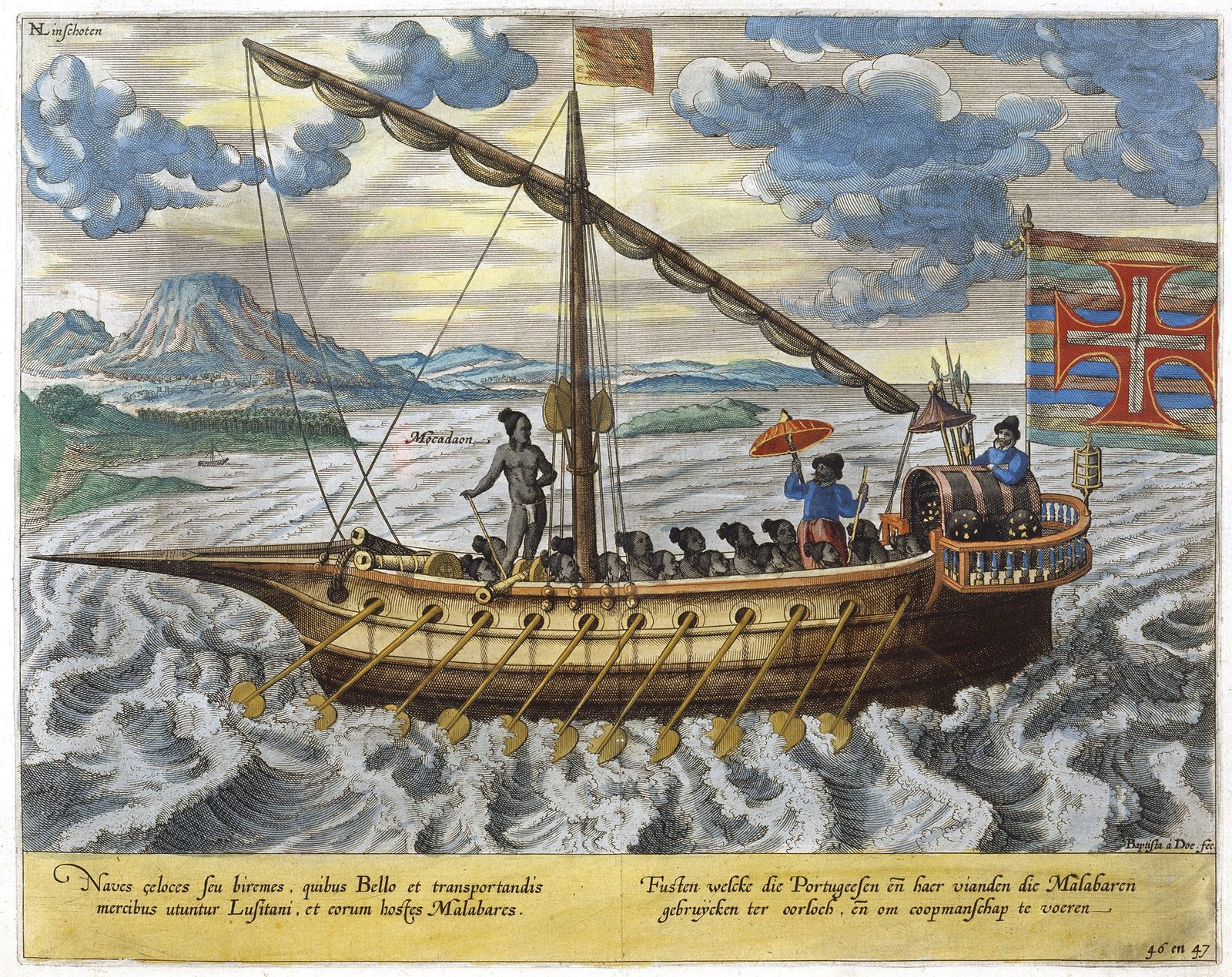
The Fusta: Coelho’s Armed Ship
The Fusta
Central to everything that followed was a ship.
At some point in the early 1580s, Coelho commissioned a Portuguese shipwright in Nagasaki to build him a fusta, a swift, European-rigged vessel in the style of a light galley, displacing somewhere between 200 and 300 tons, heavily armed with artillery. The fusta was a practical weapon of Mediterranean and Atlantic warfare, a vessel designed for the kind of rapid coastal strike and anti-piracy operation that had defined the Portuguese presence on trade routes from Morocco to Malacca. In the hands of a naval officer, it was an ordinary military tool. In the hands of a Jesuit Vice-Provincial, it was something else entirely.
The ostensible justification was self-defense. The waters around Nagasaki were plagued by wakō, mixed Japanese-Chinese pirate bands that preyed on the silk shipping that kept the Jesuit mission solvent. One particular crew, led by a certain Fukahori Sumikata, had been a persistent nuisance, and the fusta had allegedly been used in military action to repel them. This was defensible, just barely, within the logic of a religious order that was also the de facto administrator of an international port city.
What was not defensible was the theater that Coelho began to make of it.
He commanded the vessel as if it were his flagship. He traveled between Jesuit residences aboard it when land routes would have served. He had himself escorted in late 1586 by a flotilla of seven additional armed vessels belonging to the recently baptized naval commander Kurushima Michifusa, a seasoned veteran of the Seto Inland Sea maritime networks, described in Jesuit correspondence as the supreme captain of the seas, and sailed up the coast in what can only be described as a naval procession. A priest arriving by warship, convoyed by a pirate fleet, was not what Japanese warlords had been led to expect from the Society of Jesus.
Coelho’s Audience with Hideyoshi at Osaka
The Audience at Osaka
The defining disaster of Coelho’s career was the embassy he mounted in 1586 to meet the kampaku.
On March 6, Coelho departed Nagasaki with a substantial entourage of 30 or more people, including Luís Fróis as principal interpreter, one of the few Jesuits whose Japanese was genuinely fluent, the veteran Italian missionary Padre Organtino Gnecchi-Soldo, the Japanese Jesuit Brother Lourenço, and a handful of seminary students dressed for the occasion. By late April, he had reached Sakai. On May 4, 1586, he was received at Osaka Castle in a magnificent chamber decorated with gold-leaf screens painted by artists of the Kanō school. Hideyoshi was seated on a raised dais. Then, to the astonishment of everyone present, the kampaku stepped down from it, squatted beside Coelho on the floor, and began to speak in the frank and familiar manner of a man addressing an old friend. He reminisced warmly with Fróis, whom he had known for years. He praised the missionaries for traveling so extraordinary a distance to preach their Gospel. And then he personally conducted them on a tour of the fortress, opening chambers no foreign visitor had previously been shown, throwing back doors to reveal rooms of gold and silver and weapons, preceded through the passageways by a richly dressed young girl carrying his sword on her shoulder.
It was an orchestrated display of intimacy, and Coelho, who loved nothing more than the trappings of state ceremony, was thoroughly disarmed by it. At the top of the donjon, Hideyoshi turned the conversation to his grand military ambitions. He would conquer Kyūshū and bring the Shimazu to heel. He would then launch a massive invasion of Korea and China. And then, in a moment that the sources treat as the hinge upon which the next century of Japanese Christianity would turn, he made a request.
The kampaku was planning to conquer the Asian mainland. Would Father Coelho secure him two heavily armed Portuguese warships for the expedition?
What Hideyoshi was doing here was probing. He was a man who had spent his entire career reading other men, assessing the weight of their claims, measuring their actual capacity against their professed influence. The question about the warships was not merely a military requisition. It was also a test, a courteous inquiry designed to reveal how far this foreign priest would go in demonstrating his reach.
Coelho failed the test catastrophically. Rather than deflecting with the kind of diplomatic modesty that any experienced intermediary would have deployed, I am only a humble priest, Lord, such matters lie beyond me, the Vice-Provincial embraced the flattery and doubled it. Yes, he could secure the warships. He could arrange for additional support from Portuguese India. He could do more. He could rally the Christian daimyō of Kyūshū, Arima, Ōmura, the whole network of the Catholic south, into a military coalition that would support the kampaku’s grand design. He would, in effect, deliver a Christian army to Hideyoshi’s service.
As Fróis translated these promises, two men in the room tried desperately to stop him.
Organtino, who had been listening to the exchange with mounting horror and who understood, as a 20-year veteran of Japanese politics, exactly what Hideyoshi was hearing, moved to take over the interpreting duties. If he could seize the role, he could steer the conversation away from the military topic, soften Coelho’s offers, translate around the catastrophe. Coelho refused. Fróis continued. The Christian daimyō Takayama Ukon, serving as one of Hideyoshi’s commanders and also present in the chamber, attempted in his own way to interrupt the drift of the conversation. He failed too. The Vice-Provincial, intoxicated by the kampaku’s affability and convinced he was winning the greatest patron the Japanese Church had ever had, would not be diverted from the performance he had come to give.
It is worth pausing on what Hideyoshi had just heard. He had heard a foreign priest, operating on Japanese soil under the sufferance of the Japanese state, claim the authority to mobilize Japanese samurai on behalf of a Japanese military campaign. He had heard a religious leader assert a parallel chain of command that cut across the feudal obligations he was spending his life consolidating. He had heard, in the language of 16th-century Japanese power, the signature of the Ikkō-ikki, the militant Buddhist leagues that Nobunaga had spent a decade destroying and that Hideyoshi had personally helped to dismantle.
Organtino later described Coelho’s performance, in a confidential report to Rome, as a suicidal initiative: Hideyoshi, he noted, held priests who meddled in military affairs in particular contempt, and the Vice-Provincial had just handed him precisely the evidence needed to treat the Jesuits as a military threat. The old Christian daimyō Ōtomo Sōrin, himself in Osaka that same week to plead with Hideyoshi for military assistance against the Shimazu, was aghast when he heard what his fellow Christian had promised. He and the other daimyō of the Catholic south warned Coelho, in the days that followed, that his meddling in military affairs was actively damaging the Christian cause. The warning proved entirely correct.
For the moment, however, Hideyoshi’s mask held. On June 20, 1586, he issued a formal decree granting Coelho and his missionaries freedom to preach the Gospel throughout his lands and exempting them from the standard burden of quartering soldiers. Armed with this patent, which he took to be a triumph, Coelho departed Sakai on July 23. He crossed to Shikoku, visited Yamaguchi, swept through Kyūshū in triumph, and returned to Nagasaki in mid-December 1586 aboard the now-legendary escort of seven armed ships. Fróis, writing for European audiences, portrayed the embassy as a masterstroke. Organtino, writing for Rome, knew better.
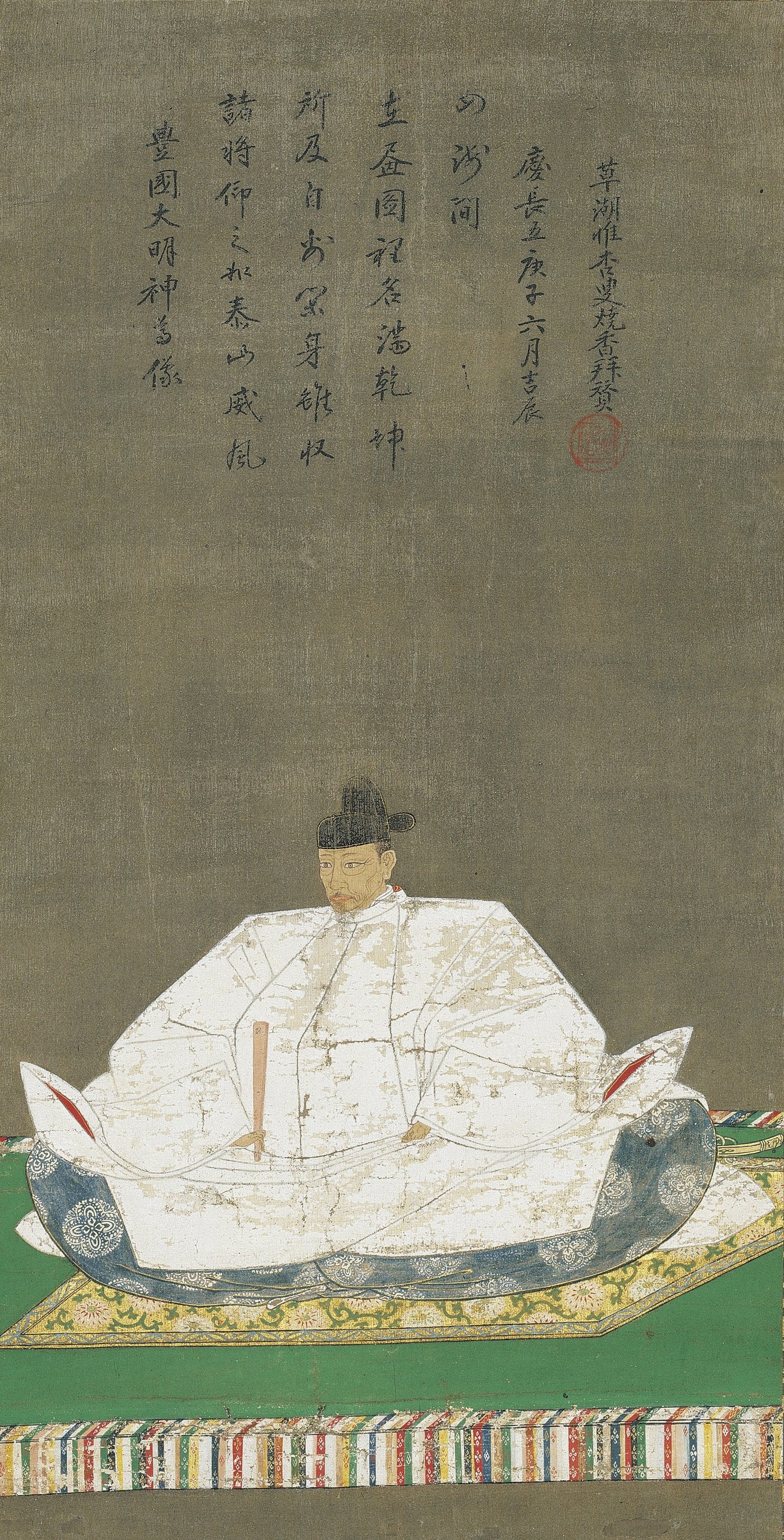
The Fusta at Hakata: The Display That Alarmed Hideyoshi
The Demonstration at Hakata
Seven months later, Hideyoshi came to collect.
The kampaku’s Kyūshū campaign of 1587, the subject of its own detailed treatment elsewhere on this site, brought the most powerful man in Japan directly into the heart of the Jesuit operational territory. In late May, Hideyoshi received Coelho amicably at his field headquarters in Yatsushiro. The mood was convivial. The Christian daimyō Takayama Ukon, Konishi Yukinaga, and Kuroda Yoshitaka were serving with distinction in the vanguard. The Shimazu were on the brink of surrender. Kyūshū was being absorbed into the Toyotomi state at a speed that surprised even Hideyoshi’s own generals.
In July, the kampaku stopped at Hakata. And Coelho, with an instinct for theater that might have served a Venetian diplomat well but was catastrophically ill-suited to the moment, sailed his armed fusta into the harbor to pay his respects.
Hideyoshi came aboard. He was given the tour. He partook of a picnic lunch on the deck. He praised, with the appreciative precision of a man who had spent his career assessing military hardware, the excellent quality of the ship’s armament.
The Christian daimyō Takayama Ukon and Konishi Yukinaga were watching this exchange with mounting horror. They understood, as Coelho did not, what it meant when a Japanese warlord showed prolonged interest in another man’s weapons. They pulled the Vice-Provincial aside and, according to the Jesuit accounts, urgently begged him to offer the fusta to Hideyoshi as a gift. Immediately. On the spot. Before the kampaku could form the idea that the priest was withholding it.
Coelho refused.
The refusal was, in the context of Japanese military culture, approximately as diplomatic as spitting. Hideyoshi departed the ship with a precisely calibrated politeness that concealed, as it had been designed to conceal, an entire constellation of recalculated assumptions. This foreign priest commanded a European warship that he would not relinquish. He commanded a port city, Nagasaki, that was effectively a foreign enclave. He commanded, on his own testimony, a network of Christian samurai across the conquered territories of Kyūshū. And he believed he could refuse direct requests from the most powerful man in the archipelago.
Back at his field headquarters on the evening of July 24, 1587, Hideyoshi demanded that Takayama Ukon, the most prominent Christian daimyō in his service, renounce his faith. Ukon, whose extraordinary story is told in his own dedicated article, refused. Hideyoshi doubled down, threatening to confiscate Ukon’s domain if he did not renounce. Ukon refused and walked away from a fief worth 70,000 koku. Hideyoshi understood how strong Christian loyalty could be. That night, he began composing the documents that would end the Christian Century’s first chapter.
The 1587 Edict and Coelho’s Stockpile of Arms
The Edict and the Stockpile
The full story of the Bateren Tsuihō Rei, the expulsion edict dated July 24, 1587, is told in detail elsewhere. Around midnight on the 24th, and again on the morning of the 25th, Coelho was confronted by Hideyoshi’s envoys with a catalog of grievances: the consumption of horse and cow meat by the priests, the destruction of Buddhist and Shinto shrines in Christian domains, and the sale of Japanese people as slaves by Portuguese merchants. Coelho attempted to explain. The Jesuits, he insisted, had tried to stop the slave trade and failed, perhaps Hideyoshi should ban the regional lords from selling their subjects? The explanations were not accepted. Within 20 days, the edict declared, all missionaries were to leave Japanese soil.
Coelho’s immediate response was a mixture of panic and improvisation. He induced what one Jesuit called a doomsday atmosphere in Nagasaki, sending frantic orders for Christian women to be hidden and for Church property to be salvaged. He then begged Hideyoshi for a delay, pointing out, correctly, that the single Portuguese carrack in port could not possibly accommodate all the missionaries in Japan for an immediate departure. The kampaku granted the extension. In the event, no priests permanently left Japan that year. The missionaries simply dispersed into the friendly Christian territories of Kyūshū and went quiet.
A normal Jesuit superior, confronted with an edict of this magnitude from a ruler of Hideyoshi’s obvious capacity, would have convened his consultors, composed a coordinated response, and begun the difficult work of negotiating a modus vivendi. This is in fact more or less what Valignano would do, three years later, when he returned from Macau. It is emphatically not what Coelho did.
Coelho, instead, went to war.
He had already been laying the groundwork. As early as 1584, three years before the edict, he had written to the Spanish authorities in Manila asking them to send four ships with men, artillery and provisions to aid the Japanese Christians. Now, with Hideyoshi’s ultimatum in hand, he abandoned any pretense of compliance. He convened meetings with the Christian daimyō, pressing them to unite in open armed resistance. He approached Arima Harunobu directly, offering firearms and financial backing if the lord would lead an uprising. Arima, the same daimyō who a few months earlier had quietly absorbed Coelho’s tantrum over his refusal to fight the Vice-Provincial’s private wars, now refused point-blank to commit what he called a treasonous and suicidal act. Konishi Yukinaga concurred. The other Christian lords fell in behind them. Coelho had no army.
So he tried to buy one. He wrote to Spanish authorities in the Philippines, to the Portuguese Crown’s representatives in Goa, to the Macau Senate, to anyone who might send men and firearms. He asked, in round numbers, for 200 or 300 soldiers to establish a fortified Christian enclave in Japan. In early 1589, from his refuge at Katsusa in the Arima domain, where he was now effectively living in exile from the port city he had once governed, he convened a secret consultation and dispatched an envoy, Padre Belchior de Moura, with instructions to petition Valignano in Macau for military support and, should the Visitor be dead, to continue onward by way of the Philippines to Spain and Rome.
The responses fell catastrophically short of what he had imagined. The Spanish in Manila, already balancing a delicate relationship with Japan, ignored him. The Jesuit Superior there, Antonio Sedeño, did not ignore him: he sent a blistering reprimand condemning Coelho’s imprudence. The Portuguese, more ambiguously, sent some weapons but no soldiers. It was not the international Catholic expeditionary force Coelho had dreamed of, but it was enough to materially implicate the Portuguese presence in what was now, on any reasonable reading, a conspiracy to wage war against the Japanese state.
And then, in the most extraordinary element of the entire episode, the detail that tips Coelho’s career from foolish into genuinely dangerous, the Vice-Provincial began secretly stockpiling weapons.
In Nagasaki, behind Jesuit doors, he accumulated a private arsenal: firearms, artillery pieces, and the powder and shot to use them. The precise inventory would not be known until after his death, but the scale was sufficient to arm a small military force. The mission that Xavier had founded as a spiritual enterprise, that Valignano had reformed as a cultural accommodation, was now, under the direction of its Vice-Provincial, operating a clandestine arms depot in the most closely watched port in Japan.
Had Hideyoshi discovered the stockpile, the consequences for the entire Christian community would have been apocalyptic. The kampaku’s paranoia about a fifth column would have been confirmed in the most damning way imaginable. The catastrophe did not happen, in the end, only because Coelho died first.
What Happened to Coelho After the 1587 Edict
The Reckoning
Gaspar Coelho died on May 7, 1590, of causes the sources do not specify. He was around 60. He was succeeded as Vice-Provincial by the Spanish Jesuit Pedro Gómez, a figure of markedly different temperament who would later preside over the 1598 Nagasaki council that confronted the slave trade.
Valignano returned to Japan shortly after the death, his second and most consequential visit, and began his own inspection of the damage. He was by this point one of the most experienced administrators in the Society of Jesus, a man who had seen virtually every form of missionary dysfunction that Asia was capable of producing. The discoveries he made in the Nagasaki residences exceeded anything he had been prepared for.
He found the letters hidden in Coelho’s desk. He found the records of unilateral decisions made without consultors. He found the correspondence with Manila and Macau soliciting military intervention. And then, in the cellars and storage rooms of the Jesuit compound, he found the weapons.
Valignano’s reaction was documented in a letter to the Jesuit General in Rome that is remarkable for its unrestrained fury. He had, he wrote, lost his composure entirely. He characterized Coelho’s schemes as the ravings of an afflicted mind driven to despair, a dangerous fancy so ill-judged that the Visitor could not think of it without a renewed access of rage. And he stated, with the clarity of a man who had spent his life crafting careful prose, exactly what he would have done had his subordinate been alive to face him: punished him severely, for the whole enterprise had run directly counter to the orders and policies of the Society of Jesus.
He then did the only two things that could be done. First, he liquidated the evidence. The weapons were sold, Valignano ordered, in the deepest secrecy. The artillery ammunition was loaded onto a ship bound for Macau, to be disposed of at the other end of the Portuguese maritime network. The entire apparatus of Coelho’s planned insurrection was dismantled and dispersed before any Japanese investigator could stumble across it. Second, he denounced his dead subordinate publicly, making a point, in his communications with the Christian daimyō and through them with the Toyotomi administration, of distancing the Society of Jesus from everything Coelho had done. It was damage control of the most urgent kind. If the Japanese state learned of the plot before Valignano could establish that the Jesuit institution had never sanctioned it, every priest in Japan was a dead man.
It was, Valignano wrote, a marvel that Hideyoshi had not already discovered the plot.
What Gaspar Coelho’s Failure Taught the Mission
The Cautionary Tale
The contrast with his predecessor Francisco Cabral is the instructive one. Cabral’s failings were racism and cultural rigidity, grave faults, but faults of attitude. His errors were the errors of a man who refused to engage with the realities of the country in which he served. Coelho’s errors were of an altogether more sinister order. He engaged with Japanese realities energetically, he simply engaged with them as a would-be warlord rather than as a priest. He sought to transform the mission into a military-political entity, stockpiling weapons, soliciting foreign troops, attempting to forge a confederation of Christian daimyō willing to wage war against the state.
The traditional diagnosis is that Coelho was a bad fit for an impossible job, a man temperamentally unsuited to the political delicacy the Japan mission required, elevated beyond his competence by a Visitor who had mistaken docility for wisdom. There is truth in this. But it does not capture the full picture the Jesuit sources themselves describe. Coelho was not simply overmatched. He was corrupted, by the trappings of office, by the luxury of Nagasaki, by the flattery of Christian daimyō who needed his connections, and above all by the fatal intoxication of commanding his own warship. The fusta was the physical embodiment of everything that went wrong: a real instrument of violence placed in the hands of a man who believed, in defiance of every piece of evidence available to him, that he could wield it without consequence.
His fellow Jesuits had no illusions. Pasio condemned his senseless extravagance with presents. Organtino called his diplomacy suicidal. Sedeño reprimanded his imprudence. Valignano, in his measured retrospective, wrote simply that it was contrary to the orders and policy of the Society.
But Coelho’s gambit failed on its own terms. His Christian daimyō refused his coalition. His Spanish correspondents ignored his pleas for troops. His own Jesuit brethren condemned him.
Sources & Further Reading
Boxer, Charles Ralph. The Christian Century in Japan, 1549–1650. Berkeley: University of California Press, 1951. The foundational English-language study of the entire Nanban period, with sustained treatment of Coelho’s Vice-Provincialate and the chain of events leading to the 1587 edict.
Schütte, Josef Franz, SJ. Valignano’s Mission Principles for Japan. 2 vols. Translated by John J. Coyne. St. Louis: Institute of Jesuit Sources, 1980–1985. The definitive scholarly reconstruction of the internal politics of the Japan mission, including the most detailed documentary account of Coelho’s conduct and Valignano’s posthumous furore.
Moran, J. F. The Japanese and the Jesuits: Alessandro Valignano in Sixteenth-Century Japan. London: Routledge, 1993. An illuminating study of Valignano’s reforms and the administrative culture within which Coelho operated.
Elison, George. Deus Destroyed: The Image of Christianity in Early Modern Japan. Cambridge, MA: Harvard University Press, 1973. A superb analysis of how Jesuit behavior, Coelho’s in particular, was perceived and interpreted by Japanese political authorities.
Fróis, Luís, SJ. Historia de Japam. 5 vols. Edited by José Wicki. Lisbon: Biblioteca Nacional, 1976–1984. The great contemporary Jesuit chronicle, written by the man who acted as Coelho’s interpreter in the 1586 audience. Essential and unreliable in equal measure.
Valignano, Alessandro, SJ. Sumario de las cosas de Japón (1583). Adiciones del Sumario de Japón (1592). Edited by José Luis Álvarez-Taladriz. Tokyo: Sophia University, 1954. Contains the Visitor’s direct commentary on Coelho’s character, style, and catastrophes.
Cooper, Michael. Rodrigues the Interpreter: An Early Jesuit in Japan and China. New York: Weatherhill, 1974. Excellent supporting context on the world of the Jesuit mission during and after Coelho’s tenure.
Higashibaba, Ikuo. Christianity in Early Modern Japan: Kirishitan Belief and Practice. Leiden: Brill, 2001. A lucid account of the mission’s development from the ground up, with attention to the role of Christian daimyō in the Vice-Provincial’s political calculations.
Boxer, Charles Ralph. The Great Ship from Amacon: Annals of Macao and the Old Japan Trade, 1555–1640. Lisbon: Centro de Estudos Históricos Ultramarinos, 1959. Indispensable on the economic substructure, the Nau do Trato, upon which Coelho’s mission financially depended and which his behavior imperiled.
Cieslik, Hubert, SJ. “The Great Martyrdom in Edo 1623.” Monumenta Nipponica 10, no. 1/2 (1954): 1–44. Useful background on the longer persecution whose roots trace to Coelho’s precipitation of the 1587 edict.
Ross, Andrew C. A Vision Betrayed: The Jesuits in Japan and China, 1542–1742. Edinburgh: Edinburgh University Press, 1994. A thoughtful general account that places Coelho’s actions within the wider arc of Jesuit missionary strategy in East Asia.
Ruiz-de-Medina, Juan, SJ. Documentos del Japón. 2 vols. Rome: Instituto Histórico de la Compañía de Jesús, 1990–1995. A fundamental collection of primary documents on the Japanese mission, including correspondence bearing directly on Coelho’s administration.
Cite this page
Nanban.pt. “Gaspar Coelho: The Priest Who Thought He Was a Prince.” Last modified 25 September 2026. https://nanban.pt/articles/gaspar-coelho/.
@misc{nanban-gaspar-coelho,
  author = {Nanban.pt},
  title = {Gaspar Coelho: The Priest Who Thought He Was a Prince},
  year = {2026},
  url = "https://nanban.pt/articles/gaspar-coelho/",
  note = {Last modified 2026-09-25}
}