The Soldier Who Would Not Bend: Francisco Cabral and the Battle for Japan’s Soul
A Portuguese soldier turned Jesuit priest was given command of the most culturally complex mission in Christendom. He responded by trying to make Japan more like Portugal. The results were catastrophic.
Francisco Cabral was a Portuguese soldier who became a Jesuit priest and was given command of the Japan mission, the most culturally complex in Christendom, from 1570 to 1581. He responded by trying to make Japan more like Portugal, and the results were catastrophic.
Who Was Francisco Cabral?
The Fidalgo from the Azores
Francisco Cabral was born on the island of São Miguel in the Azores, sometime around 1528 or 1530 or 1533, the sources disagree. His father, Aires Pires Cabral, was the administrative magistrate of the archipelago and a member of the Desembargo do Paço, the central tribunal of justice in Lisbon. The family was connected: Francisco was a kinsman of Pedro Álvares Cabral, the man who had stumbled upon Brazil in 1500 while attempting to sail to India. The Cabrals were minor Portuguese nobility, the kind of family that produced administrators and soldiers and expected its sons to serve the crown in one capacity or another, preferably somewhere profitable.
Francisco grew up in Lisbon and studied humanities at the University of Coimbra before choosing the path that younger sons of the lower fidalguia so often chose. In 1550, he sailed for the Orient in the retinue of Afonso de Noronha, the incoming Viceroy of India, to make his fortune as a soldier. The Estado da Índia was hungry for men willing to fight, and Cabral fought with distinction. At the Battle of Hormuz, he faced the fleet of Sultan Suleyman the Magnificent, commanded by the legendary Ottoman admiral Piri Reis, the same cartographer whose surviving map fragment, drawn in 1513, remains one of the most celebrated documents in the history of exploration. Cabral survived. He had proved himself brave and disciplined. He had also, in the furnace of colonial warfare, acquired a set of qualities that would serve him well in a military hierarchy and disastrously in almost every other context: an absolute conviction in the superiority of European civilization, a deep comfort with rigid command structures, and an instinctive suspicion of anyone who did things differently from the way he had been taught.
It was during his service in the East that Cabral met the Jesuit Antonio Vaz and decided to petition to join the Society of Jesus. He was accepted as a novice in Goa in December 1554. He studied logic, philosophy, and theology, was ordained a priest in 1558, and rose rapidly through the administrative ranks of the Indian Province: master of novices in Goa, rector at Vasai, rector of the house at Kochi, rector of the college at Goa. Even at this stage, his superiors recognized a duality in his character that they recorded with the measured candor peculiar to Jesuit personnel assessments. In 1559, the Provincial Antonio de Quadros wrote that Cabral was “very firm in the Society” and “rich in religious virtues” but also “somewhat willful... prudent and of a choleric nature and sometimes hasty”. The following year, Melchior Nunes Barreto observed that while Cabral loved to pray and preach fervently, “he seems slightly contentious”. A 1566 catalog entry put it more bluntly: he had “a proud nature, and it is difficult to change his opinions”.
These were not, in themselves, disqualifying traits. The Society of Jesus in the mid-16th century was a young and aggressively expanding organization that needed administrators with backbone. A man who was firm, zealous, slightly contentious, and difficult to argue with could be an asset, provided he was pointed in the right direction. In April 1568, the Society pointed Francisco Cabral at Japan.
Cabral’s Appointment as Mission Superior in Japan
Arrival in a Strange Country
Cabral was nominated as Visitor of Melaka, Macao, and Japan, a sweeping jurisdiction that stretched from the Strait of Malacca to the archipelago at the eastern edge of the known world. En route, he was forced to wait in Macao for a year, during which he clashed bitterly over precedence and authority with the Italian Jesuit Organtino Gnecchi-Soldo, a man of exactly the flexible, culturally curious temperament that Cabral lacked. It was an early warning. On 18 June 1570, Cabral landed in Kyūshū, succeeding Cosme de Torres as Superior of the Jesuit mission in Japan, and assumed command of one of the most delicate cross-cultural enterprises the Catholic Church had ever attempted.
The mission he inherited was small. There were perhaps 20,000 to 30,000 Christians scattered across the western domains of Kyūshū. The Jesuits operated a handful of residences staffed by a thin cadre of European priests who depended entirely on Japanese lay catechists, the dōjuku, to translate their sermons, hear informal confessions, and sustain the faith of communities they could visit only a few times a year. The operation ran on goodwill, linguistic compromise, and the precarious patronage of a handful of feudal lords who tolerated or encouraged Christianity for reasons that ranged from genuine spiritual interest to ruthless commercial calculation.
By the time Cabral departed Japan a decade later, the number of Christians had surged to at least 100,000, perhaps 150,000. This was an astonishing quantitative achievement. It was also, by virtually every qualitative measure, a catastrophe.
Cabral’s Strategy: Convert the Lords First
The Best Apostles
Cabral’s strategy for growing the church was simple, effective, and morally corrosive. He believed that the feudal lords, the daimyō, were what he called the “best apostles” for the Christian faith. The common people of Japan were so utterly dependent on their lords for their livelihood, he reasoned, that they would adopt whatever religion their ruler chose. This was not an unreasonable observation, the feudal structures of Japan did indeed produce a high degree of religious compliance among commoners, but Cabral elevated it from an observation into a strategy. Instead of the slow, painstaking work of individual conversion through teaching and example, he pursued a policy of converting lords and then harvesting their populations wholesale.
The results were numerically spectacular. Before Cabral’s arrival, Ōmura Sumitada, the first Christian daimyō, had been baptized in 1563. Subsequently, he ordered the Christianization of his entire domain. Between 35,000 and 60,000 subjects were baptized, most of them with no meaningful instruction in what they were being baptized into. Arima Yoshisada brought in another 20,000 converts in less than a year. The celebrated Christian warrior Takayama Ukon converted the population of his fief of Takatsuki. The mechanism was always the same: the lord converted, the lord’s subjects followed, Buddhist temples and Shinto shrines were demolished, and the Jesuits counted the baptisms.
What nobody counted, because nobody was equipped to count it, was understanding. Cabral’s mass-baptism strategy produced a church of enormous breadth and almost no depth, some 100,000 souls brought nominally into the Catholic fold, almost none of them properly instructed in the faith, and without any ordained native clergy to sustain the community when the European priests were absent, which was most of the time. The Jesuits had built a cathedral on sand, and the sand was already shifting.
The Silk Robes Controversy
Black Cotton and Burned Silk
The conflict between Francisco Cabral and Japanese culture expressed itself most visibly in the matter of clothing, which may sound trivial until you understand that in 16th-century Japan, clothing was politics.
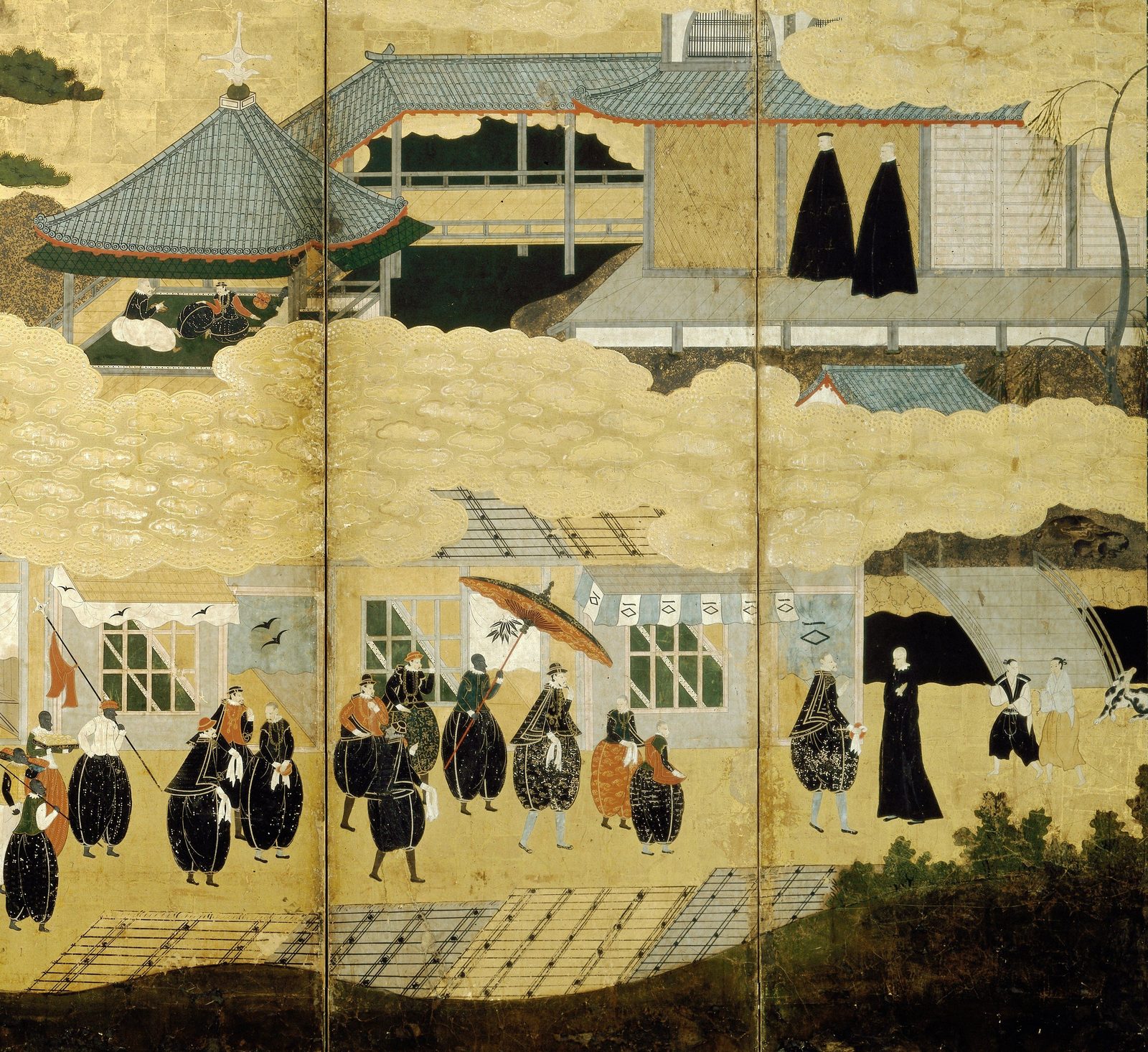
Before Cabral’s arrival, the Jesuit missionaries had adopted the practice of wearing colored silk robes in imitation of Buddhist clergy. Francis Xavier himself had established the precedent, recognizing that in a society where social rank was legible in fabric, appearing in rags was not a sign of holy poverty but of contemptible low status. The Japanese elite associated poor clothing with beggars and outcasts. A priest who dressed like a beggar would be treated like one, and nobody would listen to a beggar’s theology.
Cabral reversed this entirely. He ordered all missionaries to discard their silks and wear only the simple black cotton cassocks of the European Jesuits. He viewed the silk robes as a dangerous lapse into luxury, a violation of the Jesuit vow of poverty, and a symptom of the moral contamination that came from accommodating to a pagan culture. He personally enforced the ban during his visitations, destroying silk pillows, cushions, and a green damask sleeping gown that one priest had been using. The veteran missionaries protested vigorously, arguing that appearing in ragged black cotton would destroy their credibility with the Japanese nobility and close the doors to evangelization. Cabral dismissed their concerns as a lack of faith.
He also reversed the earlier Jesuit practice of abstaining from meat. Xavier and his successors had adopted the Buddhist dietary norm of avoiding animal flesh, understanding that in a culture shaped by Buddhist sensibilities, eating meat was considered crude and spiritually polluting. Cabral not only ate meat himself but insisted that his missionaries do the same, and he refused to observe Japanese dietary customs or rules of etiquette. He justified these decisions in part by citing a 1572 audience with Oda Nobunaga, during which the great warlord had expressed the opinion that wearing silk made men effeminate and had affirmed that he expected the missionaries to eat meat. Cabral deployed these statements eagerly, as though the personal preferences of a single Japanese warlord, however powerful, constituted a mandate to abandon the cultural accommodation that had been working for 20 years.
The consequences were exactly what the veteran missionaries had predicted. Japanese commoners, samurai, and lords alike were offended. Even the most supportive Christian daimyō, men like Arima Harunobu and Ōmura Sumitada, reported that they never left a Jesuit residence without feeling dissatisfied by the constant tactlessness of the priests. Some Japanese Christians stated bluntly that they would never have converted had they known what transpired inside the Jesuit houses while they were still pagans.
Why Cabral Refused to Ordain Japanese Priests
The Men Who Must Not Rise
If the silk controversy was damaging, Cabral’s policy on Japanese clergy was existential. It was the decision that, more than any other, threatened to strangle the mission in its cradle.
Cabral was vehemently opposed to the formation of a native Japanese priesthood. He treated the Japanese lay catechists and the handful of Japanese admitted as Jesuit brothers, the Irmãos, as second-class members of the organization. He governed them, in the words of his critics, with “whips and harsh words”, subjecting them to insults and assigning them only menial tasks. He strictly forbade teaching the Japanese Latin or Portuguese, the languages of theological study and Jesuit administration, effectively barring them from every pathway to ordination.
His reasoning was rooted in a contempt for Japanese character that he articulated with a frankness that still startles across the centuries. He considered the Japanese “sensual, sinful, and treacherous”. He believed that their celebrated politeness was merely a façade for deceit. In letters to his superiors in Rome, he wrote that he had “seen no other nation as conceited, covetous, inconstant, and insincere as the Japanese”. He claimed that the Japanese were “trained from childhood to be inscrutable and false”, that their culture of secrecy and emotional reserve was proof of inherent moral deficiency. He dismissed them in casually derogatory terms, referred to them as negros, described their customs as “barbarous”, and even invoked astrology to explain their spiritual failings, claiming that “the climate of the country and the influence of the stars” made Japanese hearts “a prey to continual unrest and a love of novelty”.
His predecessor in spirit, Francis Xavier, had famously declared the Japanese to be “the best race yet discovered”. The gap between that assessment and Cabral’s could not have been wider.
Cabral warned Rome that elevating the Japanese would be catastrophic. His precise formulation, preserved in his correspondence, carries the chill of a man who has confused prejudice with prophecy: “What will the Japanese Irmãos do once they have studied and stand on the same level with Europeans in knowledge!” He predicted that admitting Japanese into the Society would be “the reason for the collapse of the Society, nay! of Christianity, in Japan, and it will later hardly prove possible to find a remedy”.
He admitted only seven or eight Japanese as Irmãos, and even those only at the lowest rank. The result was a church of 100,000 people with no native clergy, no indigenous intellectual class, and no mechanism for self-perpetuation. It was a structure designed to remain permanently dependent on a supply chain of European priests that stretched 15,000 miles back to Lisbon, through monsoon-tossed seas, past hostile Muslim ports, around the Cape of Good Hope, and across the length of the Indian Ocean. Every priest was over a year’s voyage away. Every priest who died was irreplaceable for 18 months. And Cabral was ensuring that no Japanese could ever fill the gap.
Cabral’s Dealings with the Warlords
The Warlords
Despite his contempt for the Japanese people in general, Cabral was a shrewd political operator who understood the transactional logic of Kyūshū power politics.
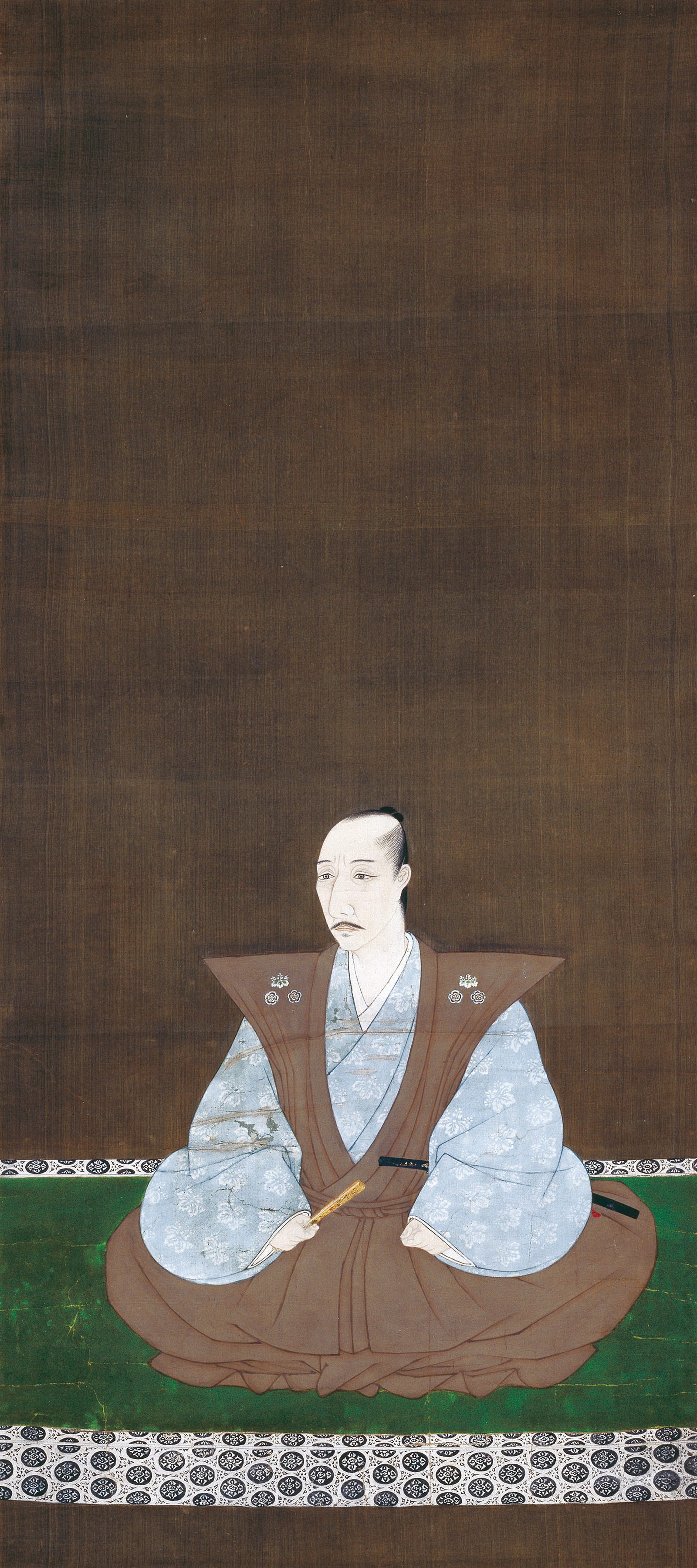
He met Oda Nobunaga twice, in 1572 and 1574, at the great warlord’s castle at Gifu. Nobunaga, who had captured Kyoto in 1568 and deposed the last Ashikaga shōgun in 1573, showed considerable favor to the Portuguese and the Jesuits. His tolerance was driven by hatred of the powerful Buddhist monastic orders, he had destroyed the warrior monks of Mount Hiei in 1571, and by a fascination with European firearms, military technology, and foreign trade. At their first meeting, Cabral presented himself in the plain black Jesuit cassock and declined Nobunaga’s gift of luxurious silk garments. It was a gesture that impressed the warlord and confirmed Cabral’s conviction that austerity was the correct approach, though one might observe that impressing a single supremely unconventional military genius was not the same thing as communicating effectively with an entire civilization.
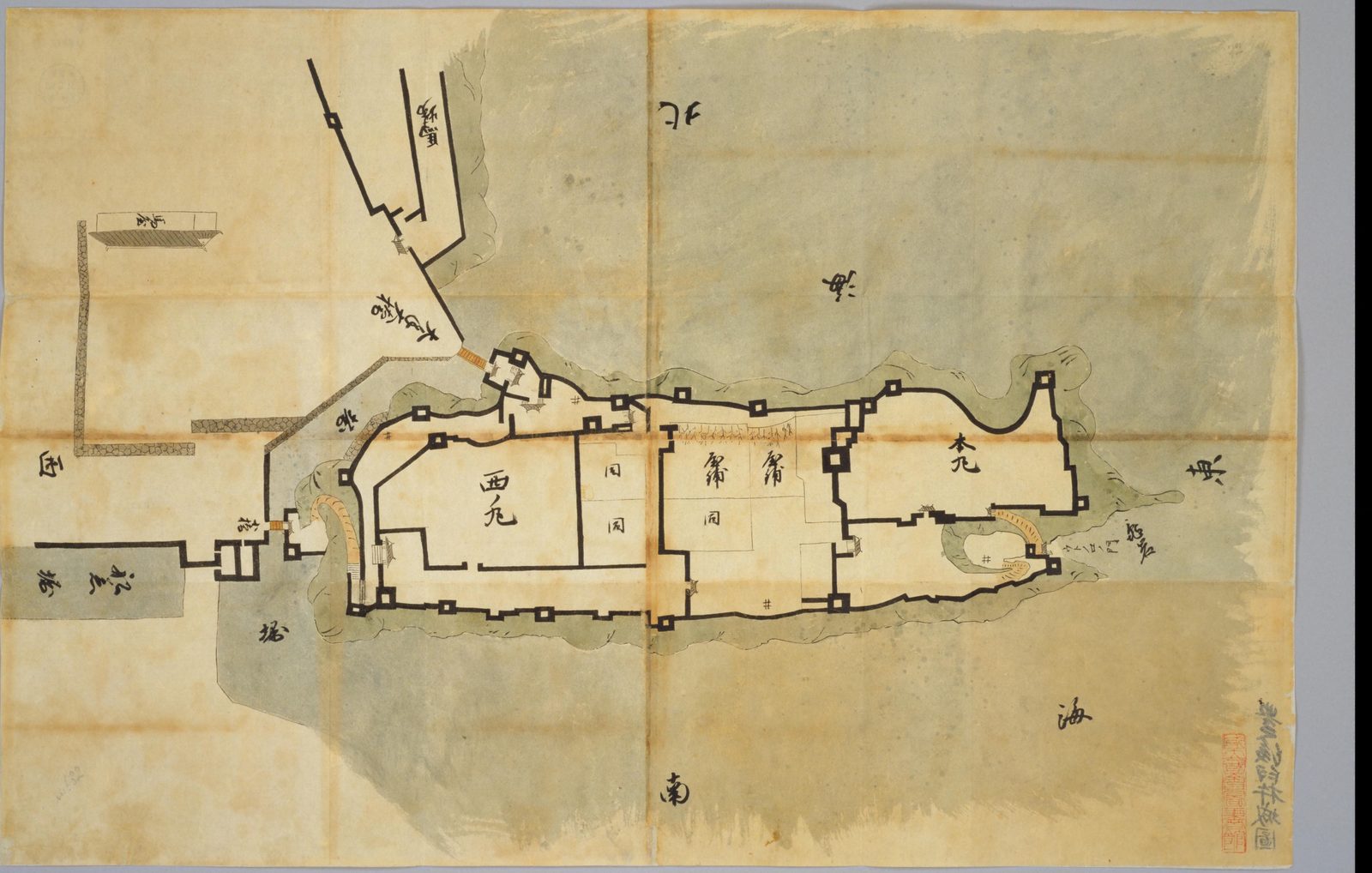
Ōmura Sumitada was a crucial ally. Cabral directed Portuguese trading ships to ports controlled by Christian daimyō and leveraged the immense commercial value of the Macao silk trade as an instrument of conversion policy. In 1580, Sumitada took the extraordinary step of ceding the port of Nagasaki and the nearby fortress of Mogi directly to the Society of Jesus, though this “Donation of Bartolomeu” was negotiated not by Cabral but by Valignano, who had by then effectively bypassed the outgoing Superior’s authority.
Cabral’s closest personal alliance was with Ōtomo Yoshishige, the lord of Bungo, baptized as “Francisco” in 1578. Cabral brokered trade arrangements ensuring that Bungo reaped significant benefits from the Macao ships. So close was their partnership that in 1578, Cabral and his entourage personally accompanied Sōrin’s massive army of 60,000 men on a military campaign into Hyūga province, carrying church equipment with the intention of establishing a new mission in the conquered territory. It was a striking image: the Jesuit Superior marching with an army, equipment for Mass packed alongside weapons of war. Sōrin’s subsequent devastating defeat by the rival Shimazu clan at the Battle of Mimikawa that same year marked the decline of his regional power and removed one of Cabral’s most important protectors.
Valignano Arrives, 25 July 1579
The Italian Lawyer
The arrival of Alessandro Valignano in Japan on 25 July 1579 was the beginning of the end for Francisco Cabral.
Valignano was everything Cabral was not. Where Cabral was a military man, rigid, and fundamentalist, Valignano was aristocratic, a trained lawyer, and a pragmatist of extraordinary intellectual sophistication. He held the title of Visitor to the Jesuit Province of India, an office that gave him sweeping authority to reorganize missions throughout Asia. He had been sent by Rome to inspect and reform, and he arrived in Japan with fresh eyes, an open mind, and the kind of administrative power that could overrule a local Superior.
What he found horrified him.
The mission was plagued by low morale. The Japanese workers were demoralized and resentful. The European missionaries were divided, with a significant faction openly opposing Cabral’s policies. The cultural chauvinism was pervasive. The mass baptisms had produced an ocean of nominal Christians with no understanding of their faith. And the native clergy, the mechanism by which any mission in any country eventually becomes self-sustaining, had been systematically suppressed.
Valignano’s diagnosis was blunt: Francisco Cabral was the problem. The Visitor concluded that every significant failing of the Japanese mission could be traced to the character and policies of its leader.
The conflict between the two men was a clash of personalities and civilizational philosophies compressed into the confined space of a few Jesuit residences on a volcanic island at the edge of the known world. Valignano championed cultural accommodation: European missionaries must learn Japanese, adopt Japanese customs, wear appropriate clothing, observe Japanese etiquette, and treat their Japanese colleagues as intellectual and spiritual equals. Cabral rejected all of it. He maintained that the Japanese language was practically impossible for Europeans to learn. He dismissed accommodation as dangerous compromise. He insisted that the Japanese must adapt to the Europeans, not the other way around.
On the question of native clergy, the disagreement was absolute. Valignano demanded that the Japanese be trained for the priesthood and treated “in the same way as we dealt with the Portuguese”. Cabral regarded this as suicidal. On finances, Cabral accused Valignano of extravagance, despite having himself overseen the purchase of 100 to 120 piculs of silk annually during his tenure as Superior, far more than the 50 piculs that Valignano’s formal agreement with the Macao merchants later stipulated. Cabral had euphemistically referred to these trade profits as “alms from the China ship”. The hypocrisy was breathtaking, and Valignano made sure Rome knew about it.
How Valignano’s Consultas Overruled Cabral
The Vote
To break the deadlock, Valignano did something devastatingly effective. He convened formal missionary councils, consultas, and put the future of the mission to a debate and vote among the senior missionaries.
A preliminary consultation was held in the Shimo district of Kyūshū in July or August of 1580, bringing together Cabral and experienced missionaries like Gaspar Coelho, Lourenço Mexia, and Luís de Almeida. The primary consultation took place at Usuki in Bungo province in October 1580, followed by further meetings at Azuchi in July 1581 and Nagasaki in December 1581.
The results were a total and humiliating defeat for Cabral. On almost every substantive question, he was outvoted by the men who had served under him. On the critical Question XVIII, “Is it appropriate to observe in everything the customs and ceremonies used by the bonzes?”, the consultation voted decisively in the affirmative, declaring that cultural accommodation was “totally necessary”. When Cabral argued that the Japanese required stern, harsh treatment, all the other fathers opposed him, siding with Valignano’s resolution that the Japanese could not be governed sternly and must instead be treated “with great gentleness and affection”. On native clergy, the missionaries approved training the Japanese for the priesthood. On language, they mandated Japanese-language study for all Europeans. On clothing, they kept his black cotton cassock. On finances, they reluctantly approved the silk trade as the only viable income source.
Almost every one of Cabral’s core policies was reversed. The comprehensive written resolutions that emerged from the consultas systematically dismantled the edifice he had built over 11 years. It was as close to a vote of no confidence as the Society of Jesus could produce.
Outvoted, outranked, and completely isolated, Cabral held to a request he had been making for years: to be relieved of his post. Valignano, who judged him unfit to govern, let him go. The more compliant Gaspar Coelho was appointed as Vice-Provincial. By 1581 or 1582, Cabral left Japan for Macao, convinced that Valignano’s reforms would lead to the ruin of everything.
The Silk Trade That Funded the Mission
The Silk and the Hypocrisy
Cabral’s career unfolded within the extraordinarily profitable triangular relationship between Japanese warlords, Portuguese merchants, and Jesuit missionaries that defined the economics of the Nanban period. The daimyō of Kyūshū aggressively courted the Portuguese because the Jesuits served as the essential brokers for the Macao–Nagasaki silk trade, the most lucrative commercial route in the western Pacific.
Prior to 1570, Portuguese ships had wandered between various Kyūshū ports: Hirado, Yokoseura, Fukuda. In 1571, Nagasaki was established as the permanent trading port. In 1579, Valignano formalized a contract with the Macao mercantile community giving the Jesuits the right to import 50 picos of raw Chinese silk annually on the Great Ship, the proceeds of which sustained the mission’s operations.
Cabral’s own relationship with this trade revealed the gap between his rhetoric and his practice. During his tenure as Superior, he had actively overseen the purchase of 100 to 120 piculs of silk annually, roughly double the amount Valignano later formalized. He called these profits “alms from the China ship”, a remarkable piece of linguistic laundering. Yet from exile in India, he would spend decades attacking Valignano for entangling the Society in commercial trade, accusing the Visitor of ruining the mission’s spiritual purity through commerce. Valignano easily rebutted the charge by citing Cabral’s own much larger commercial dealings. The man who had traded more silk than anyone was now scandalized by the principle of trading silk.
Cabral After Japan: Macau and China
Letters from Exile
After departing Japan, Cabral served as superior of the Chinese mission in Macao from 1582 to 1586, then returned to India where he became rector of the professed house in Goa in 1587. In 1592, he was appointed Provincial of India, the highest regional office, a position he held until 1597. His leadership style in India mirrored his rigid approach in Japan. Valignano, visiting Goa in 1595, reported that Cabral’s regime had created an atmosphere of fear. It was “harsh where it should be gentle”. The harmony between superior and subject was “sadly lacking”, and “resentment and bitterness” were “only too common”. Some Jesuits were terrified of being dismissed from the Society or even imprisoned, a fate three of them actually suffered under his authority.
From exile, Cabral waged a relentless letter-writing campaign against Valignano, dispatching a stream of long, bitter epistles to the Jesuit General Claudio Acquaviva in Rome. In these letters, he blamed every misfortune that befell the Japanese mission on Valignano’s accommodative reforms. He accused Valignano of making the Jesuits appear too rich, too powerful, and too politically subversive through his grand building projects and luxurious lifestyle. When Toyotomi Hideyoshi issued his 1587 edict banning Christianity, Cabral was triumphant. He wrote to Acquaviva in 1593 claiming that he had foreseen the coming storm “from a high watchtower”. He argued that Valignano’s extravagant gifts to Hideyoshi had backfired catastrophically, leading the Japanese ruler to conclude that the Jesuits were wealthy, powerful, and a politically subversive arm of the Spanish crown.
He also accused Valignano of administrative sabotage, claiming the Visitor kept the best and most talented men for the Japanese mission while using Goa as a dumping ground for troublemakers, and of withholding monetary contributions that Japan was supposed to share with India. In a particularly personal letter to the Portuguese Assistant in Rome, João Álvares, dated December 1596, Cabral called Valignano bossy and snobbish, and ridiculed him for spending too much time writing unnecessarily long legislative texts.
He explicitly claimed, in a 1596 letter, that he had always resisted admitting Japanese into the Society because of the “immoral character” of the Japanese people. His negative views had not softened after his departure. They had, by every available measure, hardened into something approaching obsession. Valignano, for his part, accused Cabral of an “extraordinary hostility toward Japan”, noting that Cabral actively dissuaded Jesuits in India from going there, maintained that any manpower or effort spent on Japan was utterly wasted, and seemed as though he would be glad to see the entire Japan mission end in total ruin.
Cabral’s Final Years
A Second Prophet Daniel
After his tenure as Provincial ended in 1597, Cabral was relieved of all administrative and command duties, fulfilling what he had long stated was his deepest desire: to focus solely on his own spiritual salvation. His hagiographic obituary, written by a fellow Jesuit in the formulaic genre of edifying death narratives that the Society produced for its departed members, describes a man who devoted himself entirely to penance and prayer. He walked the stations of the Rosary every day within the Jesuit house, kneeling in front of all the images of Our Lady. The obituary compared him to “a second Prophet Daniel”.
He died peacefully in Goa on 16 April 1609, far removed from the Japanese mission he had once strictly governed and later so fiercely condemned. He was approximately 80 years old, though given the uncertainty around his birth date, this is an estimate. He had outlived most of his adversaries and all of his allies. The Japan he had left behind in 1581 was already transforming under Valignano’s reforms. The Japan of 1609 was entering the final phase of its relationship with Christianity, the escalating persecutions under the Tokugawa shogunate that would culminate in the expulsion of all missionaries, the execution of tens of thousands of Christians, and the closure of the country to the Western world.
Sources & Further Reading
Boxer, C.R. The Christian Century in Japan, 1549–1650. University of California Press, 1951. The foundational English-language study of the Jesuit mission in Japan, with extensive treatment of the Cabral–Valignano conflict.
Cooper, Michael (ed.). The Southern Barbarians: The First Europeans in Japan. Kodansha International, 1971. Primary source translations documenting the Nanban encounter, including Jesuit letters and reports from Cabral’s era.
Elison, George. Deus Destroyed: The Image of Christianity in Early Modern Japan. Harvard University Press, 1973. Essential for understanding the ideological framework within which the Japanese authorities perceived Christianity and the Jesuit enterprise.
Moran, J.F. The Japanese and the Jesuits: Alessandro Valignano in Sixteenth-Century Japan. Routledge, 1993. A detailed study of Valignano’s mission philosophy and his confrontation with Cabral’s policies.
Schütte, Josef Franz. Valignano’s Mission Principles for Japan. Translated by John J. Coyne. 2 vols. Institute of Jesuit Sources, 1980–1985. The definitive scholarly work on Valignano’s accommodationist program and the consultas that overturned Cabral’s directives.
Üçerler, M. Antoni J. “Alessandro Valignano: Man, Missionary, and Writer.” Renaissance Studies 17, no. 3 (2003): 337–366. An important reassessment of Valignano that contextualizes his reforms against Cabral’s earlier regime.
Costa, João Paulo Oliveira e. “The Misericórdias among Japanese Christian Communities in the 16th and 17th Centuries.” Bulletin of Portuguese-Japanese Studies 5 (2002): 67–79. Useful for understanding the institutional structures Cabral and Valignano shaped.
Gonçalves, Sebastião. Primeira Parte da História dos Religiosos da Companhia de Jesus. Edited by Josef Wicki, 3 vols. Coimbra, 1957–1962. The Jesuit institutional chronicle of the Indian Province, containing contemporary assessments of Cabral’s character and governance.
Valignano, Alessandro. Sumário de las Cosas de Japón (1583). Edited by José Luis Alvarez-Taladriz. Sophia University, 1954. Valignano’s own report on the state of the Japanese mission, written immediately after Cabral’s replacement, and a devastating indictment of his predecessor’s legacy.
Correia, Pedro Lage Reis. “Francisco Cabral and Lourenço Mexia in Macao (1582–1584): Two Different Perspectives of Evangelization in Japan.” Bulletin of Portuguese-Japanese Studies 15 (2007): 47–77. A nuanced examination of Cabral’s brief tenure in Macao after leaving Japan.
Wicki, Josef (ed.). Documenta Indica. 18 vols. Monumenta Historica Societatis Iesu, 1948–1988. The definitive collection of Jesuit correspondence from India, containing many of Cabral’s letters to Rome and the personnel assessments of his character.
Recent scholarship
- González-Bolado, Jaime (2026). “Portraying the ‘Chosen Samurai’: The Creation of an Idealized Image of the Japanese in 16th-Century Jesuit Printed Works”, Religio: Revue pro religionistiku, 34, pp. 145–168. — This 24-page article argues that 16th-century Jesuits crafted an idealized “Chosen Samurai” image in print, partly to secure funding, while their private letters revealed a far more critical view of the Japanese people.Free full text ↗ (opens in a new tab)
- Zampol D'Ortia, Linda (2024). “A Failing Mission? Salvation in the Jesuit Mission in Japan Under Francisco Cabral”, Edizioni Ca' Foscari, Ca' Foscari Japanese Studies 23, 184 pp. — The best study yet of the mission's most reviled superior: Zampol D'Ortia reads Cabral through Jesuit salvation theology rather than caricature, and this open-access monograph turns a stock villain into the key to understanding why Valignano's accommodation policy was needed at all.Free full text ↗ (opens in a new tab)
Cite this page
Nanban.pt. “The Soldier Who Would Not Bend: Francisco Cabral and the Battle for Japan’s Soul.” Last modified 6 October 2026. https://nanban.pt/articles/francisco-cabral/.
@misc{nanban-francisco-cabral,
  author = {Nanban.pt},
  title = {The Soldier Who Would Not Bend: Francisco Cabral and the Battle for Japan’s Soul},
  year = {2026},
  url = "https://nanban.pt/articles/francisco-cabral/",
  note = {Last modified 2026-10-06}
}