The Witness Who Never Went Home: Bernardo of Kagoshima, the First Documented Japanese Visitor to Europe (c. 1532–1557)
Baptized at Kagoshima and sent west by Francis Xavier to see Christian Europe and report back, Bernardo reached Lisbon, Rome and Coimbra. He died at Coimbra in 1557, and only his baptismal name survives.
Bernardo of Kagoshima was a young samurai of Kagoshima whom Francis Xavier baptized in 1549 or early 1550 and took with him when he left Japan in 1551, sending him west to see Christian Europe so that he could later testify about it to the Japanese. He is the earliest Japanese visitor to Europe recorded in the surviving documents and the first Japanese known to have entered the Society of Jesus: he landed at Lisbon, was received into the order in January 1554, studied at Coimbra, spent most of 1555 in Rome and died at Coimbra in 1557 without returning to Japan.
A Recommendation from Goa
Why Francis Xavier Sent Bernardo of Kagoshima to Europe
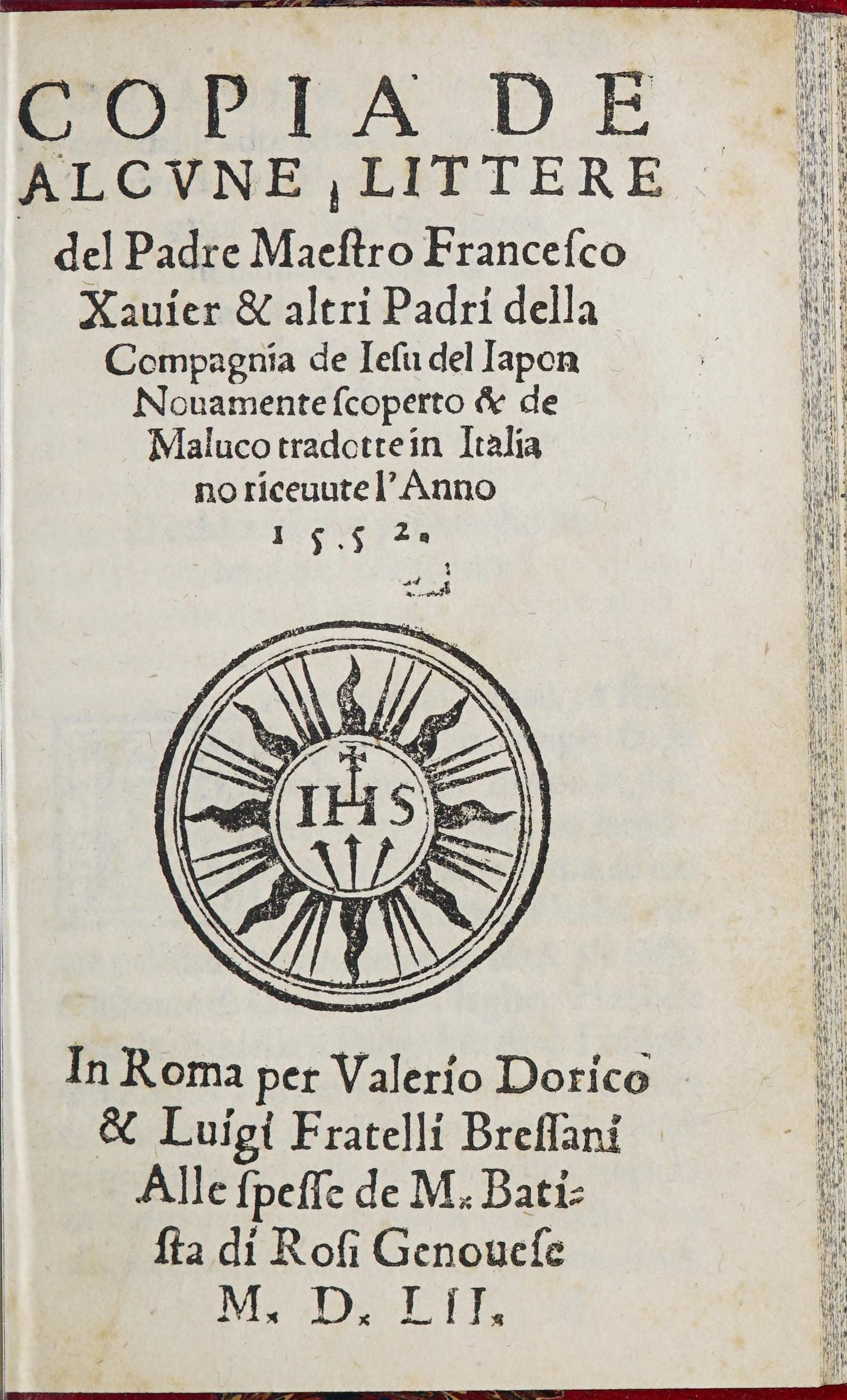
In letters written at Goa in April 1552, to Simão Rodrigues in Portugal and to Gaspar Barzaeus, whom he was leaving in charge in India, Francis Xavier commended a young Japanese Christian named Bernardo. Xavier had left Japan in November 1551 after a little more than two years there, and he had brought Bernardo with him. The letters explained what the young man was for. He was to see Christian Europe so that he could later "testify to the Japanese about what they had seen with their own eyes."
The plural is Xavier's own: the letter commends Bernardo together with Mateus, a convert from Yamaguchi. The letters also give Xavier's reasoning. He had found the Japanese convinced, as he put it, that no other people counted for much beside themselves. The historian Kōso Toshiaki has read the plan through the Japanese proverb of the frog in the well (i no naka no kawazu, 井の中の蛙), which takes the walls of its well for the edges of the world. On that reading, a Japanese convert who had seen Europe could correct the outlook in a way a foreign missionary could not. The same letter adds a second purpose running in the opposite direction: Xavier had hoped to send a pair of learned bonzes to Portugal so that Europeans could judge for themselves how intelligent and subtle the Japanese were, but they would not come.
Bernardo did reach Europe. He landed at Lisbon, entered the Society of Jesus, studied at Coimbra, spent most of 1555 in Rome and died at Coimbra in 1557 without seeing Japan again. He is the earliest Japanese visitor to Europe recorded in the surviving documents, and the first Japanese known to have entered the Society of Jesus.
Almost everything known about him passes through Jesuit hands. His Japanese name was not recorded in any source that survives; he appears as Bernardo, as Bernardo of Kagoshima, or as Satsuma Bernardo. No letter in his own hand has been securely identified. The calligraphic Japanese text of a copy of Ōuchi Yoshinaga's 1552 grant to the mission, made at Coimbra in 1555 or 1556, is probably his: Schurhammer thought so, and Ruiz-de-Medina, noting that no other Japanese was then in Europe, attributes it to him. The judgments of his character that circulate in the literature come from Xavier, from the Jesuits who received him in Europe and from Alessandro Valignano writing decades later. They are the assessments of men who had chosen him, trained him and wished his example to edify others, and they are reported here as theirs.
A Young Samurai of Satsuma
Bernardo's Baptism at Kagoshima and the Question of Xavier's First Convert
The mission that produced him came ashore at Kagoshima, in the province of Satsuma at the southern tip of Kyūshū, on the 22nd day of the seventh month of Tenbun 18 (15 August 1549). The party was small. Xavier traveled with the Spanish priest Cosme de Torres, the Spanish lay brother Juan Fernández and a Satsuma man named Anjirō, who had been baptized at Goa in 1548 as Paulo de Santa Fé. Anjirō served as interpreter and catechist, and he brought his own household to baptism early in the Kagoshima stay. The wider story of the mission's arrival and its two years in Japan is told in the article on Francis Xavier's Japanese mission.
Bernardo was a young samurai of Kagoshima, a member of the warrior class that served the Shimazu lords of Satsuma. His age rests on a single figure, 18, given by the historians Léon Bourdon and Alexandra Curvelo, and from this a birth year of about 1532 has been derived.
Xavier baptized him at Kagoshima in 1549 or early 1550, giving him the name Bernardo. Whether he was the first, second or merely an early convert depends on which Jesuit is counting and what he is counting. Pedro de Ribadeneyra, who knew him later in Rome, called him el primer hombre que dentro del Japón recibió el santo bautismo, the first man baptized in Japan. Jerónimo Nadal, who handled his admission to the Society, described him in an English rendering as "the second convert made by Xavier in Japan." Luís Gonçalves da Câmara placed him among the first whom Xavier converted there. These are different categories. Anjirō, baptized at Goa, cannot be counted among those baptized in Japan, so he does not make Bernardo the second on that count. Anjirō's household, on the other hand, was baptized at Kagoshima early in the stay, and no letter records the order of those first Kagoshima baptisms. Nadal's and Ribadeneyra's ordinals therefore cannot be reconciled into one count without knowing exactly whom each included.
Kagoshima did not remain hospitable for long. In the Jesuit telling, Shimazu Takahisa at first allowed the missionaries to preach. When the Portuguese ships he hoped to attract went to other harbors, and the Buddhist clergy pressed him, he forbade further conversions. Xavier's public attacks on the morals of the monks had already hardened their opposition. At the end of August 1550 Xavier left Kagoshima. Anjirō stayed with the converts. Bernardo went with Xavier.
Hirado, Hakata and a Bad Audience at Yamaguchi
Bernardo as Xavier's Companion from Hirado to Yamaguchi
The first stop was Hirado, off the northwest coast of Kyūshū, where Portuguese ships were in port and the lord, Matsuura Takanobu, welcomed the Jesuits. Cosme de Torres stayed behind at Hirado. Xavier went on with Fernández and Bernardo by Japanese boat.
At Hakata, the trading city on Kyūshū's northern coast, Xavier again rebuked the monks of a Rinzai Zen temple. From there the three crossed to Honshū and made for Yamaguchi, the seat of Ōuchi Yoshitaka, then one of the most powerful lords in western Japan. A man named Uchida took them in and became the first convert in the city, baptized as Thomé. Xavier and Fernández preached twice a day at street corners.
Through the Ōuchi retainer Naitō Okimori they obtained an audience with Yoshitaka himself. It went badly. Fernández read from a scroll that condemned sodomy, and Yoshitaka took the passage as directed at him. The visitors were dismissed, and the Jesuit accounts record that they feared for their lives. Converts at Yamaguchi on this first visit were few. The episode, and the city's later importance to the mission, is treated at length in the article on the Portuguese in Yamaguchi.
The Jesuit accounts record little of what Bernardo did during these weeks beyond his presence. What they do record is his work on the road: he served as carrier, and the next stage of the journey shows what that meant.
Snow on the Road to Miyako
Bernardo on Xavier's Winter Journey to Kyoto, December 1550
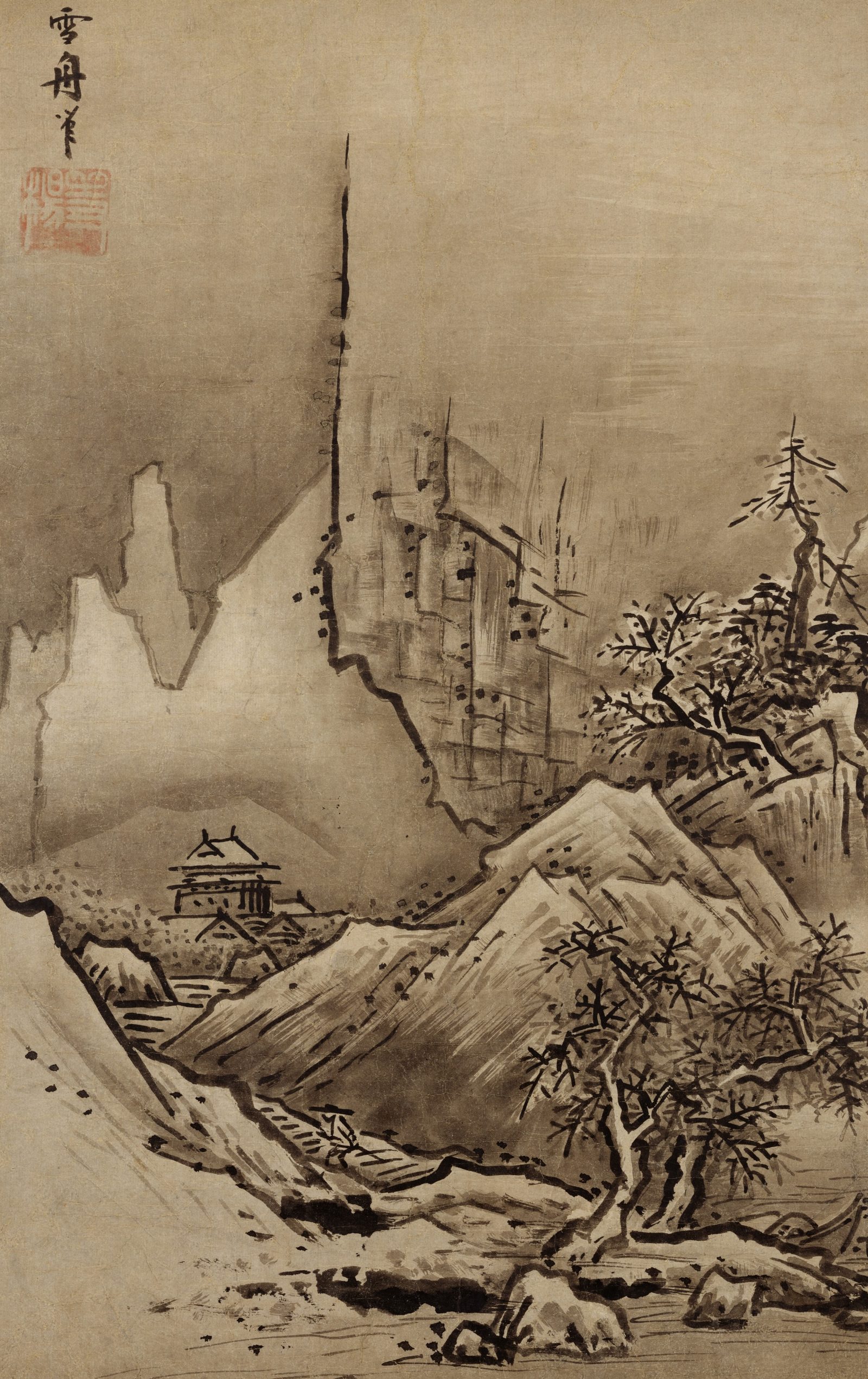
In December 1550 Xavier, Fernández and Bernardo left Yamaguchi for the capital. Xavier hoped to reach the emperor, Go-Nara, and the authorities of the Enryakuji on Mount Hiei, the great Tendai monastery above the city. The Jesuit accounts describe the first part of the journey on foot to Iwakuni through snow to the knees and streams to the waist. From there they went by boat to Sakai, the merchant city on Osaka Bay, where a merchant named Hibiya gave them hospitality. In Miyako, as Kyoto was then called, they lodged with the Konishi family.
Miyako had been ruined by years of war, and the imperial court had little power. The visitors had come without gifts and dressed as mendicants. In the 11 days they spent there, they failed to reach either the emperor or the Enryakuji.
Bernardo's part in this journey is the most concrete thing recorded of him in Japan. He carried a sack of roasted rice, the party's provision for the road; the vessels for Mass had been left behind at Hirado. Xavier said afterwards, in Goa, that Bernardo had kept him alive for much of the road to Miyako with that rice, and Bernardo, who slept at Xavier's side, later told Ribadeneyra in Rome that Xavier called on the name of Jesus even in his sleep.
An Empty Temple Called Daidōji
The Second Yamaguchi Stay of 1551: Daidōji, Lourenço and Bernardo
The second stay at Yamaguchi, from about April to September 1551, ran on different terms. Xavier, who had gone to Miyako as a mendicant, came back to Yamaguchi as an envoy in fine robes; the accounts record the change of approach without recording his reasons for it. He brought gifts from the Governor of India: a striking clock, a keyboard instrument, spectacles, fine cloth and wine. Ōuchi Yoshitaka, who had dismissed the missionaries a few months earlier, now granted them freedom to preach and an empty temple, Daidōji (大道寺), as a residence and church.
The grant is documented in two stages that are easily confused. Juan Ruiz-de-Medina's critical edition of the early Japan mission documents, Documentos del Japón, identifies the temple as Daidōji and distinguishes the original grant made by Ōuchi Yoshitaka in 1551 from its confirmation by Ōuchi Yoshinaga in 1552. Yoshinaga was the successor installed after the coup of September 1551 that ended Yoshitaka's rule and his life, so the confirmation belongs to a new lord and a later year.
Daidōji became the scene of daily disputations. Among those drawn in was a blind minstrel whom Xavier baptized in 1551 as Lourenço, a baptism that Ruiz-de-Medina's edition supports. Lourenço's later career as a preacher for the mission is told in the article on Brother Lourenço. Jesuit reports credited this second Yamaguchi stay with several hundred baptisms; the figure usually given is about 500, and like the other convert counts of these years it comes from the missionaries' own reckoning.
The Jesuit accounts record nothing specific about Bernardo's role at Daidōji. He remained in Xavier's household through the second Yamaguchi stay and went with him when the mission's affairs moved to Bungo.
A Carrack at Funai
How Bernardo Left Japan with Xavier from Bungo in 1551
At the end of August 1551 news reached Yamaguchi that a Portuguese ship commanded by Duarte da Gama had arrived in Bungo, on the eastern coast of Kyūshū. Xavier went to Funai, the Ōtomo capital, where Ōtomo Yoshishige, later known as Sōrin, then 21, received him with honor.
Not everyone went to Bungo. Ruiz-de-Medina's edition places Cosme de Torres and Juan Fernández in Yamaguchi during the upheaval of September 1551, after Xavier had left for Funai. Torres, who had stayed at Hirado the year before, had by then joined the Yamaguchi community, and he and Fernández were left in charge of it through the violence of the coup. Bernardo went to Bungo with Xavier and left Japan with him.
The ship sailed from Okinohama in Bungo in November 1551. Ōtomo Yoshishige sent an envoy with the ship to the Viceroy at Goa. Xavier's party included other Japanese Christians besides Bernardo. The Jesuit sources name Mateus, a convert from Yamaguchi, and two Kagoshima men baptized at Goa with Anjirō in 1548, João and António, who were to serve the missionaries as interpreters. With Ōtomo's envoy, Schurhammer counts five Japanese on da Gama's ship. Bernardo was one of several Japanese in Xavier's company.
Goa and the Long Way Round
From Goa to Lisbon by the Cape of Good Hope: Bernardo's Voyage to Portugal
The route ran south along the China coast to Malacca and on to India. Xavier was at Cochin by late January 1552, and the party reached Goa in February. Bernardo lodged at St. Paul's College, the Jesuit seminary in Goa that trained boys and young men from across Asia. Mateus of Yamaguchi died there in 1552. António went back to Japan with the Jesuit Baltasar Gago as his interpreter, landing at Kagoshima in August 1552; João followed in 1556 with Melchior Nunes Barreto.
Bernardo went the other way. Xavier was now preparing to go to China, and Bernardo was sent on toward Europe with his recommendations. Xavier left India in 1552 and died on the island of Shangchuan, off the Chinese coast, in December of that year. Bernardo never saw him again.
The voyage to Portugal went round the Cape of Good Hope by the route of the Portuguese India fleets, which sailed from India around the turn of the year to catch the northeast monsoon and arrived in Lisbon, if all went well, in late summer or autumn. The Jesuits who received him at Lisbon wrote that he arrived ill and exhausted from the voyage. The sailing pattern explains the wait. Bernardo spent most of a year in Goa: he was still there on 30 November 1552, when Gaspar Barzaeus wrote that he was about to sail with Brother André Fernandes, whom Xavier was sending to Europe to report on the mission. They sailed early in 1553 and reached Lisbon in September of that year. Curvelo gives September 1552, a year too early.
A Novice at Coimbra
The First Japanese Jesuit: Bernardo's Admission to the Society in January 1554
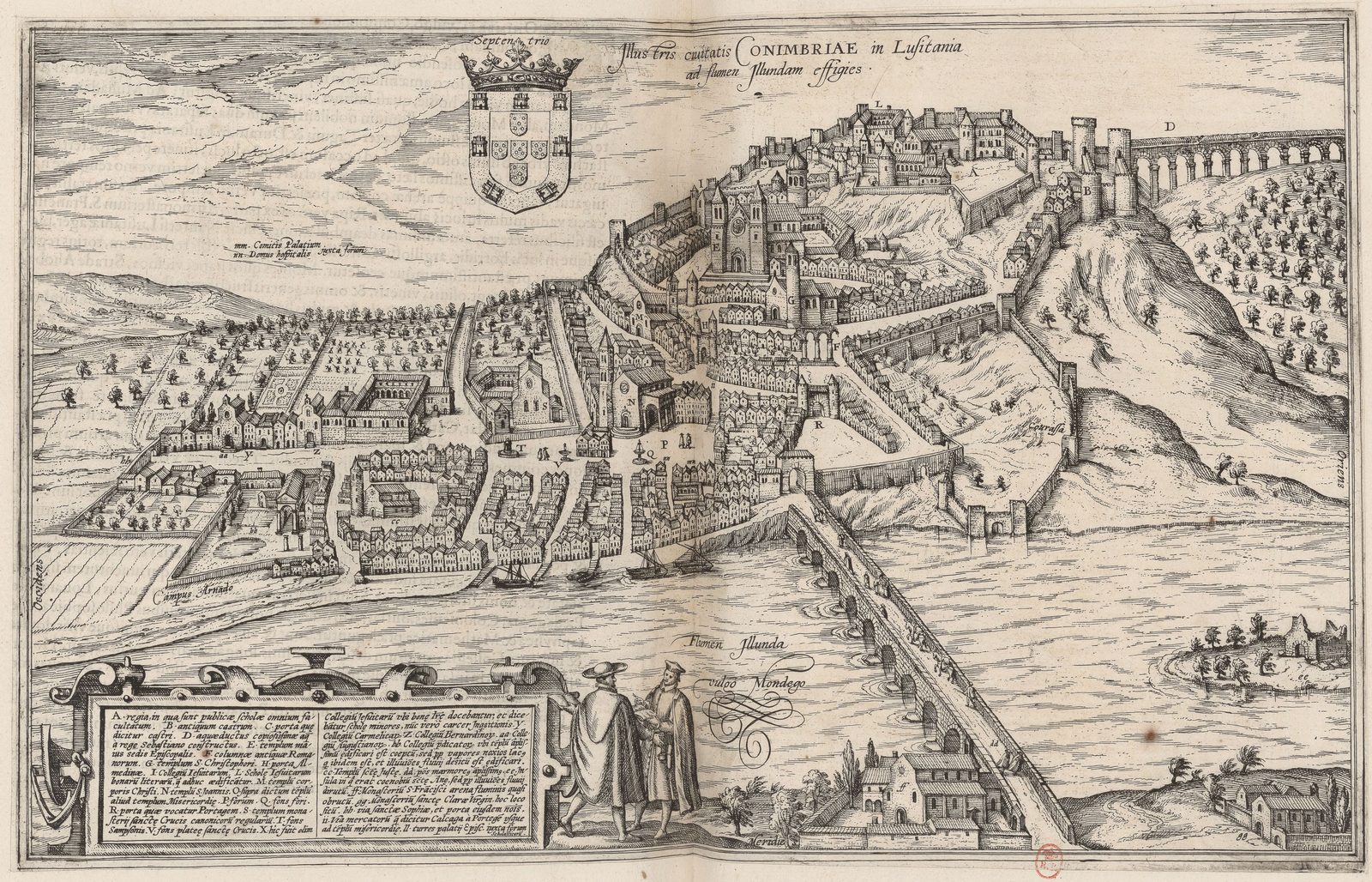
His entry into the Society of Jesus is as well documented as his arrival. Jerónimo Nadal was then commissary for the Iberian provinces of the Society, and the decision to receive Bernardo was taken under him in December 1553. The editorial apparatus of Ruiz-de-Medina's edition, citing Juan de Polanco's chronicle, places the admission itself at the beginning of 1554. A letter of Diego Mirón dated 14 February 1554 already describes Bernardo as a novice at Coimbra. The best-supported date for his entry is therefore January 1554, with 1553 the year of deliberation and authorization. Valignano, writing much later, said he was received "by Our Father Ignatius," which most plausibly means received into the order during Ignatius's generalate. The phrase need not mean that Ignatius admitted him in person; Bernardo was in Portugal at the time and Ignatius in Rome.
That made Bernardo the first Japanese known to have entered the Society. Within Japan, Oliveira e Costa names Paulo of Bungo and Brother Lourenço as the first Japanese admitted, around 1556. Ruiz-de-Medina's edition treats Lourenço's admission at about that date with care, because the forms of early Japanese admission did not map neatly onto the European sequence of novitiate and vows, and association with the mission was a different thing from formal membership. These distinctions explain why Lourenço is sometimes called the first Japanese Jesuit brother: the claim usually concerns admission inside Japan, whereas Bernardo was received in Portugal.
At Coimbra Bernardo studied Latin and the humanities. The intention, consistent with Xavier's letters, was to prepare him to return to Japan as a native preacher who could speak from what he had seen. Coimbra was the principal Jesuit house of studies in Portugal and a recruiting ground for the Indies; among those there in the same years was Pedro Gómez, who would later govern the Japan mission as vice-provincial. Little is recorded about his progress in his studies; at Coimbra he appears in the record as a novice mentioned in his superiors' letters.
The Year of Three Popes
Bernardo's Stay in Rome in 1555 and His Meeting with Ignatius of Loyola
In 1554 Bernardo set out for Rome. As reconstructed by Schurhammer from the Jesuit letters, the route ran overland through Spain by way of Salamanca, Segovia and Barcelona, and then by sea to Naples. He reached Rome on 7 January 1555.
In Rome he met Ignatius of Loyola at the professed house of the Society. Pedro de Ribadeneyra, then a young Jesuit and later Ignatius's first biographer, acted as his confessor and companion, and it is Ribadeneyra who left the description of him as the first man baptized in Japan.
He arrived in a year of unusual turnover at the papal court. Julius III died on 23 March 1555. Marcellus II was elected on 9 April and died on 1 May. Paul IV was elected on 23 May. Kōso's account records that Bernardo had an audience with Paul IV. That account supports the general sequence of the Roman visit, but the audience itself, its date and anything said at it have not been tied to a dated document.
He left Rome on 23 October 1555 with Luís Gonçalves da Câmara, who was taking him back to Portugal; Schurhammer gives 18 October.
One further item belongs to the Roman period. Nadal, in a letter of 1568, describes lines in Japanese and Italian in Bernardo's hand that Friedrich von Wirsberg, by then prince-bishop of Würzburg, had brought back from his own time in Rome, kept with devotion and showed him in 1566. The sheet has not survived: by the time Schurhammer asked, it was no longer in the Würzburg diocesan archive, which lost 60 percent of its holdings on 16 March 1945, and the attribution rests on Nadal's report of what the bishop told him.
Lent at Coimbra
The Death of Bernardo at Coimbra in 1557 and Valignano's Epitaph
The return journey ran through Florence, Pisa and Genoa, then by sea to Alicante and overland across Murcia into Portugal. Bernardo resumed his studies at Coimbra and fell gravely ill there.
The sources give his death in three forms that should be kept apart. Kōso places it in late February or early March 1557. Curvelo puts it in the spring of 1557. Schurhammer, in one note, says he died in Lent; a letter written from the college in May 1557 places his illness and death in the weeks before Lent, which began that year on 3 March. He was buried at Coimbra.
If the birth year of about 1532 is right, he was some 25 years old. He had left Japan a little over five years earlier and had been in Europe since 1553.
Valignano's Historia del principio y progresso de la Compañía de Jesús en las Indias Orientales, written in the 1580s, gives him an epitaph. Bernardo, in Valignano's words, was "a prudent and virtuous man" who died in the college of Coimbra con mucha edificación, to the great edification of all. The phrase is a conventional one in Jesuit accounts of a good death, and it records what the order wished to say of his end.
The Errand Left Undone
Bernardo's Legacy: The Tenshō Embassy, the Japanese Jesuit Brothers and Arai Hakuseki
Xavier's plan required a return, and Bernardo did not return. No Japanese audience heard him describe Lisbon or Rome, and the testimony Xavier had wanted for the mission was never given. Curvelo has argued that his death postponed Xavier's idea of a two-way exchange of witnesses between Japan and Europe until the Tenshō Embassy of 1582–90, when four young Japanese Christians were sent to Europe and brought home again.
The organizer of that embassy, Alessandro Valignano, was also the author of Bernardo's epitaph, and he knew the earlier story. Whether he consciously modeled the embassy on Xavier's experiment is not known. The differences between the two journeys are a matter of record. Bernardo traveled as an individual convert under a Jesuit's recommendation, without diplomatic letters, and left little trace outside Jesuit correspondence. The Tenshō envoys were presented as representatives of Christian lords of Kyūshū, were received in ceremony and returned to Japan to tell what they had seen.
Oliveira e Costa has read Bernardo institutionally, as the forerunner of the Japanese brothers who by 1590 made up half of the Jesuits of the Japan mission. That reading places him at the start of a line that ran through Lourenço and Paulo of Bungo to the Japanese brothers and catechists on whom the mission came to depend. The line was not a direct succession: Bernardo was received in Portugal and died there, and the Japanese brothers of the 1580s were recruited and trained in Japan. What connects them is an intention already visible in Xavier's letters: that Japanese Christians would themselves carry the faith to Japan.
On the Japanese side the record is close to empty. No contemporary Japanese account of Bernardo has been identified. The nearest thing to a Japanese memory comes a century and a half later and in garbled form. In 1709 the scholar and shogunal adviser Arai Hakuseki questioned the Sicilian missionary priest Giovanni Battista Sidotti, who had entered Japan illegally and been brought to Edo. In Seiyō kibun (西洋紀聞, "Things Heard about the West"), Hakuseki recorded what Sidotti told him of an envoy of the lord of Bungo who took a young boy to Rome to join the order and died there as he was about to return; Hakuseki himself supplied the envoy's name, Ueda Genza, and dated him to the Tenshō Embassy, and Kōso Toshiaki has suggested that the man who died in Europe is a memory of Bernardo. Bernardo's own Japanese name does not appear in that account or in any other known source.
Sources & Further Reading
Bourdon, Léon. La Compagnie de Jésus et le Japon, 1547–1570. Paris: Fondation Calouste Gulbenkian, 1993. The standard history of the mission's first two decades; its pages on Bernardo give his age, his admission and his death.
Curvelo, Alexandra. "Coimbra e a missão do Japão no século XVI numa perspetiva histórico-artística." In Visto de Coimbra: O Colégio de Jesus entre Portugal e o Mundo, edited by Carlota Simões, Margarida Miranda and Pedro Casaleiro, 175–192. Coimbra: Imprensa da Universidade de Coimbra, 2020. Places Bernardo in the history of the Coimbra college and its ties to the Japan mission, and sees in his early death the postponement of the exchange the Tenshō Embassy later carried out.
Kōso, Toshiaki (髙祖敏明). "Misshon shō ka shiviru anbasadā ka: Tenshō ken'ō shisetsu no rekishiteki ichi o kangaeru" (ミッション・ショーかシヴィル・アンバサダーか―天正遣欧使節の歴史的位置を考える―). Jōchi Daigaku Kyōikugaku Ronshū 52 (2018): 17–34. Reads Xavier's plan through the proverb of the frog in the well and follows Bernardo from Kagoshima to Rome and Coimbra, as the forerunner of the Tenshō Embassy.
Oliveira e Costa, João Paulo. "The Misericórdias among Japanese Christian Communities in the 16th and 17th Centuries." Bulletin of Portuguese-Japanese Studies 5 (2002): 67–79. Counts the Japanese members of the Jesuit mission, half of it by 1590, and names Bernardo as the first Japanese to come to Europe.
Ruiz-de-Medina, Juan G., ed. Documentos del Japón, 1547–1557. Rome: Instituto Histórico de la Compañía de Jesús, 1990. The critical edition that identifies the Yamaguchi temple as Daidōji, separates Yoshitaka's 1551 grant from Yoshinaga's 1552 confirmation, places Torres and Fernández in Yamaguchi in September 1551, and supplies the documents behind the January 1554 admission and Lourenço's baptism.
Schurhammer, Georg. Francis Xavier: His Life, His Times. Vol. 4, Japan and China, 1549–1552. Translated by M. Joseph Costelloe. Rome: Jesuit Historical Institute, 1982. The standard day-by-day reconstruction of Xavier's Japanese journeys and of the departure from Bungo and the passage to India, on which the account of Bernardo's years with Xavier draws. Its note on Bernardo (p. 65 n. 2) traces his later life, from Lisbon to his death at Coimbra.
Cite this page
Nanban.pt. “The Witness Who Never Went Home: Bernardo of Kagoshima, the First Documented Japanese Visitor to Europe (c. 1532–1557).” Last modified 25 October 2026. https://nanban.pt/articles/bernardo-of-kagoshima/.
@misc{nanban-bernardo-of-kagoshima,
  author = {Nanban.pt},
  title = {The Witness Who Never Went Home: Bernardo of Kagoshima, the First Documented Japanese Visitor to Europe (c. 1532–1557)},
  year = {2026},
  url = "https://nanban.pt/articles/bernardo-of-kagoshima/",
  note = {Last modified 2026-10-25}
}