Cristóvão Ferreira: The Fallen Jesuit of Japan
The highest-ranking Jesuit in Japan broke under torture in 1633, renounced his faith, and spent the rest of his life helping the shogunate destroy the Church he had served for three decades. His apostasy is the darkest chapter of the Christian Century.
Cristóvão Ferreira was the highest-ranking Jesuit in Japan, a Portuguese priest who broke under torture in 1633 and renounced his faith. He then spent the rest of his life helping the shogunate destroy the Church he had served for three decades, an apostasy remembered as the darkest chapter of the Christian Century.
Ferreira’s Apostasy: Five Hours in the Pit, 1633
Five Hours in the Pit
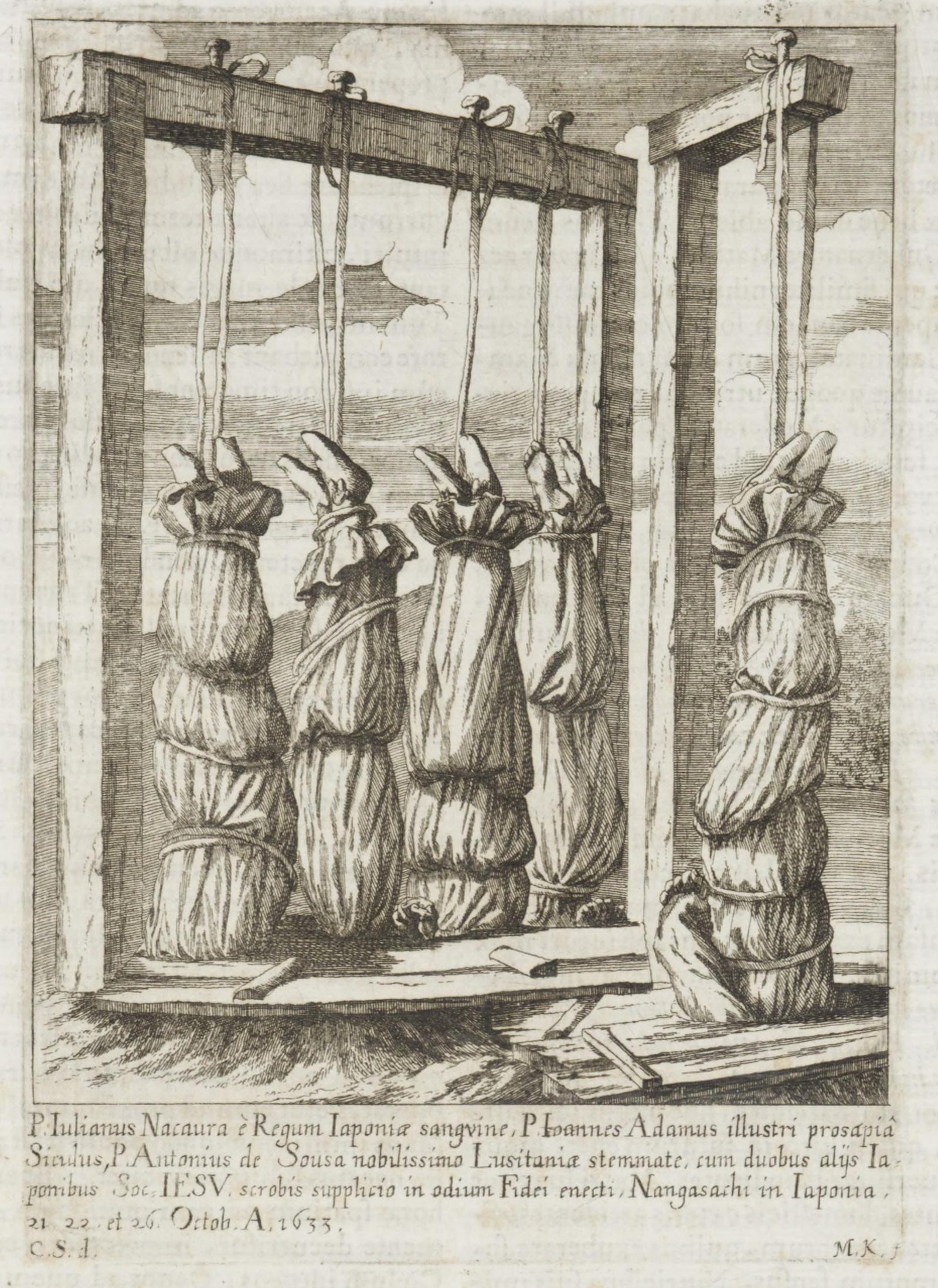
On October 18, 1633, in a courtyard in Nagasaki, eight men were suspended upside-down over open pits.
Their bodies were tightly bound to prevent excessive movement, with one hand left free, the hand that would signal surrender. Small incisions had been made behind their ears, allowing blood to seep slowly from the head, relieving just enough cranial pressure to prevent the merciful loss of consciousness. Below them, the pits were filled with excrement. The torture was called ana-tsurushi, the hanging in the pit, and it had been refined by the Tokugawa inquisitors not to kill but to break. A victim could endure it for days.
Seven of the eight held. The Dominican father Lucas del Espíritu Santo lasted nine days before he died. The others, five Jesuits and a Dominican lay brother, endured their hours and accepted their deaths or were eventually dispatched. Among them was Julião Nakaura, who had once traveled to Rome as a teenage ambassador of the Tenshō Embassy, kissed the feet of Pope Gregory XIII, and been granted the title of Knight of the Golden Spur. He did not break.
The eighth man was 53 years old. He was Portuguese, from Torres Vedras. He had been a Jesuit since the age of 16. He had spent over two decades in Japan, much of it operating underground after the 1614 expulsion edict, moving between safe houses, celebrating secret masses, baptizing and burying in the shadows. He had risen to become the Vice-Provincial of the Jesuit mission, the highest-ranking Catholic official in Japan. His name was Cristóvão Ferreira.
After five to six hours, Ferreira raised his free hand and signaled his apostasy.
He became the first European priest in Japan to break under torture. He would spend the remaining 17 years of his life helping the men who broke him destroy the faith he had served for 37 years.
Who Was Cristóvão Ferreira Before He Apostatized?
The Man Before the Pit
Ferreira’s early career was, by the standards of the Jesuit mission in Asia, exemplary. Born around 1580, he entered the Society of Jesus in 1596 and sailed to the East in 1600, studying theology and Japanese in Macau before arriving in Japan around 1609. He spent two years studying the language in Arima, then moved to Kyoto, where he served in the Jesuit residence as minister, consultor, and admonitor, administrative roles that demanded both linguistic fluency and cultural sensitivity.
When the definitive expulsion edict of 1614 ordered all missionaries out of Japan, Ferreira refused to leave. He went underground, one of dozens of priests who chose to remain secretly in the country, ministering to the hidden Christian communities at the risk of capture and death. He took his final Jesuit vows in 1617. He traveled covertly through the Kansai region and Shikoku, administering sacraments, hearing confessions, maintaining the fragile infrastructure of a Church that could no longer exist in daylight.
He was, by all accounts, good at this. His Japanese was fluent. His understanding of the culture was deep. He rose steadily: secretary to the Provincial, then Procurator of the Society in Japan, then, as his superiors were arrested and killed one by one through the 1620s and early 1630s, the last man standing. When Provincial Mateus de Couros died in 1632 and his successor Sebastião Vieira was captured, Ferreira became the Vice-Provincial and Vicar General of the entire Japanese Diocese. The formal notification of his appointment, dispatched from Rome in December 1632, never reached him.
He was captured in Nagasaki on September 24, 1633. 24 days later, he was in the pit.
Why Ferreira’s Apostasy Mattered to the Tokugawa
What the Pit Proved
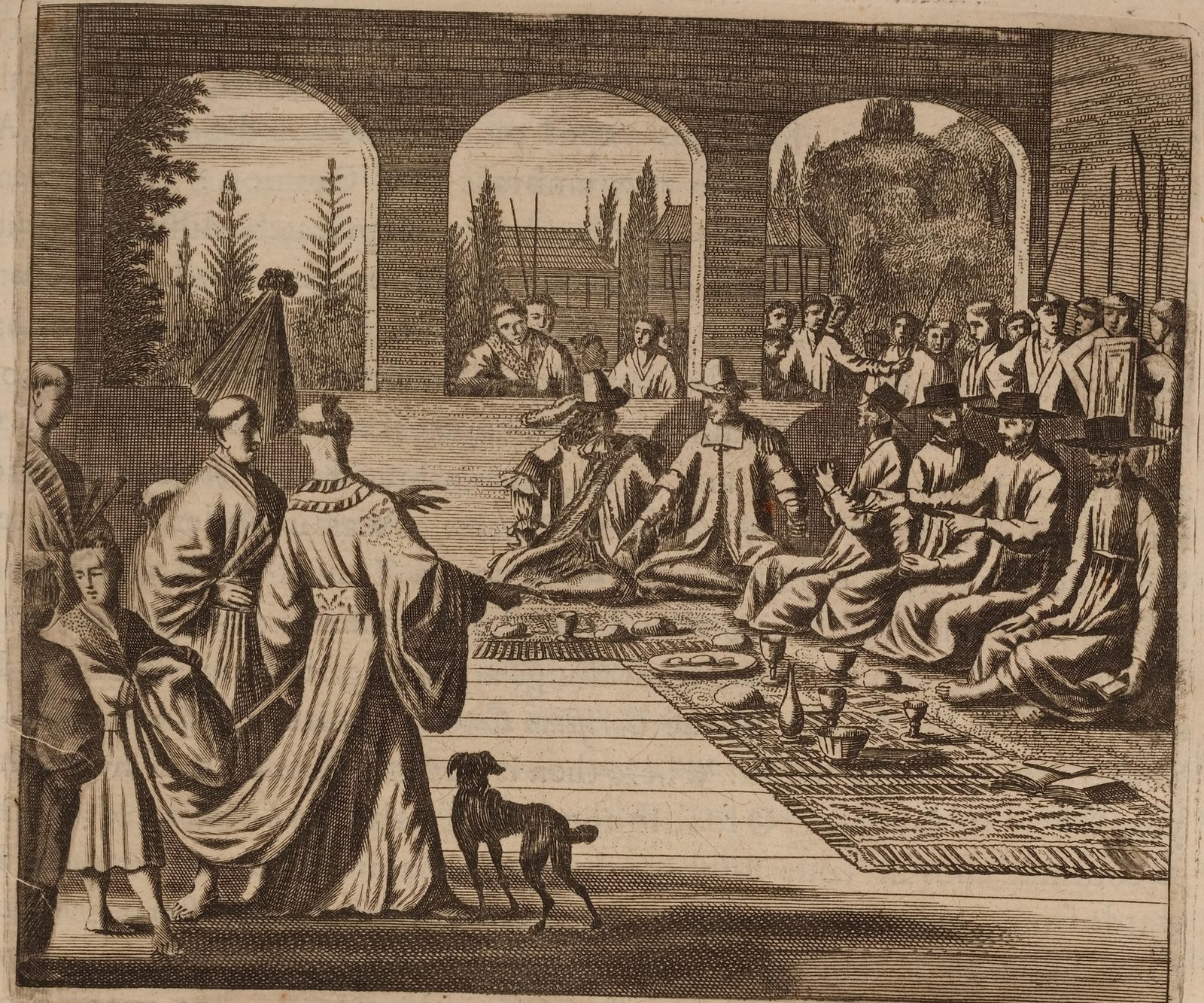
For the Tokugawa inquisitors, Ferreira’s apostasy was not merely a success. It was the single most valuable propaganda victory in the entire campaign against Christianity.
The persecution’s psychological strategy, pioneered by the Nagasaki governors and perfected by Inoue Chikugo-no-kami Masashige, later the Inquisitor General, rested on the understanding that killing Christians was counterproductive. Martyrdom created saints. Saints inspired the faithful. The blood of the persecuted seeded the Church. The public executions of the 1620s, the Great Martyrdoms of Kyoto and Nagasaki, where dozens were burned alive or beheaded, had produced precisely this effect: the crowds who witnessed the deaths were often more strengthened than terrified.
Their insight was that apostasy was more devastating than martyrdom. A dead priest was a relic. A living priest who had publicly renounced his faith was proof that the Christian God could not protect those who served him. The higher the priest’s rank, the more devastating the proof.
And Ferreira was the highest-ranking Catholic official in the country.
His breaking demonstrated, to the hidden Christian communities scattered across Kyushu, that the Vice-Provincial himself, the man who had led the mission, who had administered the sacraments, who had been closer to God than anyone else in Japan, had looked into the pit and concluded that God was not coming. If the shepherd fell, what hope had the sheep?
The shogunate exploited the apostasy immediately and systematically. Ferreira was not discarded. He was repurposed.
Sawano Chūan: Ferreira’s Life After Apostasy
Sawano Chūan
For the remaining 17 years of his life, Cristóvão Ferreira lived as Sawano Chūan, a Japanese name, a Japanese identity, a Japanese life. He was registered as a member of the Zen Buddhist sect. He was given a residence in Nagasaki. The shogunate arranged for him to marry the Japanese widow of an executed Chinese merchant. They had a son and two daughters.
He was placed under the direct command of Inoue Masashige and put to work. His assignment was, in essence, to use everything he knew about the Church to destroy it. He served as an interpreter and translator for the Nagasaki magistrate’s office, rendering intercepted European documents into Japanese. He worked as an inspector of incoming foreign ships in Nagasaki harbor, searching for smuggled missionaries, Bibles, and Christian contraband. He helped formulate the specific written oaths of apostasy, korobi shōmon, that forced apostates to swear by both Japanese and Christian deities, calling down divine damnation on themselves if they ever returned to the faith. The oaths were designed to be psychologically irrevocable, sealing the apostate’s break with a specificity that made reconversion feel like self-destruction.
And he interrogated priests.
When the Rubino Groups, Italian Jesuits who had deliberately smuggled themselves into Japan in 1642 and 1643 with the explicit mission of finding Ferreira and persuading him to recant, were captured, Ferreira was their interrogator, certainly in 1643 and perhaps in 1642. He questioned his former brethren. He taunted them. He argued, reportedly, that if God were true, He would deliver them from the shogun’s clutches. He helped break the second group, whose members all apostatized, including Giuseppe Chiara, who, like Ferreira, took a Japanese name (Okamoto San’emon) and lived out his days as a servant of the Tokugawa state.
The missionaries who had come to save Ferreira’s soul were destroyed with Ferreira’s help.
The Books Ferreira Wrote as Sawano Chūan
The Scholar in the Wreckage
There is a paradox at the center of Ferreira’s post-apostasy life that resists easy moral categorization.
As Sawano Chūan, Ferreira authored works that served the shogunate’s anti-Christian program. The Kengiroku, “Deceit Disclosed,” signed in 1636, was an anti-Christian treatise that methodically refuted Catholic dogma using natural law and Confucian ethics. It painted Christianity as a political fabrication designed to destabilize foreign governments, interpreting the First Commandment as a subversive doctrine that bred rebellion against secular authority. The work could serve a practical function: it was, in effect, a technical manual for Japanese inquisitors, providing them with the theological vocabulary and argumentative framework they needed to interrogate Christian prisoners effectively, although the authorities kept it strictly locked away rather than exploiting it.
But Ferreira also produced works that had nothing to do with persecution and everything to do with the transmission of knowledge.
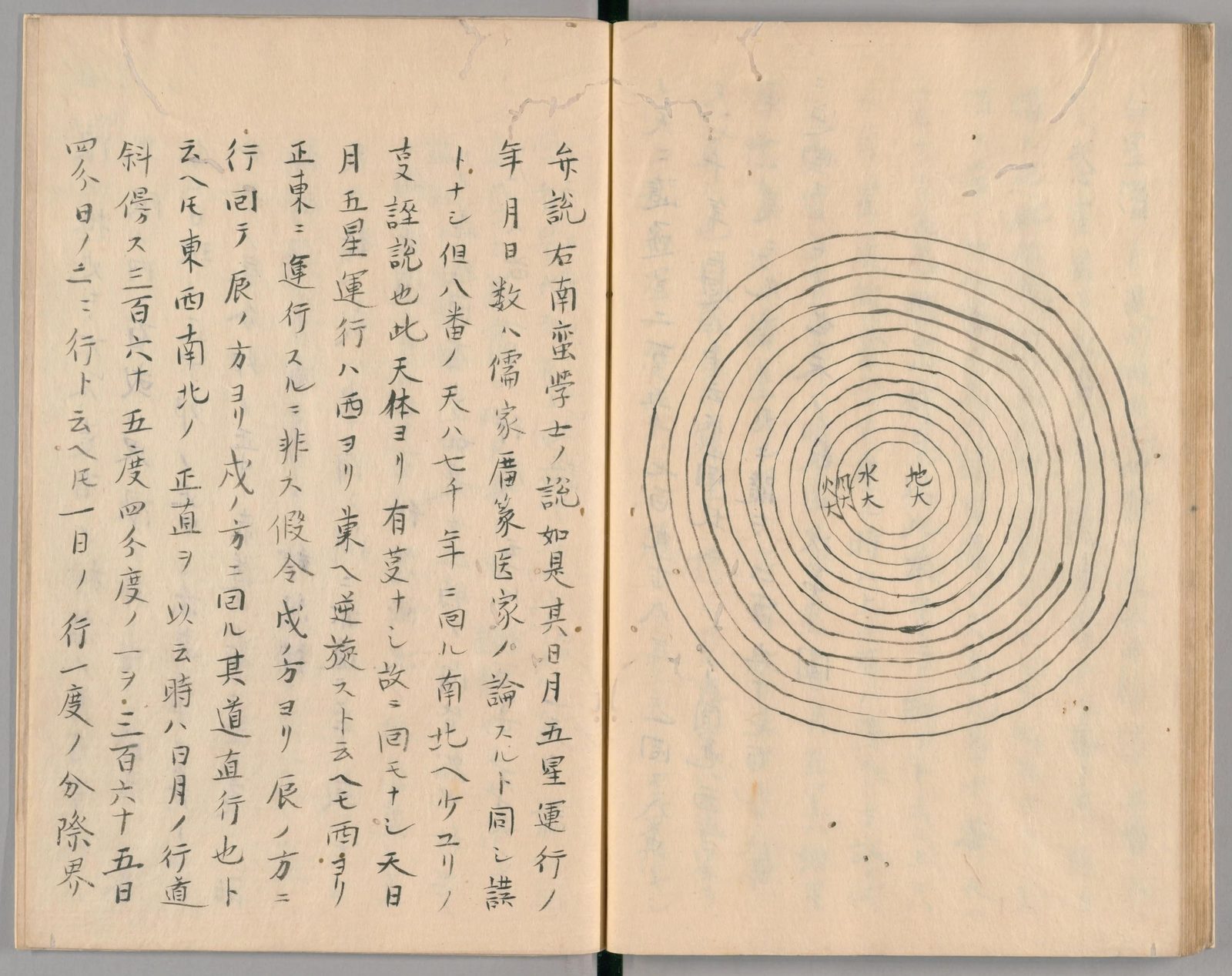
In the mid-1640s, Inoue ordered Ferreira to translate a Western astronomy text that had been confiscated from a captured priest. Ferreira rendered the cosmological treatise into Romanized Japanese, and it was subsequently transcribed into native script by the translator Nishi Kichibei and annotated by the Confucian scholar Mukai Genshō. Completed in the later 1650s as the Kenkon Bensetsu, “Debate on Astronomy”, the work covered the structure of the cosmos, the composition and dimensions of the earth, and astronomical phenomena. It was the first publication of Western scientific theories in Japan and proved deeply influential among Japanese intellectuals, contributing to the Rangaku tradition of Dutch Learning that would, over the following two centuries, become Japan’s window onto European science.
Ferreira also authored medical treatises, including the Nanban Geka Hidensho, “The Secret Book of Southern Barbarian Surgery”, drawing on knowledge acquired from his interactions with Dutch physicians at Dejima. He took on Japanese pupils, passing down rudimentary Western surgical techniques to a country whose other windows onto European medicine were few and tightly controlled.
The man who helped the shogunate destroy the Christian Church also helped Japan access Western science and medicine. The man who broke priests under torture also trained surgeons. The moral architecture of the story does not resolve into a clean arc of villainy. It resolves into something more uncomfortable: a human being operating under coercion, serving a state that had broken him, and producing, amid the wreckage of his former life, work that was both destructive and constructive simultaneously.
How Catholic Europe Reacted to Ferreira’s Fall
The Shockwave
In Catholic Europe, Ferreira’s apostasy landed with the force of a detonation.
The initial reports were confused. The Portuguese trading ships had left Nagasaki for Macau just before Ferreira’s torture was completed, and the first communications to reach Rome actually reported that Ferreira had died a glorious martyr. For a brief period, the Society of Jesus believed it had gained a saint. When the truth arrived, that the Vice-Provincial was alive, apostatized, married, and working for the enemy, the reversal was devastating.
On November 1–2, 1636, in Macau, Visitator Manoel Dias and nine other Jesuits convened a formal canonical proceeding, pronounced the ban, and signed the document expelling Cristóvão Ferreira from the Society of Jesus. The man who had been the leader of the Japan mission was now, officially, nobody.
The institutional response was driven by something deeper than administrative procedure. Ferreira’s fall was an existential crisis for the Society. The Jesuits’ enemies, rival religious orders, Protestant polemicists, secular critics, immediately weaponized the apostasy as proof that the Jesuit enterprise in Asia was built on vanity rather than faith.
Jesuits across Europe and Asia volunteered for the Japan mission in what amounted to a wave of expiatory martyrdom. The most famous expedition was the 1635 voyage of 34 Jesuits led by Padre Marcello Mastrilli, reportedly sponsored by King Philip IV, which was widely understood, whether or not it was literally true, as a mission of atonement for Ferreira’s fall. The Rubino Groups of 1642–43 were more explicit: Italian Jesuits who smuggled themselves into Japan with the specific, stated purpose of finding Ferreira and persuading him to recant.
They found him. He interrogated them. Several broke. The rest were killed. The atonement failed.
How Cristóvão Ferreira Died, 1650
The Legends
Cristóvão Ferreira died in Nagasaki in November 1650, at approximately 70 years of age. He died as Sawano Chūan, a Buddhist, a servant of the Tokugawa state, a married man with three children. He had not returned to the Christian faith.
This was, for the Society of Jesus, an intolerable conclusion. The Jesuits could process martyrdom. They could process failure. What they could not process was the idea that the leader of their Japan mission had lived and died in a state of permanent apostasy, that his soul was, by the Church’s own theology, damned. The institution needed a different ending: Reports reached Jesuit superiors in 1653 and 1654, transmitted via a mandarin in Tonkin, claiming that the elderly Ferreira had been struck by a severe illness, filled with remorse, and confessed his sins aloud to God. Betrayed by a servant, or by the volume of his own prayers, he was supposedly dragged from his sickbed before the magistrate. When his tormentors laughed and called him delirious, he replied with full clarity of mind. He was returned to the pit. He died a martyr.
The story was beautiful and it has never been confirmed. The reports reached Europe at second hand by way of Tonkin, two years after Ferreira was already dead, and Cieslik, who examined them, left the question open. The legend was a mechanism of institutional consolation, a narrative patch applied to a wound that the Society could not bear to leave open. It circulated widely in Catholic Europe for decades. It comforted those who needed comforting.
Ferreira in Endō’s Silence
Silence
Ferreira’s story would have remained an obscurity of ecclesiastical history, a footnote in the annals of the Japan mission, known to specialists and forgotten by everyone else, if not for a Japanese Catholic novelist named Endō Shūsaku.
In 1966, Endō published Chinmoku, Silence, a novel that placed Ferreira at the center of a fictional narrative about two young Portuguese Jesuits who smuggle themselves into Japan to find their former teacher and confront the mystery of his apostasy. The novel, widely regarded as one of the masterpieces of 20th-century Japanese literature, does not treat Ferreira as a villain. It treats him as a problem, a theological problem, a human problem, a problem about what faith means when God does not intervene.
Endō’s Ferreira is a man who broke not because he lacked faith but because the suffering of others, the Japanese Christians tortured alongside him, tortured because of him, was unbearable. The novel’s central question is not whether apostasy is forgivable but whether it can be, in circumstances of extremity, an act of compassion. The answer Endō gives is deliberately ambiguous, which is why the novel has haunted readers, Catholic and otherwise, for 60 years.
Martin Scorsese’s 2016 film adaptation brought the story to a global audience, and Ferreira, played by Liam Neeson, became a figure known far beyond the seminar rooms of Jesuit history and Japanese studies. The real Ferreira was probably neither the monster that his contemporaries feared nor the tortured soul that Endō imagined. He was a man who endured five hours of a torture specifically designed to be unendurable and concluded, at the age of 53, that he could not endure a sixth. Everything that followed, the collaborations, the interrogations, the writings, the marriage, the children, the 17 years of service to the state that had destroyed him, flowed from that single decision in the pit.
Sources & Further Reading
Boxer, C.R. The Christian Century in Japan, 1549–1650. University of California Press, 1951. The foundational study, with detailed treatment of Ferreira’s apostasy and its consequences.
Cieslik, Hubert. “The Case of Christovão Ferreira.” Monumenta Nipponica 29, no. 1 (1974): 1–54. The definitive scholarly article on Ferreira, drawing on primary Jesuit sources and Japanese administrative records.
Elison, George. Deus Destroyed: The Image of Christianity in Early Modern Japan. Harvard University Press, 1973. Essential for understanding the ideological apparatus of persecution in which Ferreira operated as Sawano Chūan.
Endō, Shūsaku. Silence. Trans. William Johnston. Monumenta Nipponica Monographs, Sophia University, 1969. The novel that made Ferreira’s story globally known, fiction, but grounded in historical reality and the deepest theological questions of the persecution.
Hesselink, Reinier H. The Dream of Christian Nagasaki: World Trade and the Clash of Cultures, 1560–1640. McFarland, 2016. Provides the Nagasaki context for Ferreira’s arrest and post-apostasy life.
Higashibaba, Ikuo. Christianity in Early Modern Japan: Kirishitan Belief and Practice. Brill, 2001. Useful for understanding the hidden Christian communities that Ferreira’s apostasy was designed to demoralize.
Moran, J.F. The Japanese and the Jesuits: Alessandro Valignano in Sixteenth-Century Japan. Routledge, 1993. Background on the Jesuit institutional culture that shaped Ferreira’s career and the Society’s response to his fall.
Paramore, Kiri. Ideology and Christianity in Japan. Routledge, 2009. Analyzes Ferreira’s anti-Christian writings, particularly the Kengiroku, within the broader context of Tokugawa ideological control.
Screech, Timon. The Lens Within the Heart: The Western Scientific Gaze and Popular Imagery in Later Edo Japan. University of Hawai’i Press, 2002. Relevant for understanding the Rangaku tradition to which Ferreira’s scientific writings contributed.
Turnbull, Stephen. The Kakure Kirishitan of Japan: A Study of Their Development, Beliefs and Rituals to the Present Day. Japan Library, 1998. Traces the long-term consequences for the hidden Christian communities that Ferreira’s apostasy and subsequent collaboration helped to dismantle.
Recent scholarship
- González-Bolado, Jaime (2026). “Letters from Exile: Jesuit Knowledge Production on Japan in the Wake of the “Christian Century” (1640–70)”, Journal of Jesuit Studies, 13:1. — A fresh angle on the decades after the expulsion: the Jesuits kept producing knowledge about a Japan they could no longer enter, through informant networks across East Asia and annual letters written from exile — essential context for the aftermath of 1639.
Cite this page
Nanban.pt. “Cristóvão Ferreira: The Fallen Jesuit of Japan.” Last modified 25 September 2026. https://nanban.pt/articles/cristovao-ferreira/.
@misc{nanban-cristovao-ferreira,
  author = {Nanban.pt},
  title = {Cristóvão Ferreira: The Fallen Jesuit of Japan},
  year = {2026},
  url = "https://nanban.pt/articles/cristovao-ferreira/",
  note = {Last modified 2026-09-25}
}