O Desejado: Dom Sebastião and the Ghost That Haunted Two Empires
A posthumous orphan, a boy-king obsessed with crusade, and a catastrophic death in Morocco, how one man's medieval fantasies in Lisbon reshaped the future of Christianity in Japan
Dom Sebastião (1554-1578) was King of Portugal from 1557 until his death at the battle of Alcácer Quibir, and his reign shaped the Jesuit mission in Japan through the 1570 Sintra decrees banning the Japanese slave trade and an annual subsidy of 1,000 cruzados granted to the Japan mission in 1574. He died childless at 24, which, after the brief reign of his great-uncle Cardinal Henrique, ended the House of Aviz and delivered Portugal to Philip II of Spain in 1580, opening Japan to Spanish mendicant orders whose rivalry with the Portuguese Jesuits helped provoke the Tokugawa expulsion of the Portuguese and Spanish.
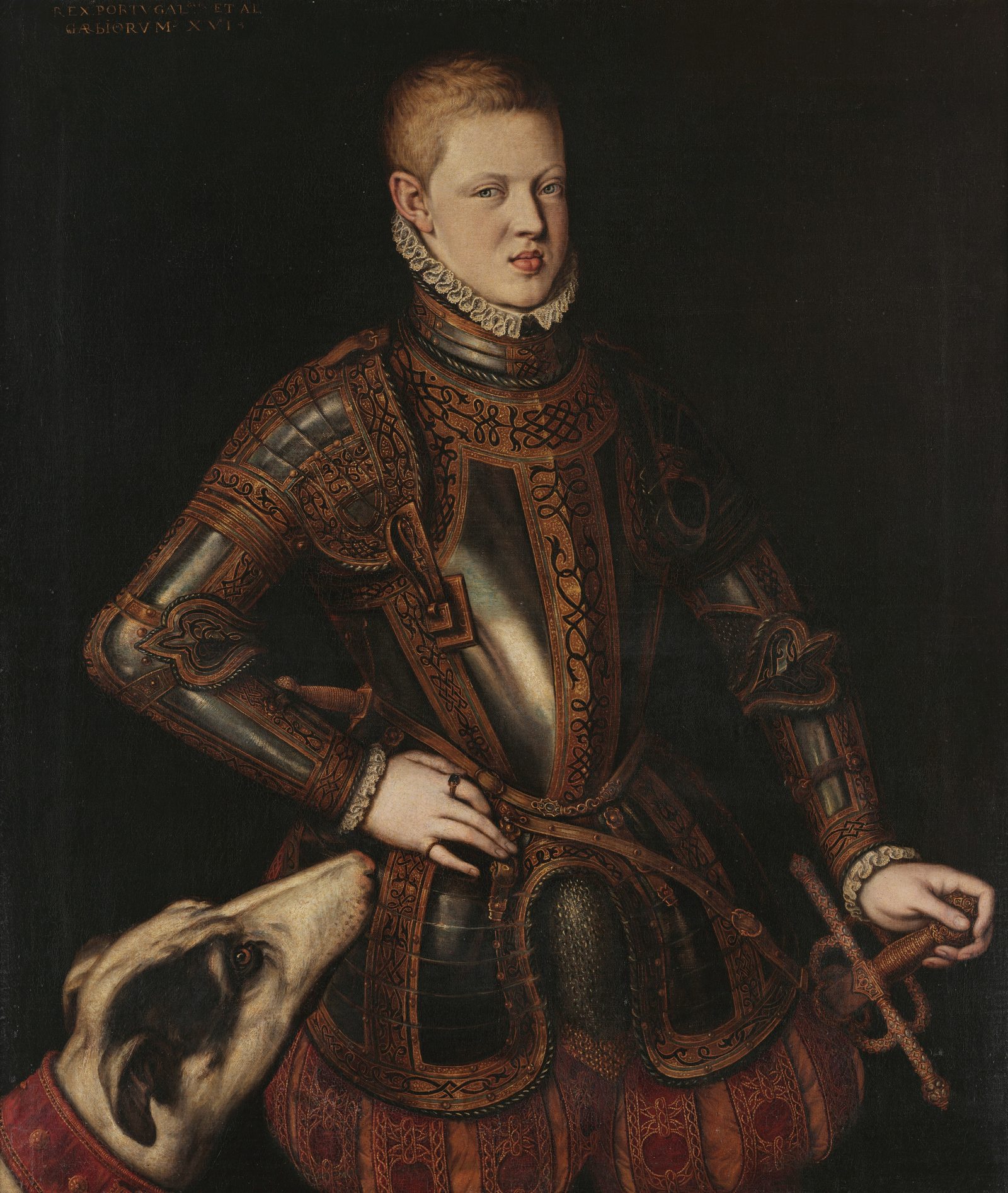
In the spring of 1574, a tall Italian Jesuit with a law degree, a scar from a youthful knife fight, and plenipotentiary authority over every Catholic mission from the Cape of Good Hope to the Sea of Japan traveled to the royal palace of Almeirim to ask the King of Portugal for money.
The king was 20 years old. He was blond, blue-eyed, hardened by obsessive hunting and fencing, and had been on the throne since the age of three. He dressed so plainly that foreign visitors mistook him for a minor courtier. He had refused every marriage proposal placed before him, a decision that was slowly bankrupting the hopes of an entire dynasty. He spent his nights studying Latin texts and military treatises. He spent his days dreaming of a crusade into North Africa that his advisors, the ones brave enough to speak honestly, regarded as suicidal.
The Jesuit was Alessandro Valignano, newly appointed Visitor of Missions in the Indies, and he needed 60 men and a royal subsidy to carry out the most ambitious restructuring of Catholic missions Asia had ever seen. The king listened. The king was generous. He provided the funds, arranged passage for the priests, and allocated an annual subsidy of 1,000 cruzados from the customs house at Malacca to sustain the Jesuit mission in Japan.
Four years later, both men's worlds would be unrecognisable. The king would be dead in a Moroccan field. The dynasty doomed. Portugal would vanish into the Spanish empire. And the chain of consequences set in motion by that death would reach all the way to the harbors of Nagasaki, where it would eventually help destroy everything the Jesuits had built.
The king's name was Sebastião. The Portuguese called him O Desejado, the Desired One. He had been desired from the moment of his birth, mourned from the moment of his death, and mythologized for centuries afterward. And the story of how a young man's obsession with medieval glory in Morocco reshaped the fate of Christianity in Japan is one of the strangest threads in the entire Nanban tapestry.
The Boy Who Was Already Too Late
Who Was Dom Sebastião? The King Born in 1554
Sebastião entered the world on 20 January 1554, and he was already carrying the weight of a kingdom before he drew his first breath.
His father, Prince João, heir to the Portuguese throne, had died 18 days earlier. The infant was posthumous, born to a dead man's widow, and he was the only thing standing between the House of Aviz and extinction. His grandfather, King João III, had fathered six sons. Every one of the other five had died without leaving a legitimate heir. The mathematics were brutal: an entire dynasty's survival now rested on the lungs of a newborn.
The court received the news of the birth with something approaching religious ecstasy. Here, finally, was the son that Portugal had prayed for, literally prayed for, with public processions and church services dedicated to petitioning God for an heir. The moniker O Desejado attached itself to the infant immediately. It was not just a nickname. It was a theological statement. This child was the answer to the nation's prayers, proof that divine providence had not abandoned the Portuguese.
His mother, Joana of Austria, daughter of the Holy Roman Emperor Charles V, took one look at the situation and left. She returned to Castile within weeks of the birth, leaving the infant prince to be raised by the Portuguese court. She would never return. Sebastião would grow up without a mother, without a father, and, after King João III died in 1557, when the boy was three, with no closer family than the grandmother and great-uncle who would govern in his name. He was an orphan on a throne, surrounded by courtiers, tutors, and Jesuits, all of whom had their own ideas about what the last hope of the Aviz dynasty should become.
The Education of a Crusader
How Sebastião Was Raised: The Regency and the Crusade
The regency that governed Portugal during Sebastião's minority was a study in dysfunction. His grandmother, Queen Catarina, herself a Castilian, sister of Charles V, served as regent from 1557 to 1562. She was competent but politically isolated, and her tenure accelerated the Castilianization of the Portuguese upper classes in ways that would prove deeply consequential. When she stepped down, exhausted by faction fighting, the regency passed to Sebastião's great-uncle, Cardinal-Infante Dom Henrique, a churchman of advanced age, limited imagination, and no talent whatsoever for the kind of rough-and-tumble politics that a regency demanded.
Sebastião's education, meanwhile, was producing a young man of considerable intelligence and catastrophic judgment. He was tutored by the celebrated mathematician and cosmographer Pedro Nunes, one of the finest scientific minds in Europe, and by Jesuit priests who steeped him in Latin, theology, and the martial ideals of the Christian knight. He could translate the most intricate Latin texts. He excelled at mathematics. He absorbed, with the uncritical enthusiasm of an orphan hungry for a sense of purpose, the chivalric romances that were enjoying a late and extravagant flowering at the Portuguese court, tales of knights errant, holy wars, and kings who conquered infidel lands for the glory of God and Christendom.
The Jesuits, in particular, shaped him profoundly. His personal tutor was Padre Luís Gonçalves da Câmara, a Jesuit of considerable influence, and the Society's fingerprints were all over the young king's worldview: the fervent piety, the sense of divine mission, the conviction that the King of Portugal occupied a unique position in God's plan for the redemption of the world. Sebastião's personal memorandum of governing principles, a kind of royal to-do list that he kept and updated, began with the instruction to "always have God as the end of all works". Other items included the conquest and development of India, Brazil, Angola, and Mina. The list read less like a policy agenda and more like a crusader's oath.
By the time Sebastião assumed personal rule in 1568, at the age of 14, he was a walking paradox: brilliant but rigid, devout but reckless, hardened by physical training but fatally sheltered from the real consequences of political decisions. Alessandro Valignano, who met the king six years later, described him with diplomatic precision, handsome, physically fit, pure in morals, simple in dress, deeply religious, and possessed of a strong sense of royal self-confidence. He was also, Valignano noted, "daring and obstinate in his plans". It was the kind of assessment that, read in hindsight, sounds less like praise and more like a diagnosis.
The King and the Faraway Islands
Portugal’s Japan Trade Under Dom Sebastião
While Sebastião was learning to fence and dreaming of Morocco, the foundations of Portugal's engagement with Japan were being laid 10,000 miles from Lisbon by men he would never meet.
Portuguese merchants had first stumbled onto the Japanese archipelago in 1543, during the reign of Sebastião's grandfather. Francis Xavier had launched the Jesuit mission there in 1549. By the late 1560s, the annual voyage from Macau to the ports of Kyūshū, carrying Chinese silk and returning laden with Japanese silver, was already one of the most profitable trade routes in the Portuguese empire. The details of that commerce, and the Jesuit enterprise it sustained, are told in depth elsewhere on this site. What matters here is the degree to which this entire enterprise depended on decisions made in Lisbon by a teenage king.
Sebastião's most consequential interventions in Japanese affairs came in a burst of legislative activity between 1570 and 1574. They were driven by a simple and sincere conviction: that the behavior of Portuguese merchants in Asia was a scandal that imperiled the salvation of souls, and that it was the king's sacred duty to correct it.
The intelligence reaching Lisbon was damning. Jesuit letters, which circulated widely through the court, because Sebastião's Jesuit advisors made sure they did, reported that Portuguese traders in Japan were engaged in practices so corrupt that they were actively destroying the missionary enterprise. Two offenses stood out with particular clarity.
The first was slavery. Portuguese merchants, along with their African and Indian servants, had been purchasing Japanese men, women, and children for years, prisoners of war sold by rival warlords, impoverished peasants sold by desperate families, and shipping them to Macau, the Philippines, Malacca, Goa, and as far as Lisbon and the Americas. The trade was an open secret, and the Jesuits reported that it was doing catastrophic damage to the Christian mission. Every Japanese person chained in the hold of a Portuguese ship was a walking advertisement against the faith.
The second was commercial fraud. Portuguese merchants were deliberately using one set of weights and scales for buying goods and a different, rigged set for selling them. The practice was, by the standards of any century, straightforward swindling, and the Japanese had noticed.
The Decrees of Sintra
The Decrees of Sintra, 1570: Regulating the Japan Trade
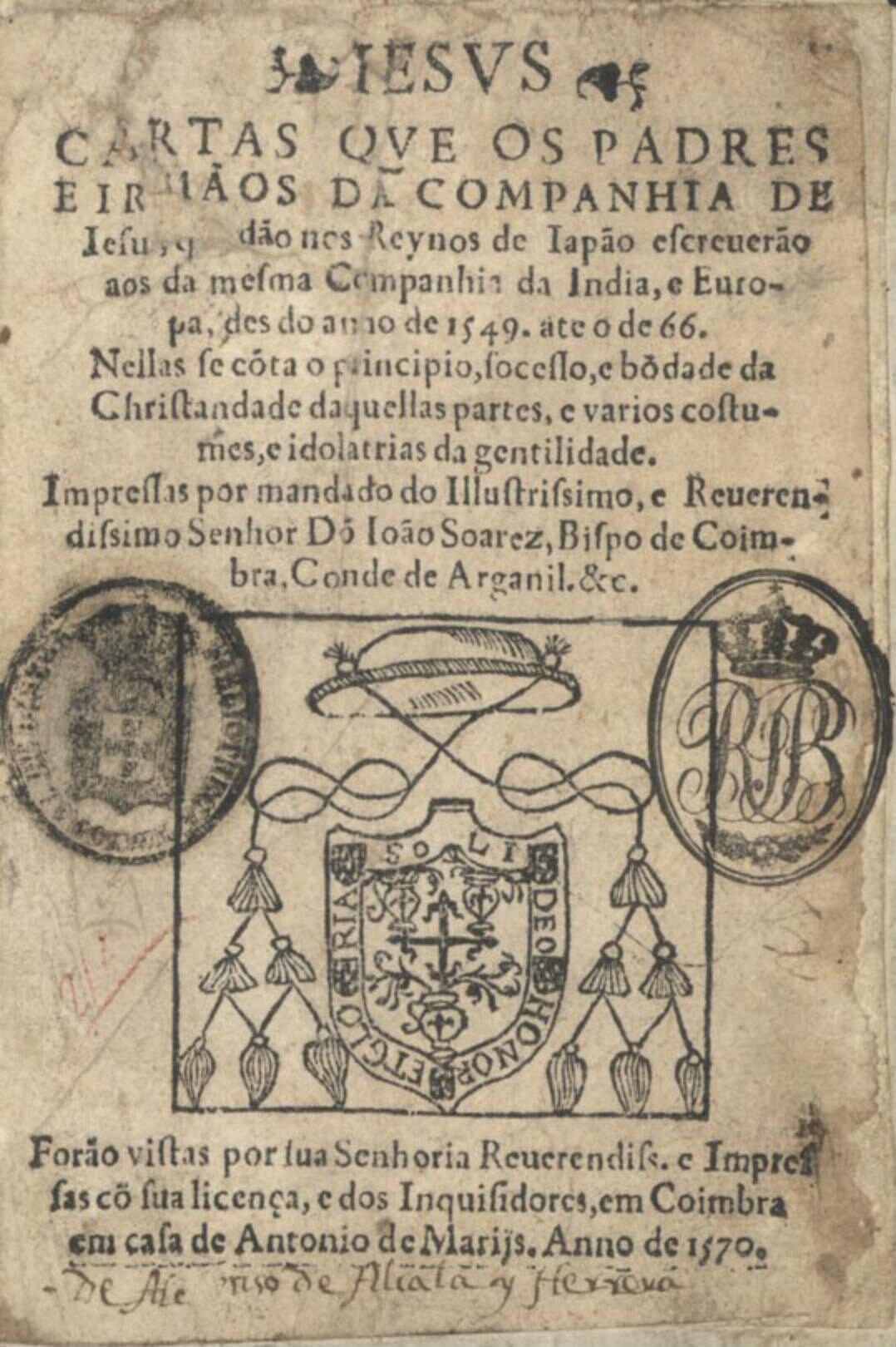
In September 1570, from his palace in Sintra, Sebastião signed a series of royal charters, alvarás, that represented one of the earliest attempts by any European monarch to legislate protections for a non-European people.
The centerpiece was a strict prohibition on the purchase, acquisition, or sale of Japanese men and women as slaves anywhere in Portuguese territory. The penalty was comprehensive confiscation of all property belonging to the offender. Any Japanese person found in bondage was to be freed unconditionally. The decree was not couched in abstract humanitarian language, it was framed explicitly as a defense of the missionary enterprise. The enslavement of the Japanese was creating, in the king's words, "great scandal" and serving as a "hindrance to the Christian mission". If the Portuguese wanted the Japanese to accept baptism, they needed to stop putting them in chains.
Alongside the anti-slavery injunction came a regulation of commercial practices. Sebastião ordered that all merchants buying and selling in Japan must use a single, standardized system of weights and measures. The rigged scales were banned. The fraud was to stop.
The decrees were published in March 1571 and dispatched to the Portuguese authorities in Goa. They arrived in Asia accompanied by royal letters addressed to Ōmura Sumitada, Dom Bartolomeu, the first Japanese daimyō to convert to Christianity, informing him directly that the Portuguese crown was taking active steps to protect his people from abuse. The letters were calculated diplomacy: by assuring converted Japanese lords that their subjects would be safe from Portuguese predation, Sebastião was trying to secure the network of friendly ports that the Jesuit missionaries depended on for their survival.
The problem, of course, was enforcement. Lisbon was, in the best case, 18 months by sea from Nagasaki. The Viceroy in Goa had his own priorities, his own faction fights, and his own complex relationships with the merchant class that profited from the slave trade. The wealthy traders who were buying and selling Japanese people had no intention of stopping, and the colonial authorities who were supposed to enforce the decree had no appetite for confronting them. The anti-slavery legislation was, as one historian put it, a practical failure. The trade continued. The fraud continued. The scandal continued.
And a generation later, when Toyotomi Hideyoshi confronted the Jesuits about the enslavement of his people, he was responding to a problem that a Portuguese king had already tried, and failed, to solve.
Silk, Silver, and the Jesuits' Stipend
How Silk and Silver Funded the Jesuit Mission
Sebastião's Japan policy was not all prohibition and regulation. He also understood, or, more precisely, his Jesuit advisors understood and persuaded him, that the missionary enterprise required money.
In 1574, the same year he met Valignano at Almeirim, the king enacted a formal annual subsidy of 1,000 cruzados for the Japan mission. The money was to be drawn from the revenues of the Portuguese customs house in Malacca, tying the mission's funding directly to the profits of the Asian maritime trade network. It was a shrewd arrangement: the Jesuits' survival in Japan was now institutionally linked to the commercial system that brought Portuguese ships to Asian waters in the first place.
The subsidy was modest compared to the sums the Jesuits would later generate through their direct involvement in the Macau-Nagasaki silk trade, but it represented something important, formal, ongoing royal commitment to the Japan mission as a state enterprise. Previous support had been ad hoc: a grant here, a favor there, dependent on the whims of individual viceroys. Sebastião's decree made it structural.
He also wielded trade privileges as a diplomatic instrument. In September 1570, alongside the anti-slavery decrees, the king enacted a charter granting freedom of trade in the seas of Japan, China, India, and the Moluccas specifically to converted Japanese rulers who supported Christianity. The message was unmistakable: baptism came with commercial benefits. Japanese lords who opened their ports to the Jesuits would find Portuguese carracks following close behind. Those who did not would find the ships going elsewhere.
It was during these very years that the infrastructure Sebastião was subsidizing reached its mature form. In 1570, Ōmura Sumitada reached an agreement with the Jesuits to open the small fishing village of Nagasaki to Portuguese shipping. In 1571, the first Portuguese carrack officially dropped anchor there, commanded by the fidalgo Tristão Vaz da Veiga. Within a decade, Nagasaki would eclipse every other port in Kyūshū, and in 1580, two years after Sebastião's death, Sumitada would take the extraordinary step of ceding the entire city to the Society of Jesus. The chain from royal subsidy to Jesuit port city was direct, and it began at Almeirim.
The Crusade
Why Dom Sebastião Invaded Morocco
While his policies were reshaping the religious landscape of Kyūshū, Sebastião himself was fixated on a landscape much closer to home.
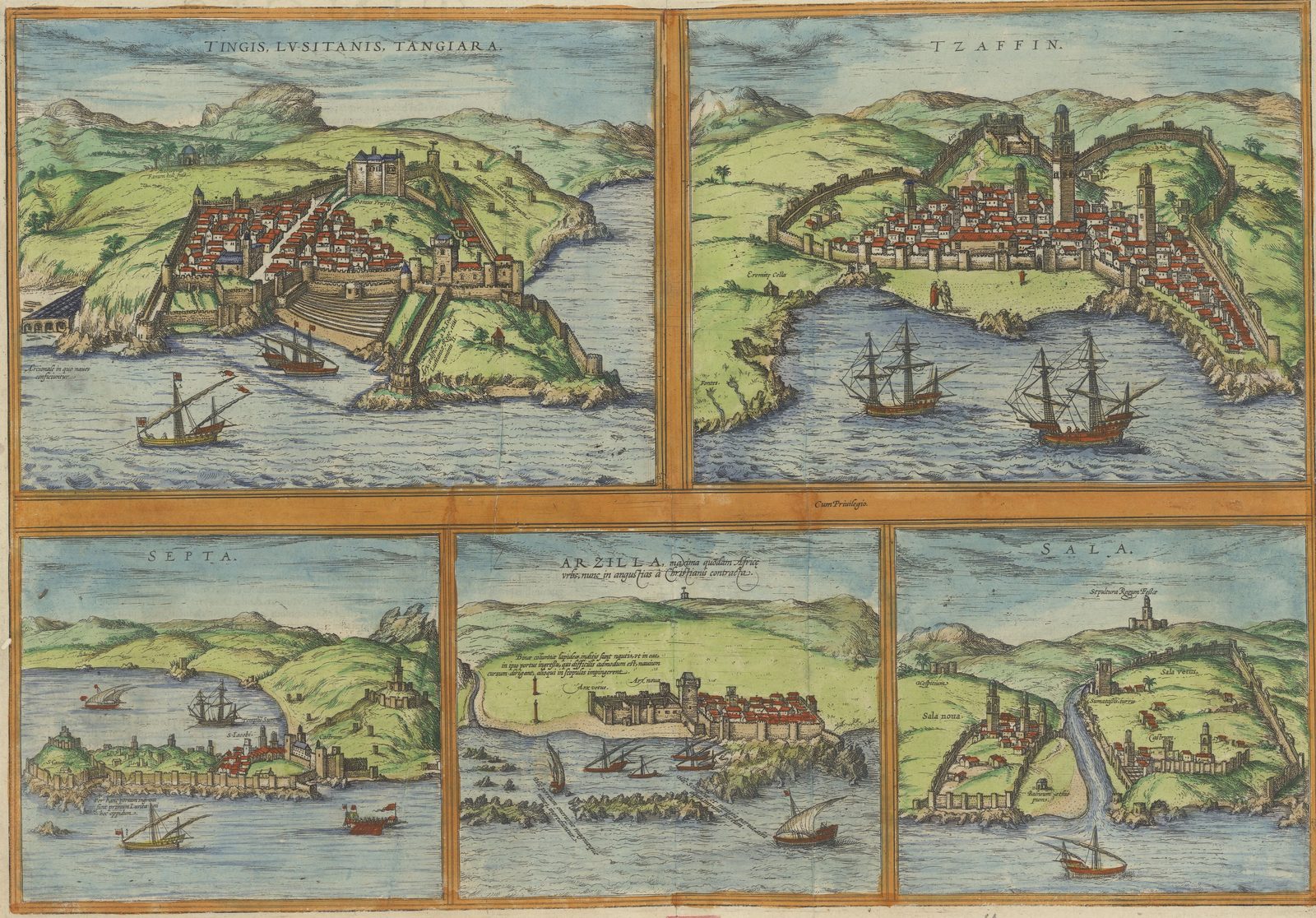
Morocco haunted him. The Portuguese had maintained enclaves on the North African coast since the capture of Ceuta in 1415, and the dream of a great crusade into the Maghreb had been a recurring fantasy of the Aviz dynasty for generations. For Sebastião, steeped in chivalric romance and possessed of what the Jesuit chronicler Padre Amador Rebelo, who had known the king since the age of six, described as "immeasurable courage", the dream was not a fantasy at all. It was his destiny.
In 1574, the same year he funded the Japan mission and met Valignano, Sebastião traveled to the Portuguese enclaves of Ceuta and Tangier. He was not there to inspect fortifications. He was there to provoke the Moors into a battle. The Moors, who had a better sense of timing than the Portuguese king, declined to oblige.
Two years later, in 1576, Sebastião met his uncle, King Philip II of Spain, at the monastery of Guadalupe. He proposed a joint expedition to seize the Moroccan port of Larache and install a friendly sultan, Muley Mohammed, who had been overthrown by a usurper, Muley Abd-al-Malik, on the Moroccan throne. Philip, who had spent decades managing the largest empire on earth and understood the difference between ambition and competence, warned his nephew that attacking hardened Berber warriors with unseasoned Portuguese troops was extremely unwise. He promised modest Spanish support, in two years' time, if Sebastião still insisted, and clearly hoped the young man would come to his senses.
Sebastião did not come to his senses. Surrounded by courtiers who pandered to his fantasies and Jesuits who framed his ambitions in the language of holy war, he assembled an expeditionary force and sailed for Morocco in the summer of 1578.
The army was large, perhaps 15,000 to 20,000 men, but poorly trained, badly organized, and led by a king whose tactical experience consisted of chasing deer through Portuguese forests. The plan was to march inland from the coast, engage the Moroccan forces, and restore Muley Mohammed to his throne. The plan assumed that Portuguese courage would compensate for Portuguese inexperience. It assumed that God was on Portugal's side. It assumed, in short, everything that a medieval knight-errant would have assumed, and nothing that a competent 16th-century military commander would have known.
The Field of the Three Kings
The Battle of Alcácer Quibir, 4 August 1578
On 4 August 1578, near the town of Alcácer Quibir, Ksar el-Kebir, in modern Morocco, the Portuguese army met the forces of Muley Abd-al-Malik in what became one of the most catastrophic military defeats in European history.
The battle earned its famous name, the Battle of the Three Kings, because three monarchs died that day. Muley Abd-al-Malik, the defending Moroccan sultan, was already mortally ill and died in his litter during the fighting, possibly before the battle was even decided. Muley Mohammed, the pretender whom Sebastião was trying to restore, drowned while attempting to flee across the river Wadi al-Makhazin. And Sebastião himself was killed.
The Portuguese chronicle tradition, particularly Padre Amador Rebelo's account, written by a man who had known the king intimately since childhood, records that the battle was not initially hopeless. Sebastião, leading his cavalry personally, charged into the Moroccan lines with such ferocity that he opened lanes through the enemy formation. The Moors fell back. For a moment, it appeared that sheer violence might carry the day.
Then came a cry, volta, volta ("turn back, turn back"), shouted by someone in the Portuguese ranks. Whether it was a renegade, a coward, or a panicked officer, no one ever established. The effect was instantaneous. The Portuguese cavalry broke off its charge. The Moroccan forces, sensing the shift, counterattacked. The Portuguese artillery, which had been positioned uselessly and never fired a single shot, was captured intact. The army disintegrated.
Sebastião rallied a handful of knights and charged again. The chroniclers record that he killed dozens of Moors personally, fighting at odds of one to 30. It was magnificent. It was also futile. The 24-year-old king died on the field, and with him died 8,000 Portuguese soldiers and the independence of the nation.
The King Who Wouldn't Stay Dead
Sebastianism: The Myth That the King Would Return
The strangest chapter of Sebastião's story began after the battle.
The chivalric code that the Portuguese court had drilled into its warriors since childhood contained a specific provision: a knight must not survive seeing his king in mortal peril. The practical consequence was that no Portuguese survivor of Alcácer Quibir would admit to having actually seen the king die. Each man who escaped the field had, by the logic of the code, been elsewhere at the critical moment, because admitting otherwise would have been an admission of cowardice worthy of execution.
This meant that there was no confirmed eyewitness to Sebastião's death. And from that gap in the historical record, a myth was born.
The Portuguese people, reeling from the loss of their king, their army, and, within two years, their national independence, refused to believe that Sebastião was dead. He had escaped the battlefield, they said. He was in hiding. He was wandering the earth in disguise, waiting for the right moment to return and deliver Portugal from the Spanish Habsburg yoke that descended upon them in 1580, when Philip II claimed the Portuguese throne and initiated 60 years of Iberian Union.
The myth acquired a name: Sebastianismo. And it was not a fringe belief. It was a mass movement, part messianic cult, part nationalist resistance, part collective refusal to accept reality. Sebastião was the Encoberto, the Hidden One, a savior-king who would emerge from the mist on a foggy morning and restore Portugal to its rightful glory. The legend was so potent that at least three impostors claimed to be the returned king between 1584 and 1595. Another appeared in Venice in 1598, and the Spanish authorities took the threat seriously enough to execute him. Sebastianist sentiment persisted in Portuguese and Brazilian culture for centuries, a ghost that would not be laid to rest, born from a boy-king's reckless charge into a Moroccan field.
His heavily decayed body was eventually recovered and returned to Lisbon for interment in the church of Nossa Senhora da Graça.
The Shadow Over Nagasaki
What Sebastião’s Death Meant for Nagasaki
In Nagasaki, the consequences of Sebastião's death arrived not as myth but as policy.
The immediate effect was dynastic. Sebastião had never married, his refusal of every proposed match was perhaps the single most consequential decision of his life, and he left no descendants. His great-uncle, the aged Cardinal Henrique, succeeded him briefly and died childless in 1580. Philip II of Spain, grandson of the Portuguese King Manuel I through his mother, pressed his claim with characteristic Habsburg thoroughness: he invaded, won the brief War of Portuguese Succession, and absorbed the Portuguese empire into the Spanish one.
The Iberian Union, as the arrangement was called, was supposed to preserve the administrative separation of the two empires. Philip agreed to keep the Portuguese Padroado, the system of royal patronage over overseas missions, distinct from the Spanish Patronato. In theory, the Portuguese Jesuits would continue to manage the mission in Japan. In theory, the Macau-Nagasaki trade would remain a Portuguese monopoly. In theory, nothing would change.
Theory lasted about five years.
The problem was geography. Macau was Portuguese. Manila was Spanish. Both were now ruled by the same king. Spanish mendicant friars, Franciscans, Dominicans, Augustinians, who had been operating in the Philippines saw the union as an invitation to enter Japan, a territory that the Portuguese Jesuits had jealously monopolized for decades. The result was a jurisdictional brawl between religious orders that would have been comic if its consequences had not been lethal.
The rivalry came to a catastrophic head in 1596, when the Manila galleon San Felipe wrecked off the coast of Shikoku. The ship's pilot, in what must rank among the most disastrous boasts in maritime history, reportedly told Japanese officials that Spanish missionaries served as the advance guard for military conquest, softening foreign populations for eventual subjugation by the Spanish Crown. Whether the pilot actually said this, or whether the story was embroidered by Jesuit informants eager to discredit their Franciscan rivals, the effect was the same. Toyotomi Hideyoshi, who had been watching the proliferation of competing European religious orders with mounting suspicion, reacted by executing 26 Christians, including six Franciscans and three Jesuits, on Nishizaka hill in Nagasaki in February 1597.
The San Felipe incident and the Twenty-Six Martyrs have their own articles on this site. What matters here is the chain of causation. Before 1580, Japan had one set of European missionaries (Jesuits) backed by one European power (Portugal) pursuing one strategy (convert the daimyō, control the trade, build a Japanese church). After 1580, Japan had competing religious orders backed by competing factions within a single, sprawling Iberian superstate, each pursuing its own agenda. The Japanese could no longer tell who was in charge, what the Europeans wanted, or whether the priests and the merchants were working together or against each other. The confusion bred suspicion. The suspicion bred hostility. The hostility, within two generations, bred the total expulsion of the Portuguese and Spanish from Japan.
Philip II, to his credit, attempted to continue Sebastião's humanitarian policies. In 1581, he issued a new law reinforcing the ban on the Japanese slave trade. It was ignored exactly as thoroughly as Sebastião's original decree had been. The merchants who profited from human trafficking did not stop because of a king in Lisbon. They weren't going to stop because of a king in Madrid. The distance was too great. The profits were too large. The enforcement was too weak.
The Weight of the Desired One
Dom Sebastião’s Legacy: 10 Years, a Ruined Kingdom
Sebastião ruled for 10 years, died at 24, and left behind a kingdom in ruins and a mission in jeopardy. His personal obsession, the medieval crusade, the holy war against Islam, the cavalry charge into the Moroccan interior, was exactly the kind of grandiose fantasy that destroys nations when combined with real power and insufficient counsel. He was a man of the 12th century governing in the 16th, and the mismatch was fatal.
And yet his Japan legacy, stripped of the catastrophe that followed, was remarkably enlightened. The 1570 anti-slavery decrees were genuine attempts to protect Japanese people from exploitation, inadequately enforced, certainly, but ahead of their time in their recognition that colonial subjects possessed rights that the metropolitan power was obliged to uphold. His financial patronage of the Jesuit mission, his diplomatic outreach to converted daimyō, and his commercial regulation of Portuguese traders in Asia all reflected a coherent vision of empire in which the spread of Christianity and the protection of converts were not afterthoughts but governing priorities.
In the end it did not matter. Sebastião failed on the battlefield. He failed to produce an heir. Portugal lost its independence because of his failure.
Sources & Further Reading
Boxer, C. R. The Christian Century in Japan, 1549–1650. University of California Press, 1951. The indispensable study of the Jesuit enterprise in Japan, with detailed treatment of the Macau-Nagasaki trade system and the impact of the Iberian Union.
Cooper, Michael. They Came to Japan: An Anthology of European Reports on Japan, 1543–1640. University of California Press, 1965. Translated primary sources including Jesuit correspondence from the Sebastião era.
Costa, João Paulo Oliveira e. O Japão e o Cristianismo no Século XVI. Sociedade Histórica da Independência de Portugal, 1999. Detailed analysis of the relationship between Portuguese royal policy and the Japanese mission.
Fróis, Luís. Historia de Japam. 5 vols., ed. Josef Wicki. Biblioteca Nacional de Lisboa, 1976–1984. The primary Jesuit chronicle, essential for the decade of Sebastião's reign.
Lúcio de Sousa. The Portuguese Slave Trade in Early Modern Japan: Merchants, Jesuits, and Japanese, Chinese, and Korean Slaves. Brill, 2019. The definitive modern study of the slave trade that prompted Sebastião's 1570 decrees.
Moran, J. F. The Japanese and the Jesuits: Alessandro Valignano in Sixteenth-Century Japan. Routledge, 1993. Covers Valignano's audience with Sebastião and the financial structures underpinning the Japan mission.
Rebelo, Padre Amador. Crónica de El-Rei Dom Sebastião. Ed. António Ferreira de Serpa. Livraria e Imprensa Civilização, Porto, 1925. A contemporary chronicle by a Jesuit who knew the king from the age of six and accompanied his tutor, a crucial and underutilized primary source.
Schurhammer, Georg. Francis Xavier: His Life, His Times. 4 vols. Jesuit Historical Institute, 1973–1982. Background on the mission that Sebastião's policies sustained and expanded.
Sousa, Manuel de Faria e. Asia Portuguesa. Lisbon, 1666–1675. A seventeenth-century chronicle of the Portuguese Asian empire, with extensive coverage of the Japan trade during the Aviz and Habsburg periods.
Valignano, Alessandro. Sumario de las Cosas de Japón (1583). Ed. José Luis Alvarez-Taladriz. Sophia University, Tokyo, 1954. Valignano's own account of the state of the Japan mission, written five years after Sebastião's death, reflecting on the structures the king helped create.
Cite this page
Nanban.pt. “O Desejado: Dom Sebastião and the Ghost That Haunted Two Empires.” Last modified 25 September 2026. https://nanban.pt/articles/dom-sebastiao-the-desired-one/.
@misc{nanban-dom-sebastiao-the-desired-one,
  author = {Nanban.pt},
  title = {O Desejado: Dom Sebastião and the Ghost That Haunted Two Empires},
  year = {2026},
  url = "https://nanban.pt/articles/dom-sebastiao-the-desired-one/",
  note = {Last modified 2026-09-25}
}