The Ethiopian Embassy to King Sebastian: A Patriarch, a Prince, and the Rescue of Prester John
How a Portuguese physician with a cut-off tongue talked his way into a patriarchate
The Ethiopian embassy to King Sebastian refers to the mission of João Bermudez, a Portuguese surgeon who reached the court of João III around 1538 claiming to be Patriarch of Ethiopia and secured a Portuguese army for the Christian empire of Prester John, then under Muslim assault. The resulting force of 400 musketeers under Cristóvão da Gama fought the armies of Imam Ahmad ibn Ibrahim al-Ghazi between 1541 and 1543 and saved Solomonic Ethiopia, a campaign Bermudez recorded in a self-glorifying book printed in Lisbon in 1565 and dedicated to the young Dom Sebastião.
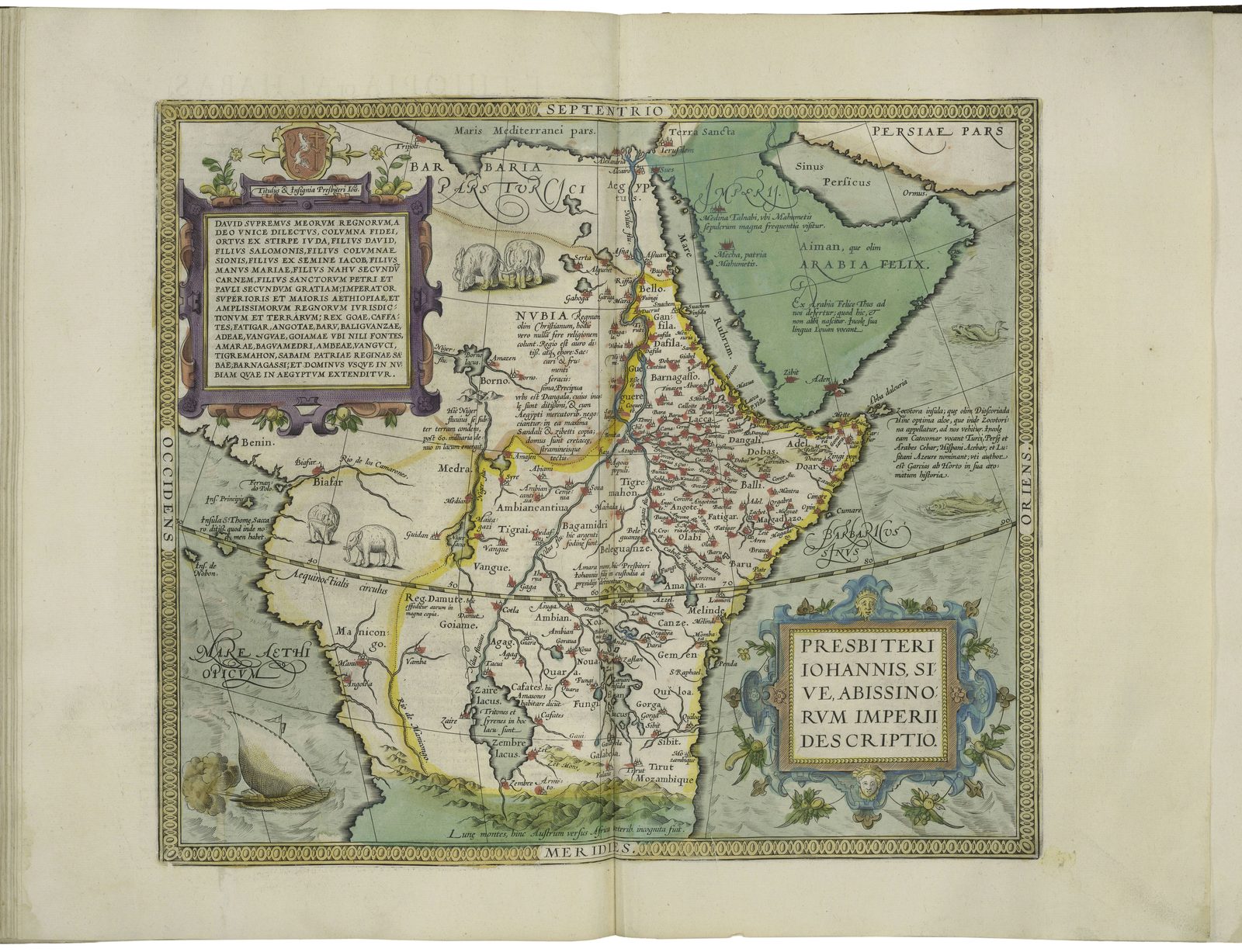
A note on scope: this story unfolds in the Horn of Africa, not in the Sea of Japan, and its protagonists never laid eyes on a Nanban screen. It sits outside the ordinary beat of this site. But it is also a story about Portuguese crusading ambition, about the fusion of religion and geopolitics that produced the Estado da Índia, about a king whose obsessions would later reshape the Japan mission, and, above all, about a cut-off tongue, a self-appointed Patriarch, 400 musketeers marching into a mountain war, and a book published in Lisbon in 1565 and dedicated to Dom Sebastião. It is, in short, a story too good not to be told.
On a morning in 1536, somewhere in the warren of papal offices behind the Vatican walls, an exhausted Portuguese traveler in his forties presented himself to Pope Paul III. He had come overland from the Ethiopian highlands by way of Cairo and Jerusalem. The Turks had imprisoned him for part of the journey, beaten him, and, according to his own later account, sliced off a portion of his tongue, leaving him with a thick, indistinct speech he would carry for the rest of his life. He claimed to speak on behalf of the Christian Emperor of Abyssinia. He claimed to have been consecrated on his deathbed by the head of the Ethiopian Church as that Church's next Patriarch. He claimed to carry instructions from the Emperor to submit the Ethiopian Church to Rome, to negotiate a royal marriage between the houses of Solomon and Aviz, to request a Portuguese army, and, this was the most arresting detail, to requisition a team of skilled quarrymen who would dig through a hill and divert the course of the Nile, ruining Islamic Egypt in a single engineering project.
His name was João Bermudez. He had trained as a surgeon. The Vatican kept no record of his consecration. And he had, at that moment, one of the most improbable careers in the history of Portuguese diplomacy ahead of him.
The Empire on the Edge
Christian Ethiopia Under Threat, 1520s–1540s
Christian Ethiopia, the Solomonic empire, whose ruling dynasty traced its descent to the son of Solomon and the Queen of Sheba, had been in mortal danger since the late 1520s. Emperor Lebna Dengel, whom the Portuguese called Onadinguel and occasionally, with their gift for Old Testament flattery, "King David", ruled a kingdom under existential assault. The attacker was Imam Ahmad ibn Ibrahim al-Ghazi, leader of the Sultanate of Adal, a Muslim polity on the Somali coast. The Portuguese knew him as Granhe, "the left-handed", and modern historians have generally adopted the Amharic form Grañ. Ahmad was brilliant, driven, and fanatical in roughly equal measure. He had declared jihad on the Christian highlands in 1529 and, over the next decade, proceeded to dismantle the Solomonic empire with the ruthless efficiency of a man who believed he was doing God's work.
The decisive factor was firearms. Ahmad's forces were reinforced by Ottoman Turkish matchlock men, professional soldiers with modern weapons, fresh from the great Ottoman expansion that had swallowed Mamluk Egypt in 1517 and Aden in 1538. The Ethiopian army, equipped with traditional spears, swords, and bows, could not cope. Garrisons fell. Monasteries were sacked. Manuscripts, some of them 1,000 years old, were burned. Populations were forced to convert at the point of the sword. By the mid-1530s, Lebna Dengel had been reduced to a fugitive moving through the mountains with a shrinking escort, watching his empire dissolve around him.
It was in this collapse that Bermudez claimed to have received his extraordinary commission.
He was not, at this point, a nobody. He had traveled to Portuguese India in 1515 as a practicing surgeon. In 1520 he had joined the formal embassy of Dom Rodrigo de Lima, sent by Manuel I to the Ethiopian court, the embassy that would produce Francisco Álvares's Verdadeira Informação das Terras do Preste João das Índias, the first detailed European account of Ethiopia to circulate in print. When Dom Rodrigo's mission departed in 1526, several Portuguese stayed behind. Bermudez was one of them. For the next nine years he served the Emperor in whatever capacity a surgeon could be useful.
Then, in 1535, according to Bermudez's own account, the Abuna Marcos, head of the Ethiopian Church, whose appointment traditionally came from the Coptic Patriarch of Alexandria, lay dying. Lebna Dengel, Bermudez wrote, begged the dying man to consecrate him, Bermudez, as his successor. The Abuna allegedly obliged, "first ordaining me in all the sacred orders" and then elevating him to the Patriarchate. The Emperor then commissioned him to travel west, to Rome, to submit the Ethiopian Church to the Pope's authority; to Lisbon, to beg for armies.
This is the version Bermudez told. It is almost certainly not what actually happened. Later historians have described the circumstances of his alleged consecration as "dark and doubtful", the kind of phrase academics reach for when they mean "pure fabrication with plausible corners". The Vatican archives preserve no trace of any papal confirmation. A 1538 papal document recognized a different man, a figure named Caesar, as Patriarch of Alexandria. When the Holy See eventually appointed a Catholic Patriarch of Abyssinia in 1555, the choice was the Jesuit João Nunez Barreto, with no mention of Bermudez. In his own lifetime, King João III would publicly repudiate him as a "mere priest" who had "usurped" the title, and Galawdewos would refuse to accept him as anything more than the "Patriarch of the Franks".
But in 1536, standing before Pope Paul III with his cut-off tongue and his preposterous demands, Bermudez did not yet know that history would spend four centuries undermining his claims. He claimed that he carried a dying empire's last hope in his saddle-bags. He persuaded them.
The Instructions from the Other Side of the World
What João Bermudez Was Sent to Demand
The demands Bermudez carried were operatic even by the standards of 16th-century Portuguese diplomacy. He was to request a perpetual alliance between the two crowns, sealed by a royal marriage between Portuguese and Ethiopian children; a force of trained Portuguese soldiers to defeat the "King of Zeila", meaning Imam Ahmad; and the dispatch of skilled quarrymen who would dig through a hill and divert the course of the Nile to ruin Islamic Egypt.
To modern ears this sounds like the raving of a man who had spent too long in the sun. To 16th-century Portuguese ears, it sounded like Albuquerque. Afonso de Albuquerque, the architect of the Portuguese Estado da Índia, had openly entertained schemes a generation earlier for combining Ethiopian manpower with Portuguese naval supremacy to destroy Mecca, ransom the body of the Prophet from Medina, and, in his most famous fantasy, divert the Blue Nile to ruin Egyptian agriculture. The logic matched the grand strategy animating Portuguese expansion since Prince Henry: outflank the Islamic world, attack it from the rear, combine Christian naval power with the vast manpower of Prester John's kingdom, and, at the far end of the scheme, retake Jerusalem.
The Prester John framing mattered. Since Pero da Covilhã's 1487 intelligence mission, the Portuguese had identified the Ethiopian emperor as the long-sought priest-king of the medieval legend. This was a historical reach, but a politically lucrative one. If Lebna Dengel was Prester John, then an alliance with him was not a diplomatic convenience but the fulfillment of a prophecy Portuguese courts had been discussing since the 13th century. Bermudez understood his audience. His instructions did not ask for modest assistance; they asked for a grand Albuquerquian project. And because the framing fitted so precisely with existing Portuguese strategic thinking, it was taken seriously.
He made his way from Rome to the Portuguese court, reaching Évora in 1537 or 1538. He met João III in person. Whatever Lisbon made of his ecclesiastical pretensions, the King was persuaded on the main point: a Portuguese military expedition would go to Ethiopia. In 1539 Bermudez sailed for Portuguese India. In 1541 he joined the great Red Sea fleet of Viceroy Dom Estêvão da Gama, son of Vasco da Gama, whose 1497 voyage had set this entire enterprise in motion, as it sailed north to Massawa. The physician-Patriarch was coming home, at the head of an army.
400 Men and a Queen Mother
The Portuguese Expedition of 1541 to Ethiopia
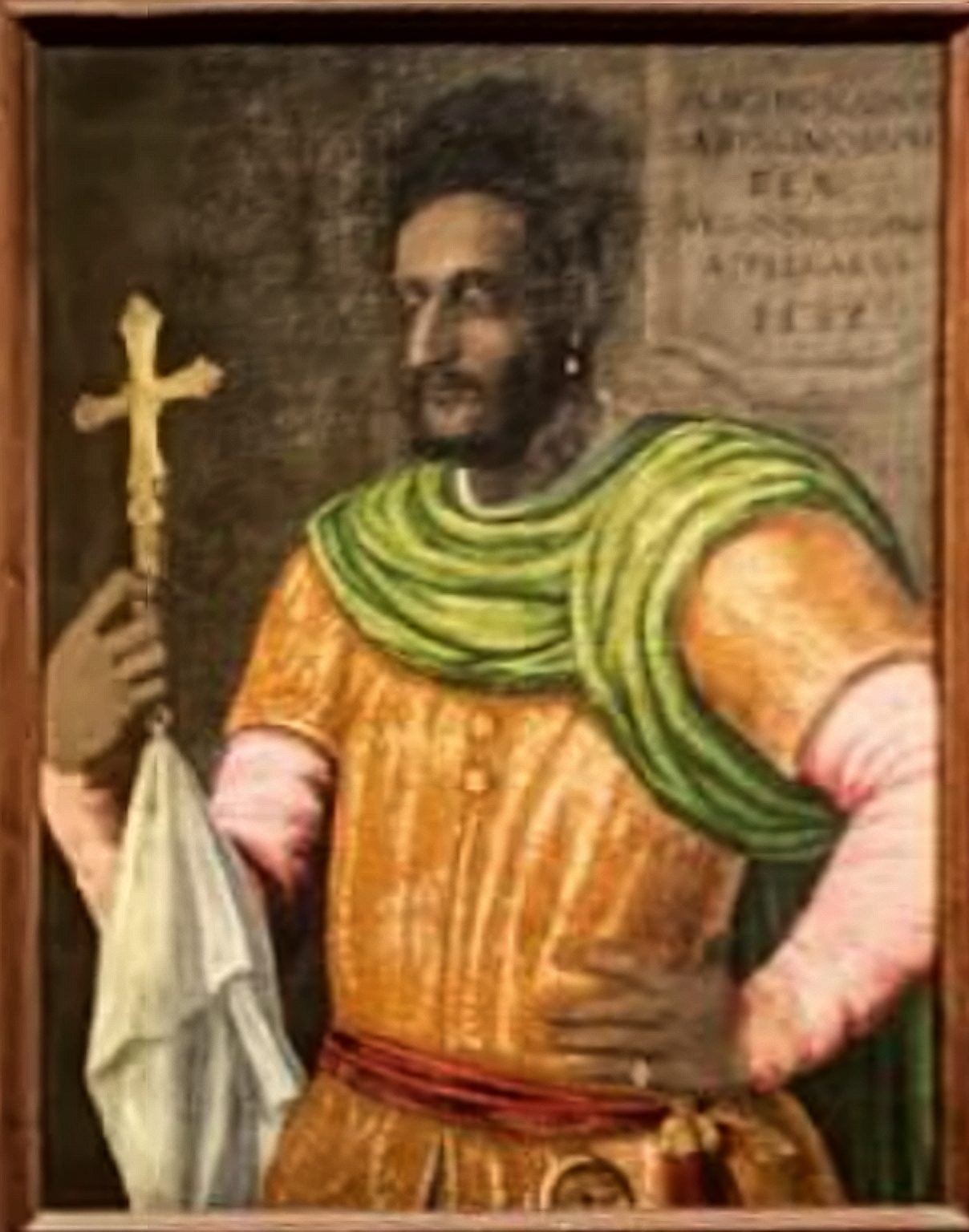
The expedition that disembarked at Massawa in 1541 was, by the standards of the Portuguese Asian enterprise, not particularly large. But it was exceptionally well equipped for 16th-century East African warfare. Its core consisted of 400 Portuguese soldiers, the vast majority of them arquebusiers armed with matchlock muskets, and among them roughly 70 skilled mechanics and craftsmen. With them marched 130 military slaves and 10 artillerymen operating field guns that could fire stone and iron balls. Two priests accompanied the force, along with Bermudez, who had finally obtained, after six years of lobbying, the army he had crossed continents to demand.
Command of the land expedition was given, on 9 July 1541, to the Viceroy's 25-year-old younger brother, Dom Cristóvão da Gama. He was handsome, pious, courageous to the point of recklessness, and came from one of the most celebrated military families in the empire. He would not leave Ethiopia alive.
The expedition was met at Massawa by the Queen Mother, Sabla Wangel, Lebna Dengel had died the year before, and the young Emperor Galawdewos was still consolidating power elsewhere, and by the coastal governor known as the Bahr-Nagash, who provided mules, oxen, and camels to drag the Portuguese artillery into the highlands. What followed was one of the most audacious and least remembered military campaigns of the 16th century.
After waiting out the rainy season at Debarwa, Da Gama marched south into territory held by Imam Ahmad. On 2 February 1542, his force stormed a steep hill fortress known as Baçanete, Amba Sanét in Ethiopian, and captured it in a frontal assault. The entire 1,500-man Muslim garrison was put to the sword. Portuguese losses were eight killed and 40-odd wounded. The local mosque was converted into a church and dedicated to Our Lady of Victory.
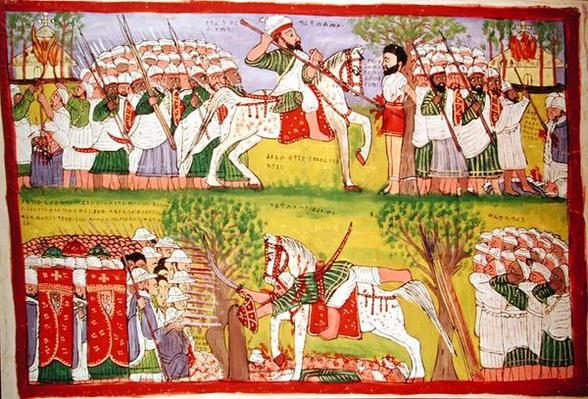
Continuing south, Da Gama pitched camp on the plains of Jarte, Wajárat in Amharic. On the Saturday before Palm Sunday, 1542, Imam Ahmad himself attacked with an army estimated at 15,000 foot, 1,500 horse, and 200 Turkish matchlockmen. The numerical disparity was grotesque. It did not matter. Portuguese firepower devastated the attackers. The Imam's horse was killed under him. The Imam himself was hit in the leg by a matchlock bullet. Four of his captains died. 12 days later, on 16 April 1542, Ahmad returned, reinforced by 3,000 foot and 500 horse under his lieutenant Garad Omar. The Portuguese won again. Omar died in the engagement. Across the two battles at Jarte, Portuguese losses totaled 30 killed and 14 severely wounded, among the latter, the expedition's chronicler Miguel de Castanhoso, whose eyewitness narrative would become the single most important source on the whole campaign.
In four months, with 400 men, Dom Cristóvão da Gama had broken the operational momentum of a war that had destroyed an empire.
Wofla: The Catastrophe
The Battle of Wofla: The Portuguese Defeat
Imam Ahmad was a man who learned from his defeats. Recognizing that he could not meet Portuguese firearms with cavalry and sword, he retreated, wrote letters, and opened his purse. The services he purchased were those of the Ottoman Pasha of Zebid: 1,000 experienced Turkish musketeers and a complement of heavier artillery. In August 1542, while the Portuguese had gone into winter quarters near Wofla, Ofla, in the Zabul mountains, in a position later historians would describe as indefensible, the Imam returned.
The battle began on 28 or 29 August 1542. The Portuguese force, now reduced by disease and detachment to roughly 350 effectives, was overwhelmed almost from the opening volleys. Da Gama fought in the front rank with the recklessness his family name demanded. He was shot in the leg. A second bullet shattered his right arm. By late afternoon the Portuguese line broke. Approximately 200 soldiers were killed. 40 of them were blown up when their own powder store exploded, a particularly 16th-century way to die. Da Gama withdrew into a thicket at nightfall with 14 surviving companions. They were discovered and captured.
What followed was calculated humiliation. On the march to the Muslim camp his captors pulled out his beard hair by hair, struck him, and spat in his eyes. Brought before Ahmad, he was forced to watch as the heads of 200 of his slain comrades were struck off in front of him. He was stripped, bound, and lashed. The camp's slaves beat him in the face with their sandals. Imam Ahmad then personally ordered Da Gama's beard to be twisted into a wick, smeared with wax, and set on fire. His eyebrows and eyelashes were torn out with metal tongs. Through all of it, according to every chronicler who left an account, the young commander prayed to God to forgive his sins. Finally, Ahmad struck off his head with his own sword. Portuguese and Ethiopian tradition afterwards embroidered the scene with the appropriate miracles, a healing spring breaking forth where the head fell, a great tree at an Abyssinian monastery withering on the day of the martyrdom.
The Turkish mercenaries who had made the victory possible were furious. They had captured the brother of the Viceroy of Portuguese India, a prisoner of surpassing diplomatic value, whose delivery to the Sultan in Constantinople could have secured them fortunes. Ahmad had killed him for religious satisfaction. The Turks collected Da Gama's severed head, took it back to Zebid, and departed Ethiopia not long afterwards. This turned out to matter a great deal.
Wayna Daga: The Reckoning
What Happened at the Battle of Wayna Daga
After Wofla the surviving Portuguese force splintered. About 120 retreated to the so-called "Jew's Hill" with the Queen Mother Sabla Wangel. Another 50, under Manuel da Cunha, escaped north toward Debarwa. During the winter of 1542–43 the scattered remnant reunited with the forces of Emperor Galawdewos, Lebna Dengel's son, now ruling in his own right, and prepared for the final engagement.
On 21 or 22 February 1543, the combined Ethiopian–Portuguese army met Imam Ahmad's forces at Wayna Daga, Oinadaga, near the shores of Lake Tana. The Portuguese survivors, perhaps 170 men, had by this point lost interest in the broader strategic picture. They had lost interest in anything other than killing the specific men who had killed Da Gama: the Imam himself, and the 200 Turkish musketeers who had remained with him after Wofla.
In the thick of the fighting, a Portuguese matchlockman named João Galego, remembered in Gaspar Correia's chronicle as "John the Gallician", from Galicia on the Portuguese–Castilian border, forced his way through the enemy line, leveled his weapon, and shot Imam Ahmad squarely in the chest. Galego was immediately cut down. The shot was fatal. An Abyssinian soldier later hacked through the dead Imam's neck to claim the glory for himself, and Ethiopian chronicles duly recorded the killing as an Ethiopian feat. But the Portuguese had kept their wits about them: before the decapitation, one of them had thought to cut off Ahmad's ear. When it came time to reconstruct what had happened, the ear was produced, the corpse was reassembled, and it was demonstrated, bureaucratically, as it were, that a Frank had delivered the killing blow.
With Ahmad dead, his army dissolved. The Ethiopian-Portuguese victory cost the Portuguese four men killed. The long war was effectively over. Christian Ethiopia had survived, not through its own military power, which had been broken at the outset, but because a Portuguese physician with a cut-off tongue had walked across Asia and persuaded a king in Évora that Prester John was worth saving.
The Inconvenient Patriarch
Why Bermudez Never Became Patriarch of Ethiopia
For Bermudez, the aftermath was catastrophic. He had expected to preside over a grateful Ethiopian Church, formally united with Rome, with himself as its Latin Patriarch. What he encountered instead was Emperor Galawdewos, theologically literate, politically seasoned, and in no mood to submit his national Church to a foreigner whose credentials were, at best, dubious. Galawdewos acknowledged him only as Abuna of the Franks, spiritual leader of the Portuguese soldiers settled in the highlands, with no authority over the Ethiopian Orthodox Church itself. King João III was less diplomatic. In 1546, Lisbon formally repudiated Bermudez in writing, declaring him a "mere priest" who had "usurped" the title of Patriarch without authority of the Holy See.
Bermudez clung on for another decade, arguing, lobbying, writing letters to men who had stopped replying. In 1555 the Pope appointed the Jesuit João Nunez Barreto as the first Catholic Patriarch of Abyssinia. Bermudez was not consulted. In 1556 he left Ethiopia. In 1558 or 1559 he returned to Lisbon and lived in obscurity, a broken old man in a city that had largely forgotten him.
He might have ended his days that way. But in 1564 or early 1565, Miguel de Castanhoso published his own account of the Ethiopian expedition. Castanhoso's book was accurate, vivid, widely read, and, from Bermudez's perspective, devastating, because it rendered him almost invisible. Castanhoso was interested in Dom Cristóvão da Gama, whose final hours he described with the authority of a man who had bled in the same campaigns. Bermudez was, in Castanhoso's telling, a peripheral figure. That was not how Bermudez remembered his own life. So he wrote his own book.
The Book for the Boy-King
The Breve Relação, Lisbon 1565: Bermudez’s Account
The Breve Relação da Embaixada que o Patriarcha D. João Bermudez trouxe do Emperador da Ethiopia was printed in Lisbon in 1565 by Francisco Correa. It is not long. It is not dispassionate. It is, in the way that self-justifying memoirs always are, a document in which its author is larger and more central than he was in life.
And Bermudez dedicated it to Dom Sebastião. The choice of dedicatee is worth examining. Sebastião in 1565 was 11 years old, on the throne since the age of three, his court dominated by a regency council in which the Jesuits, especially his tutor Luís Gonçalves da Câmara, exercised extraordinary influence. The boy's personality was already visible in outline: pious, austere, obsessed with crusading, fascinated by North Africa, suspicious of compromise. He was precisely the kind of young monarch who would thrill to a story about 400 Portuguese soldiers fighting a Muslim Imam to save a Christian empire.
Bermudez knew this. The opening of his book is an extraordinarily calculated piece of political writing. He addresses the boy directly:
Most high and most powerful King, your highness once told me that you would be pleased to learn the truth of what happened to the Captain and the soldiers whom the King, your grandfather ... entrusted to me ... in order to correct the errors which certain persons have written about this, so much so that they mistake the very name of the Captain, calling him D. Paulo when it was D. Christovão, his brother; while others write and tell of certain things which did not of a truth happen, nor did they see them. On the other hand, I who saw all things will shortly relate what occurred in this little book.
Three things are happening in this passage at once. Bermudez is correcting Castanhoso, implicitly accusing rival chroniclers of basic factual error, of confusing Cristóvão da Gama with his brother Paulo. He is establishing his own eyewitness authority. And he is framing the entire story as a gift from one generation of Portuguese crusaders to the next, a relay in which Sebastião, aged 11, is invited to pick up the torch his grandfather had lit.
It worked, at least partially. Bermudez died in 1570 with his claim to the Patriarchate still engraved on his tombstone. He had never persuaded Rome, he had never persuaded Galawdewos, he had never persuaded João III, but he had, in the end, persuaded himself.
Sebastião, who almost certainly read the book, or had it read to him, absorbed its lessons. Within 13 years of Bermudez's death, on 4 August 1578, he would lead a Portuguese army into Morocco on a crusade framed in language almost identical to the language in which the Ethiopian expedition had been framed 36 years earlier: Christian Portugal against Muslim North Africa, the rescue of a beleaguered Islamic prince who had appealed for help, the extension of the holy war across the sea. At Alcácer Quibir he would die in the desert sand alongside 8,000 of his soldiers, and the Aviz dynasty would die with him.
The story Bermudez had dedicated to him was, in a sense, the template for his destruction. 400 Portuguese musketeers could defeat a vast Muslim army if God was with them, so went the implicit lesson. What the young king did not absorb, because Bermudez did not dwell on it, was how many of those 400 had died along the way, how much of the victory had depended on an Abyssinian imperial army, a Galician matchlockman, and a grotesque run of luck. He took from the book the miracle, not the mortality rate.
What Remained in Ethiopia
The Portuguese Who Stayed in Ethiopia
Meanwhile, in the highlands around Lake Tana, the Portuguese who had survived Wayna Daga had quietly become Ethiopians.
Lisbon never extracted them. The Portuguese Crown lacked the Red Sea logistics, and frankly the interest, to repatriate a battalion stranded on the Abyssinian plateau. Of the 400 who had disembarked at Massawa in 1541, perhaps 170 were still alive in 1543. Apart from a handful, Castanhoso among them, who caught chance vessels back to India, the great majority stayed. Galawdewos granted them estates. They married Ethiopian women. They raised bilingual children. Over the next 50 years they coalesced into a distinct Luso-Ethiopian community, serving as an elite military bodyguard to the Solomonic throne. By the end of the 16th century their descendants numbered around 1,000. They spoke Amharic at home and Portuguese at mass.
They also became, eventually, the seed-corn of a religious disaster. In the 1550s King João III and Ignatius of Loyola dispatched an organized Jesuit mission to Ethiopia, beginning with Bishop André de Oviedo, partly in response to Bermudez's embarrassing presence, partly to press for the formal union of the Ethiopian and Roman Churches that Bermudez had falsely claimed to represent. Oviedo failed to convert the Emperor and lived out his days in isolation. Later Jesuits, above all the brilliant, patient Pedro Paes, did better. In the early 17th century Paes persuaded Emperor Susenyos to convert to Roman Catholicism, and for a short period it looked as though the Ethiopian Church might indeed be united with Rome.
Paes's successor, the rigid and tactless Patriarch Afonso Mendes, destroyed the achievement with the thoroughness of a man doing demolition work while believing himself to be doing architecture. Arriving in 1625, Mendes demanded drastic Latinization of every Ethiopian rite. The resulting rebellion tore the empire apart. In 1632 Susenyos abdicated in favor of his son Fasilades, who restored the traditional Ethiopian Orthodox Tewahedo Church, banished the Jesuits, hanged those who tried to remain in secret, and concluded a quiet understanding with the Ottoman Turks to keep the Portuguese permanently out. Ethiopia closed its borders. It would stay closed for over a century.
Sources & Further Reading
Bermudez, João. Breve Relação da Embaixada que o Patriarcha D. João Bermudez trouxe do Emperador da Ethiopia. Lisbon: Francisco Correa, 1565. Modern English translation in The Portuguese Expedition to Abyssinia in 1541–1543 as Narrated by Castanhoso and Bermudez, trans. and ed. R. S. Whiteway, Hakluyt Society, 1902. The self-interested but indispensable first-hand account; the dedication to Dom Sebastião is the document from which the whole episode takes its popular name.
Castanhoso, Miguel de. Dos feitos de D. Christovam da Gama em Ethiopia. Written c. 1544, first printed Lisbon, 1564. Modern critical editions and translations widely available. The eyewitness chronicle of the military campaign, and a decisive corrective to Bermudez's self-promotion.
Álvares, Francisco. Verdadeira Informação das Terras do Preste João das Índias. Lisbon, 1540. Modern critical edition: The Prester John of the Indies, trans. C. F. Beckingham and G. W. B. Huntingford, 2 vols., Hakluyt Society, 1961. The foundational European account of Ethiopia, produced from the 1520 Dom Rodrigo de Lima embassy in which Bermudez participated; essential background for every subsequent event.
Whiteway, R. S. The Portuguese Expedition to Abyssinia in 1541–1543. Hakluyt Society, 1902. The classic English-language edition of Castanhoso and Bermudez together, with extensive historical introduction that established the modern critical scholarly framework for the episode.
Pankhurst, Richard. The Ethiopians: A History. Blackwell, 2001. For the Ethiopian side: Lebna Dengel's collapse, the reign of Galawdewos, the Luso-Ethiopian settler community, and the long-term religious consequences of the campaign.
Crummey, Donald. Land and Society in the Christian Kingdom of Ethiopia: From the Thirteenth to the Twentieth Century. University of Illinois Press, 2000. Essential for the political and territorial context in which Galawdewos rebuilt the Solomonic empire after 1543.
Silverberg, Robert. The Realm of Prester John. Doubleday, 1972. The standard study of how the medieval legend evolved and was ultimately transferred to Ethiopia, providing the theological framework within which Portuguese intervention made sense.
Subrahmanyam, Sanjay. The Portuguese Empire in Asia, 1500–1700: A Political and Economic History. Longman, 1993. Valuable for situating the Ethiopian intervention within the broader Red Sea and Indian Ocean strategic thinking of the Viceroys of India.
Boxer, Charles R. The Portuguese Seaborne Empire, 1415–1825. Hutchinson, 1969. Indispensable single-volume survey of the Portuguese overseas enterprise; brief but authoritative treatment of the Ethiopian expedition within the Albuquerquian strategic tradition.
Disney, A. R. A History of Portugal and the Portuguese Empire, Volume 2: The Portuguese Empire. Cambridge University Press, 2009. Modern synthesis with an excellent account of the Ethiopian embassy and its long afterlife in Portuguese political imagination.
Cohen, Leonardo. The Missionary Strategies of the Jesuits in Ethiopia, 1555–1632. Harrassowitz Verlag, 2009. The definitive modern study of the Jesuit mission that followed Bermudez, including Oviedo's failure, Paes's success, Mendes's catastrophe, and Fasilades's expulsion.
Cite this page
Nanban.pt. “The Ethiopian Embassy to King Sebastian: A Patriarch, a Prince, and the Rescue of Prester John.” Last modified 25 September 2026. https://nanban.pt/articles/ethiopian-embassy-to-king-sebastian/.
@misc{nanban-ethiopian-embassy-to-king-sebastian,
  author = {Nanban.pt},
  title = {The Ethiopian Embassy to King Sebastian: A Patriarch, a Prince, and the Rescue of Prester John},
  year = {2026},
  url = "https://nanban.pt/articles/ethiopian-embassy-to-king-sebastian/",
  note = {Last modified 2026-09-25}
}