A Nanban Kitchen: Period Recipes from the Portuguese-Japanese Culinary Exchange
Nine dishes, from castella and tempura to konpeitō and fios de ovos, reconstructed from the earliest Iberian and Japanese cookbooks, with period measurements converted and historical context for each.
A Nanban Kitchen is a reconstruction of nine dishes from the 16th and 17th century Portuguese-Japanese culinary exchange, including castella, tempura, konpeitō, and fios de ovos. Each recipe is drawn from the earliest Iberian and Japanese cookbooks, with period measurements converted and the historical circumstances of its transmission explained.
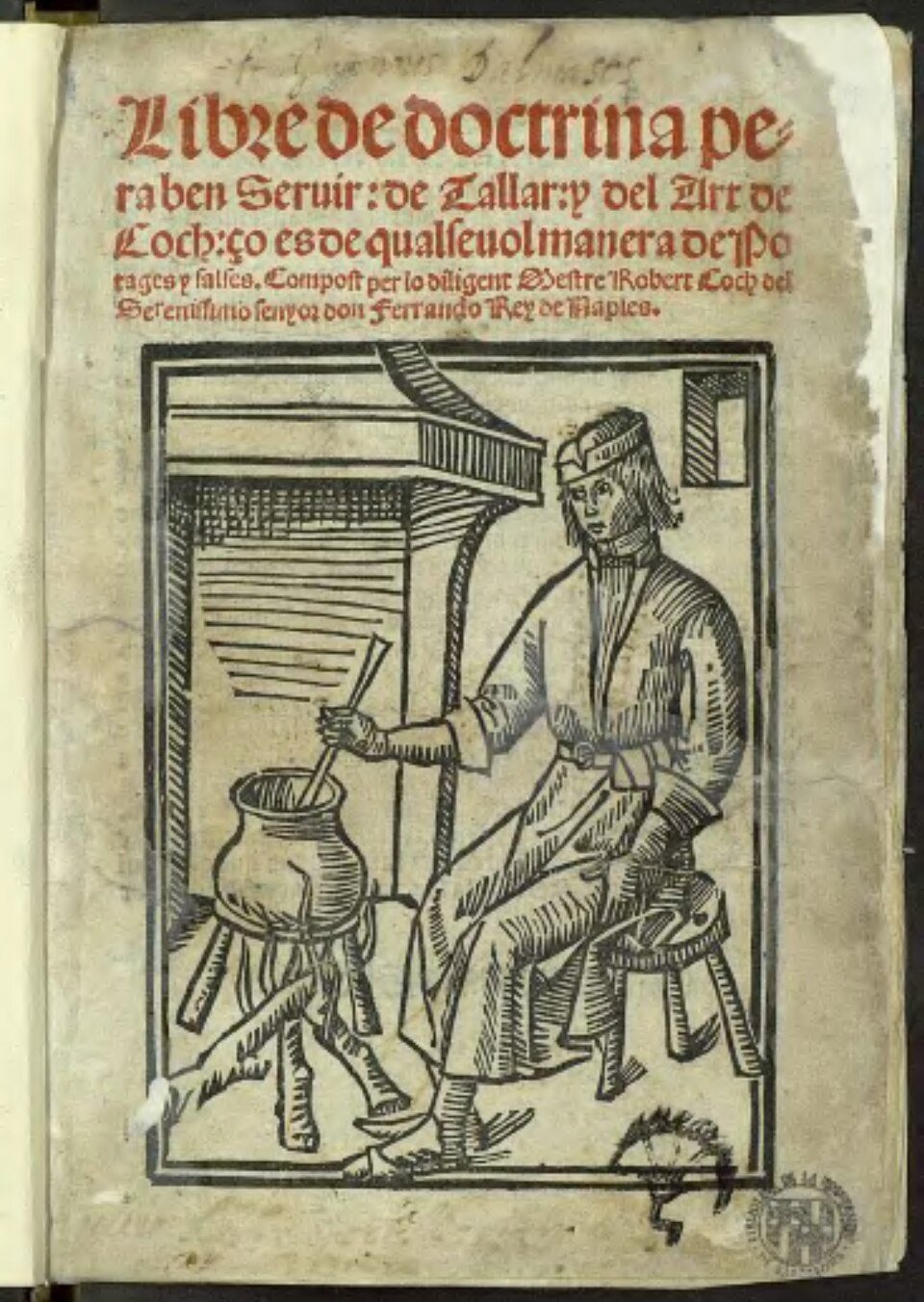
This article is inspired by Max Miller, and his excellent work on bringing historic recipes back to life at tastinghistory.com.
A Cookbook Compiled After the Expulsion
Between 1543 and 1650, Portuguese missionaries, merchants, and mariners carried more than firearms and faith to Japan, they carried flavor. The so-called Nanban (南蛮, “southern barbarian”) trade introduced sugar, eggs, wheat bread, deep-frying techniques, and vinegar preservation to Japanese kitchens, reshaping the country’s culinary landscape in ways that persist today.
The nine dishes assembled here trace that exchange through the closest surviving period-authentic recipes from Portuguese and Japanese historical sources, drawing primarily on the Livro de Cozinha da Infanta D. Maria (c.1550s), Domingos Rodrigues’ Arte de Cozinha (1680), Ruperto de Nola’s Libro de Guisados (1520/1525), and the anonymous Japanese Nanban Ryōrisho (南蛮料理書, 17th century), the remarkable “Southern Barbarians’ Cookbook” that preserved Portuguese recipes in Japanese hands even after the 1639 expulsion.
What follows is a structured mini-cookbook: each entry presents the original Iberian recipe, its Japanese adaptation, converted measurements, and the historical circumstances of its transmission.
Measurement Conversion Reference
Before the recipes, a key to the archaic units encountered in period sources. Portuguese units derive from medieval Iberian conventions; Japanese units belong to the shakkanhō system standardized under Toyotomi Hideyoshi’s Taikō kenchi land surveys of the 1580s. Where period cooks wrote “an arrátel” or “one shō”, the modern cook needs grams and millilitres.
| Unit | Origin | Modern Equivalent |
|---|---|---|
| Arrátel (pl. arráteis) | Portuguese pound | ~459 g |
| Onça | Portuguese ounce (1/16 arrátel) | ~28.7 g |
| Canada | Portuguese liquid measure | ~1.4 L |
| Quartilho | ¼ canada | ~0.35 L |
| Almude | Portuguese bulk liquid | ~16.7 L |
| Gō (合) | Japanese volume | ~180 mL |
| Shō (升) | Japanese volume (10 gō) | ~1.8 L |
| Monme (匁) | Japanese weight | ~3.75 g |
| Kin (斤) | Japanese weight (castella trade) | ~600 g |
I. Castella / Kasutera, the sponge cake that outlasted its makers
Historical context
Portuguese missionaries offered pão de Castela (“bread from Castile”) as gifts to prospective converts and feudal lords in late-16th-century Nagasaki. The name references the Kingdom of Castile, where this type of sponge cake circulated during the Renaissance. The transmission route ran Lisbon → Goa → Malacca → Macau → Nagasaki. By 1624, Fukusaya (福砂屋), still operating today, opened as the first dedicated castella shop in Nagasaki. Remarkably, castella survived the 1639 expulsion of the Portuguese and the entire 215-year Sakoku isolation, evolving into one of Japan’s most iconic confections.
A crucial scholarly finding complicates the sourcing: the earliest Portuguese recipes labeled “pão de ló” are not sponge cakes at all. Both the Livro de Cozinha da Infanta D. Maria (c.1550s) and the first edition of Arte de Cozinha (1680) describe a dense almond-and-sugar confection with no eggs and no flour, closer to marzipan than to cake. The egg-flour-sugar sponge cake we recognize was not documented in Portuguese print until Lucas Rigaud’s Cozinheiro Moderno (1780), though Anthony Vieyra’s 1773 dictionary confirms it existed by then. The actual cake transmitted to Japan was likely an oral-tradition bizcocho or pan de Castilla, a simple whisked sponge that circulated widely across Iberia without formal written documentation.
The Portuguese original: Pão de Castela (reconstructed, c. late 1500s)
The recipe below represents the most probable form of the cake carried to Japan, based on the convergence of later Portuguese, Spanish, and early Japanese sources.
| Period Form | Modern Metric |
|---|---|
| 24 egg yolks | ~480 g yolk |
| 6 egg whites | ~200 g white |
| 2½ measures fine sugar | ~500 g caster sugar |
| 1 measure wheat flour | ~125 g plain flour |
| Orange-flower water (optional) | 1–2 tsp |
Method:
- Beat the egg yolks and whites together with the sugar using vigorous hand-whisking until the mass triples in volume and falls from the whisk in thick ribbons, period cooks had no mechanical beaters, so this stage could take 30–45 minutes.
- Fold in the flour gently so as not to deflate.
- Pour into a greased baking vessel (period: earthenware; later: tin).
- Bake in a moderate oven (~170°C / 340°F) until golden and set, approximately 50–60 minutes.
The Japanese adaptation: Nagasaki Kasutera (Edo period, c. 1700s onward)
Japanese confectioners made several critical modifications:
| Ingredient | Amount | Notes |
|---|---|---|
| Eggs (whole) | 10 large (~500 g) | Whole eggs replaced the yolk-heavy ratio |
| Bread flour (strong flour) | 200 g (~1.1 gō by volume) | Gives chewier crumb than soft flour |
| Sugar | 330 g | White sugar, expensive import via Dejima |
| Mizuame (水飴, starch syrup) | 50 g (~13 monme) | Replaced some sugar during Edo scarcity |
| Zarame (ザラメ, coarse sugar crystals) | Scattered on base of mold | Creates the distinctive crunchy bottom layer |
Method:
- Whisk eggs and sugar until extremely foamy.
- Fold in sifted bread flour, then stir in warmed mizuame.
- Line a rectangular wooden frame (bottomless) with paper; scatter zarame on the base.
- Pour batter in; bake at ~160°C for approximately 60 minutes, periodically puncturing surface bubbles with chopsticks.
- Invert and cool. Sold by the kin (斤, ~600 g block).
Key adaptations: Mizuame replaced costly sugar; rectangular wooden frames replaced round pans; zarame bottom crust became a signature; no dairy or fat of any kind.
II. Tempura, Ember Day fasting, deep-fried
Historical context
The most widely accepted etymology traces tempura to the Latin Quatuor Anni Tempora, the Catholic Ember Days, quarterly fasting periods when meat was forbidden. Portuguese missionaries in Nagasaki battered and fried vegetables and fish as hearty meatless Ember Day meals. An alternative theory derives the name from Portuguese tempero (“seasoning”). The debate is unresolved, but the fasting-day connection is supported by the dish’s association with the Nanban Ryōrisho and with Lenten cooking.
The first published Japanese tempura recipe appears in the Ryōri Kondate-shō (料理献立抄, 1671). Earlier, the anonymous Nanban Ryōrisho (17th century) recorded a dish called tenpurari, chicken dusted with powdered seasonings, fried, and finished with gardenia water.
The Portuguese original: Peixinhos da Horta and Ember Day fried fish
Peixinhos da horta (“little fish from the garden”) are battered, deep-fried green beans, so named because they resemble tiny fried fish. This was common petisco (snack) fare, not fine cuisine, which likely explains its absence from elite printed cookbooks like the Arte de Cozinha.
| Ingredient | Amount |
|---|---|
| Fresh flat green beans | 200 g |
| Wheat flour | 100 g (~3½ onças) |
| Eggs | 2 |
| White wine or water | 60 mL |
| Salt | Pinch |
| Olive oil for frying | Sufficient (~500 mL) |
Method:
- Trim and blanch the green beans briefly; drain and pat dry.
- Beat eggs; whisk in flour, wine, and salt to make a thick, smooth batter.
- Heat olive oil in a pan until shimmering (~180°C).
- Dip each bean in batter, coating completely, and fry until golden, approximately three minutes per side.
- Drain and serve hot with coarse salt.
For Ember Day fish: Substitute green beans with fillets of small fish (sardines, whiting). The Nanban Ryōrisho instructs: “It is fine to use any fish. Cut the fish into round slices. Douse in flour and fry in oil. Afterward, sprinkle with powdered clove and grated garlic.”
The Japanese adaptation: Edo-period tempura
The Japanese transformation was radical. Within a century, tempura became almost unrecognisable from its Portuguese ancestor:
| Ingredient | Amount |
|---|---|
| Ice-cold water | 200 mL (~1.1 gō) |
| Egg | 1 |
| Cake/pastry flour (薄力粉) | 100 g |
Method:
- Combine ice-cold water and egg; add flour all at once. Mix only 3–4 strokes with chopsticks, lumps are intentional. Over-mixing develops gluten and destroys the ethereal lightness.
- Heat sesame oil (traditional) to 180°C.
- Dip shrimp, fish fillets, sweet potato slices, shiso leaves, or eggplant in batter.
- Fry briefly until pale golden-white, not dark gold as in Portuguese frying.
- Serve immediately with tentsuyu (天つゆ: dashi, soy sauce, mirin) and grated daikon.
What changed: The Portuguese used thick, egg-rich, room-temperature batter fried in olive oil, producing a substantial golden coating. The Japanese developed ultra-thin, ice-cold, barely-mixed batter fried in sesame oil, producing a translucent, gossamer crust. Spices (clove, garlic) gave way to the dipping-sauce-and-daikon system. The dish moved from Lenten necessity to high culinary art.
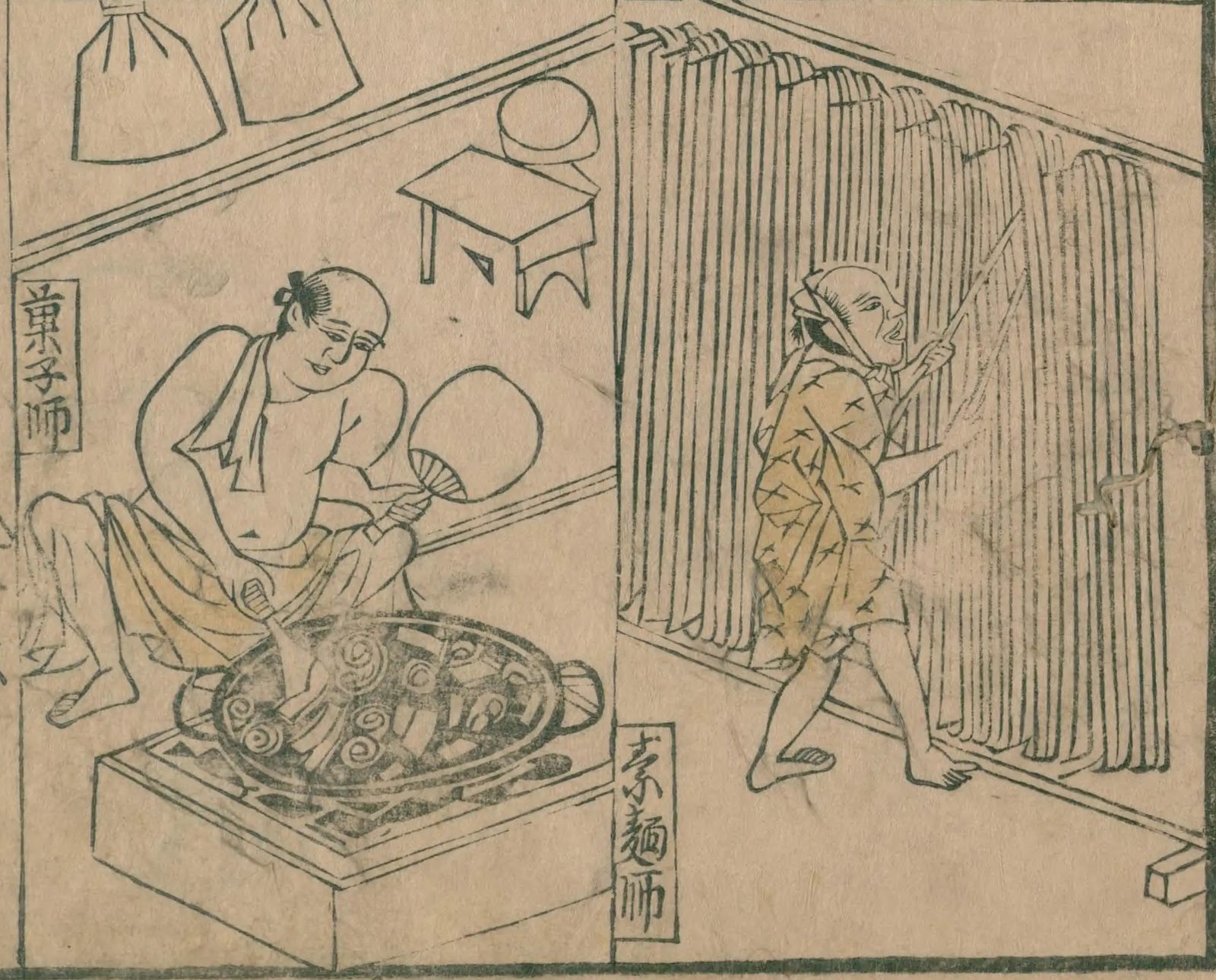
III. Konpeitō, 20 years to master a sugar star
Historical context
In 1569, Portuguese Jesuit Luís Fróis presented a glass flask of confeitos to the warlord Oda Nobunaga to secure permission for missionary activities. Nobunaga was reportedly so taken with the jewel-like sugar candies that he ordered more repeatedly. The word derives from Portuguese confeito (Latin confectum, “something prepared”). Japan had no sugar-refining technology at the time; konpeitō was an almost otherworldly luxury.
After the 1639 expulsion of the Portuguese, konpeitō imports ceased. It took until approximately 1688 (Genroku era) for a Nagasaki confectioner to master domestic production after two years of experimentation. The technique spread from Nagasaki to Kyoto to Edo. A Japanese proverb captures the difficulty: “Troweling takes ten years, syrup takes ten years, and konpeitō takes twenty years”, the full span to mastery.
Production method: the slow panning process
Konpeitō has no “recipe” in the conventional sense. It is a process, one of the most demanding in all confectionery. The Nanban Ryōrisho references a confeito recipe yielding a “tricolored, spiced candy mix,” but the crucial technique was transmitted orally, never written.
Equipment: a large dora (銅鑼), a heated, angled copper basin, traditionally set over charcoal. Portuguese confectioners used a swinging copper pan (tacho) suspended by ropes over a low fire.
| Ingredient | Role |
|---|---|
| Zarame (coarse sugar crystals) or irako (glutinous rice granules) | Seed core |
| Sugar | ~150 g per batch |
| Water | ~100 mL |
| Food coloring, flavoring (optional) | Added to syrup |
The process, day by day:
- Day 1: Place a handful of seed cores (~20–30 grains of zarame) in the heated dora. Prepare a light sugar syrup by dissolving sugar in water over medium heat.
- Ladle two tablespoons of warm syrup over the tumbling cores. Rotate the pan continuously so cores roll and coat evenly. Allow to dry completely between applications.
- Repeat the syrup-and-dry cycle. Growth rate: approximately 1 mm per day.
- Days 2–13: continue daily. The craftsman judges readiness by sound, the timbre of konpeitō rolling against copper changes as layers build. Temperature, humidity, syrup concentration, and rotation speed must all be adjusted by feel.
- The characteristic pointed bumps (typically 16–24 per piece) form naturally through uneven crystallization during the slow rotation-and-drying cycles.
- Total time: 7–13 days to reach commercial size (~10 mm diameter), with the syrup-coating cycle repeated roughly 100 times.
Portuguese sugar syrup stages (period terminology): ponto de fio (thread stage) at ~103°C for smooth initial coats; ponto de pérola (pearl stage) at ~110°C for rougher, spikier surfaces. Temperature was kept deliberately low (~77°C for the smoothest early layers) to prevent caramelization.
IV. Fios de Ovos / Keiran Sōmen, golden threads from convent surplus
Historical context
Fios de ovos (“egg threads”) emerged from the Portuguese doçaria conventual, the extraordinary tradition of convent sweets born from a practical surplus. Portuguese nuns used egg whites to starch their habits, clarify wine, and prepare communion hosts, leaving mountains of yolks. Combined with colonial sugar from Madeira and Brazil, these surplus yolks became over 150 documented convent confections, of which fios de ovos is among the most visually striking.
The technique reached Japan during the Nanban trade and became keiran sōmen (鶏卵素麺, “hen-egg thin noodles”). The Fukuoka confectioner Matsuyariemon has produced keiran sōmen continuously for 13 generations since 1673, guarding its recipe as an exhaustive trade secret. The same technique also traveled to Thailand via Maria Guyomar de Pinha (born 1664 in Ayutthaya to a Japanese-Portuguese family), where it became foi thong (ฝอยทอง, “golden strands”).
The earliest Japanese recipe: Nanban Ryōrisho (17th century)
The Nanban Ryōrisho contains the oldest known Japanese version, translated by historian Eric C. Rath:
“Strain egg yolks with a cloth. Heat sugar until it becomes a syrup, and dribble the egg yolks over it like fine kudzu noodles. Stretch these out and sprinkle with sugar. There are oral instructions.”
The closing phrase “there are oral instructions” (口伝あり) reveals that the critical technique, the drizzling motion, syrup temperature, funnel design, was transmitted person to person, not written down.
The Portuguese original: Aletria de Ovos / Fios de Ovos
Domingos Rodrigues’ Arte de Cozinha (1680) includes a recipe for “Aletria de ovos” (egg vermicelli), which corresponds to fios de ovos. His text specifies sugar syrup boiled to ponto de pérola (pearl stage). He notes that “Ovos reais” (Royal Eggs) use the same method but with thicker threads.
| Period Form | Modern Metric | Notes |
|---|---|---|
| 20–30 egg yolks | ~400–600 g | Must be perfectly strained |
| 1 egg white (optional) | ~33 g | Added per ~20 yolks for binding |
| 1–1½ libra sugar | 459–690 g | Portuguese libra ≈ arrátel ≈ 459 g |
| Water sufficient | 500 mL–1 L | To dissolve sugar |
| Rose water or orange-flower water | 1 tsp (optional) | Period Portuguese flavoring |
Method:
- Prepare syrup: combine sugar and water in a wide, shallow copper pan. Heat, stirring until dissolved, then stop stirring. Bring to ponto de pérola (~110°C / 230°F), verified when syrup drips from a spoon in pearl-like drops.
- Prepare yolks: gently stir yolks to break (do not whisk or incorporate air). Strain through a fine sieve, then again through cheesecloth, removing every trace of chalazae and membrane. The liquid must be perfectly smooth.
- The funnel: use a funil de latão (brass funnel) with several small holes, or a pierced coconut shell (Southeast Asian variant). Hold approximately 5 cm above the simmering syrup.
- Drizzle: pour strained yolks into the funnel and move in 20–25 continuous circles over the syrup. The yolk threads cook almost instantly on contact, forming golden strands.
- Cook and remove: after 15 seconds to one minute, use chopsticks or a fork to fold and lift the threads. Transfer to a wire rack; sprinkle immediately with ice-cold water to prevent sticking.
- Repeat until all yolk is used. If syrup thickens, add two spoonfuls of water and re-boil.
- Finish: glaze with a spoonful of remaining syrup for shine. Per the Nanban Ryōrisho: “sprinkle with sugar” before serving.
Critical variable: syrup temperature must stay between 103–110°C. Too hot and the yolk threads cook too fast, breaking apart; too cool and they won’t set.
V. Nanbanzuke, escabeche crosses the ocean
Historical context
Escabeche, the technique of preserving fried fish in vinegar, traces to the Persian sikbāj (سكباج), a sweet-and-sour meat stew that entered Iberia during the Moorish period (from 711 CE). The earliest documented Iberian escabeche recipe appears in the Catalan Llibre de Sent Soví (1324), with a recipe titled “escabeig a peix frit” (escabeche for fried fish). Ruperto de Nola’s Libro de Guisados (1520/1525), the first printed Iberian cookbook, contains the most detailed early formulation.
The Portuguese brought escabeche technique to Nagasaki, where it became nanbanzuke (南蛮漬け, “barbarian pickle”). Notably, the red chili pepper used in nanbanzuke was itself a Portuguese introduction from the Americas, making it a doubly Nanban ingredient.
The Iberian original: Ruperto de Nola’s “Buen Escabeche” (c. 1480, printed 1520)
From Recipe #221 of the Libro de Guisados, in the Lenten section, Nola’s base escabeche principle (translated): “Take in a frying pan two parts vinegar, if the vinegar is weak, and one part water; and if it is strong, equal parts; and add salt until you see it has flavor; and add the salt in stages, and not all at once, so that it does not become too salty; and add oil that is sweet.”
Elaborated Pandora/Dentex Escabeche (Recipe #222):
| Ingredient | Amount (reconstructed) | Notes |
|---|---|---|
| Whole fish (sea bream, dentex, or similar) | ~500 g | Fried, boiled, or roasted |
| White wine vinegar | ~200 mL (weak) or 100 mL (strong) | 2:1 or 1:1 with water |
| Water | ~100 mL | Adjust to vinegar strength |
| Olive oil | ~100 mL | “Sweet oil”, from frying |
| Honey | 1–2 tbsp | Sweetener |
| Orange juice | Juice of 1 orange | Bitter/Seville orange preferred |
| Black pepper | ½ tsp ground | |
| Ginger | ½ tsp ground | |
| Saffron | Pinch | |
| Whole cloves | 3–4 | |
| Bay leaves | 2–3 | Laid upon the fish |
Method:
- Fry, boil, or roast the fish.
- Combine vinegar, water, olive oil, and honey in a pan; bring to a simmer.
- Add pepper, ginger, saffron, cloves, and bay leaves.
- Pour the hot escabeche over the cooked fish. Squeeze orange juice over top.
- Allow to cool and marinate. Keeps for days to weeks depending on vinegar concentration.
The Japanese adaptation: Nanbanzuke
Marinade (Nanbanzu 南蛮酢):
| Ingredient | Amount | Replaces |
|---|---|---|
| Rice vinegar | 50 mL (~0.3 gō) | Wine vinegar |
| Light soy sauce (usukuchi) | 2 tbsp | Salt |
| Dashi stock (kombu/bonito) | 100 mL | Water/wine |
| Mirin | 2 tbsp | Honey |
| Sugar | 2 tsp | Honey |
| Dried red chili (takanotsume) | 1, sliced | Black pepper, ginger |
| Dashi kombu | 5 cm × 5 cm piece | Bay leaves |
Main preparation:
| Ingredient | Amount |
|---|---|
| Horse mackerel (aji) or smelt (wakasagi) | 300 g |
| Potato starch (katakuriko) | For dusting |
| Onion, thinly sliced | 1 medium |
| Carrot, julienned | ½ |
| Green pepper, julienned | 1 |
Method:
- Combine all marinade ingredients; warm gently to dissolve sugar. Add sliced vegetables.
- Dust fish lightly with potato starch. Deep-fry at 180°C until golden.
- While still hot, submerge fried fish in the marinade. Cover with the vegetable layer.
- Marinate minimum 30 minutes; ideally overnight. Serve cold. Keeps refrigerated for one week.
What changed: wine vinegar → rice vinegar; olive oil vanished; dashi and soy sauce introduced umami; Mediterranean herbs (bay, rosemary) disappeared entirely; potato starch replaced flour for a crisper coating that absorbs marinade; and the characteristically Japanese onion-carrot-pepper vegetable layer was added.
VI. Hikado, a chopped stew that swapped continents
Historical context
The name derives from Portuguese picado (past participle of picar, “to chop finely”). Portuguese residents in Nagasaki ate stews of diced beef and pork during cold months; the technique and the name spread to local kitchens. The Japanese adaptation replaced unavailable beef with yellowtail and chicken, and, in a particularly ingenious substitution, replaced bread (the standard Portuguese thickener, which carried dangerous Christian associations after the 1614 ban) with grated sweet potato, which was abundant in Kyūshū. The sweet potato thickener also suited Nagasaki’s regional preference for sweeter flavors, supported by the city’s position on the “Sugar Road” trade route.
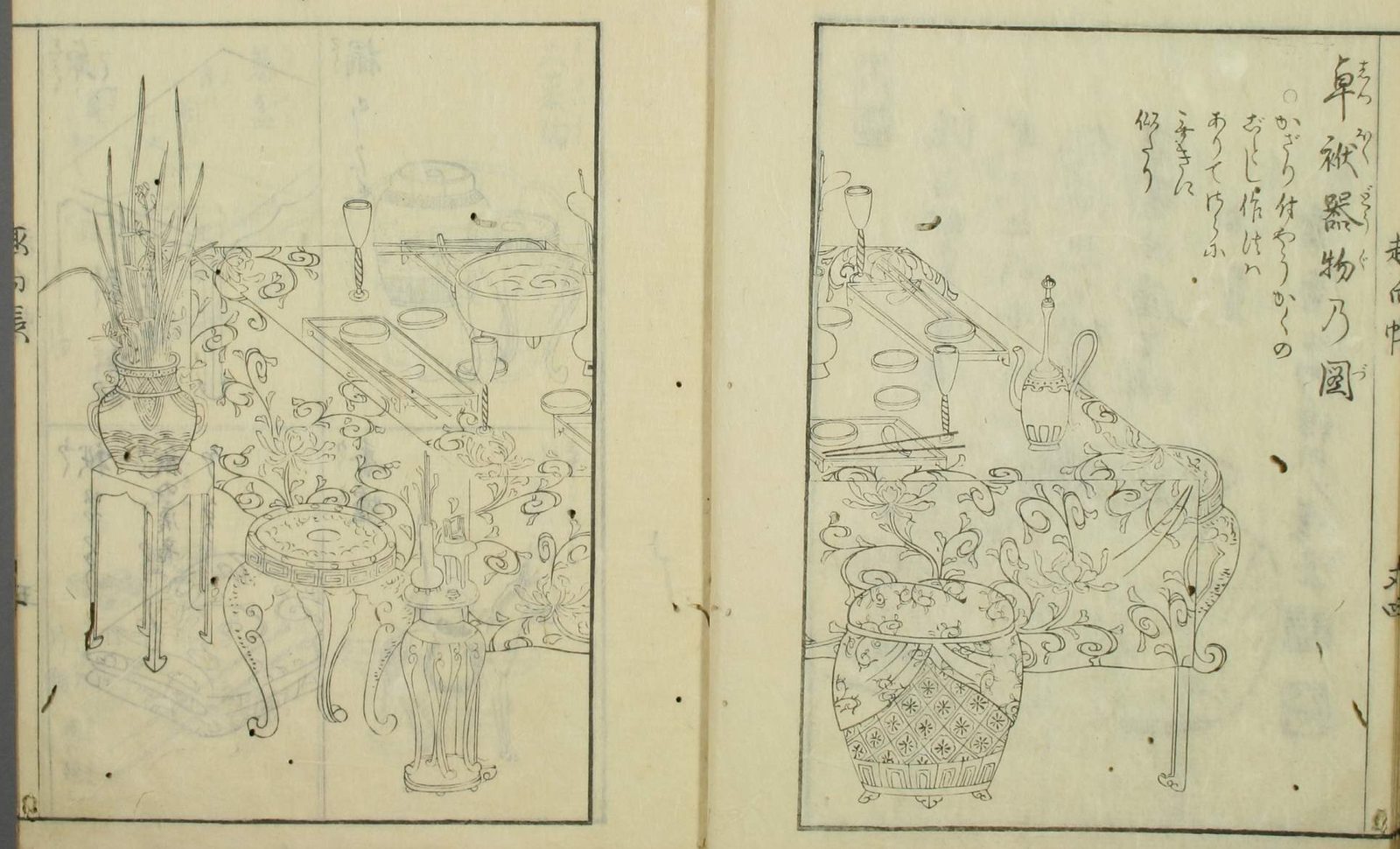
Hikado survives today as part of Shippoku cuisine (卓袱料理), Nagasaki’s unique Japanese-Chinese-Portuguese fusion tradition, arguably Japan’s first fusion cuisine. No specific “picado” recipe has been identified in the Arte de Cozinha or the Livro de Cozinha da Infanta D. Maria. The term described a cutting technique rather than a single named dish; the closest analogues are the numerous guisado (stew) recipes in both books.
Nagasaki Hikado (from MAFF Japan / Nagasaki City records)
Ingredients (serves four):
| Ingredient | Amount | Period Equivalent |
|---|---|---|
| Yellowtail (buri) | 80 g | Replaced Portuguese beef |
| Chicken | 80 g | Partial meat substitute |
| Daikon radish | 80 g, 1 cm dice | Replaced Iberian root vegetables |
| Carrots | 40 g, 1 cm dice | Present in both traditions |
| Sweet potato (cubed) | 80 g, 1.5 cm dice | Replaced potato/turnip |
| Sweet potato (for grating) | 60 g | Replaced bread as thickener |
| Dried shiitake | 4 g (4 mushrooms) | Japanese addition |
| Spring onion | 10 g | Replaced Portuguese onion/garlic |
| Dashi + shiitake soaking liquid | 700 mL (~3.9 gō) | Replaced meat stock |
| Salt | ⅕ tsp | |
| Light soy sauce | 1 tsp | Replaced wine/vinegar seasoning |
| Sake | 1 tbsp | Replaced Portuguese wine |
Method:
- Cut yellowtail into 1.5 cm cubes; season with salt and sake. Cut chicken into 1.5 cm cubes.
- Cut daikon and carrot into 1 cm dice; sweet potato into 1.5 cm cubes (skin on). Peel grating sweet potato; soak 10–15 minutes.
- Rehydrate shiitake; remove stalks; cut into 1 cm dice. Cut spring onion into small rounds.
- Blanch yellowtail briefly to remove fishy odor.
- Add chicken, daikon, carrot, and shiitake to dashi in a pot; bring to a simmer. Skim.
- Add cubed sweet potato; cook until nearly tender.
- Add yellowtail. Season with salt, soy sauce, and sake.
- Grate the reserved sweet potato directly into the simmering pot. Stir gently to thicken.
- Serve in bowls topped with spring onion.
VII. Hiryōzu, from Christmas doughnuts to tofu fritters
Historical context
The Kansai name hiryōzu (also hiryuzu or hirōsu) derives from Portuguese filhós, fried dough pastries traditionally made at Christmas and Carnival. The phonetic evolution ran: filhós → firyōsu → hiryōzu. The kanji 飛竜頭 (“flying dragon head”) are ateji, characters chosen for sound, not meaning. In Kanto, the same dish is called ganmodoki (雁擬き, “pseudo-goose”), because its flavor supposedly resembled wild goose. The etymological connection to Portuguese filhós is documented by food historian Naomichi Ishige (The History and Culture of Japanese Food, 2001).
The link between the two dishes is the shared technique, shaping a soft mixture into rounds and deep-frying until golden, rather than shared ingredients. The Portuguese original is a sweet wheat-dough pastry; the Japanese adaptation is a savory tofu fritter.
The Portuguese original: Filhós (Christmas fried pastries)
| Ingredient | Period Estimate | Modern Metric |
|---|---|---|
| Wheat flour | ~1 arrátel | 500 g |
| Fresh baker’s yeast | A piece | 40 g fresh (or 7 g dry) |
| Eggs | 3–4 | 3–4 large |
| Warm milk | ~½ quartilho | 200 mL |
| Aguardente (grape brandy) | A splash | 50 mL |
| Salt | A pinch | ½ tsp |
| Orange or lemon zest | From 1 fruit | 1 tbsp zest |
| Olive oil for frying | Sufficient | ~500 mL |
| Sugar and ground cinnamon | For coating | ~100 g sugar + 1 tbsp cinnamon |
Method:
- Combine flour, yeast, and salt. Add warm milk and aguardente; begin kneading.
- Incorporate eggs one at a time, kneading continuously, ~30 minutes by hand until the dough is smooth and elastic.
- Grease hands with olive oil; work dough until it no longer sticks to the bowl.
- Cover with a cloth; let rise 2–4 hours in a warm place until doubled.
- Pull off small pieces (~4 cm); flatten. In the traditional Beira style, the dough is stretched across the knee, making the center thinner than the edges, creating a flower-like shape.
- Deep-fry in very hot olive oil (~190°C) until golden, approximately five minutes, turning often.
- Drain; dredge generously in sugar and cinnamon.
Regional variants: Filhós de Abóbora (Beira) incorporate pumpkin purée; Alentejo versions use orange juice and are rolled paper-thin.
The Japanese adaptation: Hiryōzu / Ganmodoki
Ingredients (makes ~12 fritters):
| Ingredient | Amount | Notes |
|---|---|---|
| Firm tofu (momen-dōfu) | 600 g (2 blocks) | Replaces wheat dough entirely |
| Egg | 1 | Binding agent |
| Potato starch (katakuriko) | 1 tbsp (~9 g) | Structure |
| Carrot, finely chopped | 30 g | |
| Dried shiitake, rehydrated and chopped | 4–5 | |
| Dried hijiki seaweed, rehydrated | 10 g | |
| Ginkgo nuts (optional) | 6–8 | Seasonal luxury addition |
| Burdock root (gobō), shredded | 20 g (optional) | |
| Salt | ½ tsp | |
| Light soy sauce | 1 tsp | |
| Vegetable oil for frying | Sufficient |
Method:
- Drain tofu thoroughly: wrap in paper towels, weight with a heavy plate, refrigerate 4–12 hours.
- Crumble the well-drained tofu in a bowl. Mix in egg, potato starch, salt, and soy sauce.
- Fold in all chopped vegetables and hijiki.
- Form into round patties (~6 cm diameter) with oiled hands.
- Deep-fry at 160–170°C for 6–7 minutes until golden brown.
- Drain on a wire rack. Serve fresh with soy sauce and grated ginger, or simmer in dashi-soy broth for oden and nimono.
VIII. Pão / Pan, the word Japan still uses for bread
Historical context
Japanese パン (pan) comes directly from Portuguese pão, itself from Latin pānem. It is one of the earliest Western loanwords in Japanese, arriving with the first Portuguese traders in 1543. Bread was closely associated with Christianity, the Eucharist, and during the Sakoku period (1639–1853), bread-making was restricted almost entirely to Dejima (出島), the tiny artificial island Dutch trading post in Nagasaki harbor.
Bread did not re-enter mainstream Japanese life until the 1840s, when military official Egawa Tarōzaemon recognized its value as long-lasting military provisions, and then flourished during the Meiji Restoration (1868–1912). In 1874, former samurai Yasubei Kimura invented anpan (あんパン), bread filled with sweet red bean paste, creating the template for Japan’s unique bread culture. By 2011, Japanese household spending on bread reportedly exceeded that on rice for the first time.
16th-century Portuguese ship’s biscuit (Biscoito)
The bread most commonly carried on the Nagasaki-bound naus (carracks) was biscoito, the twice-baked hardtack that sustained all maritime nations. Each sailor received approximately one arrátel (~459 g) of ship’s biscuit per day, supplemented with wine, rice, cheese, beans, chickpeas, oil, and vinegar.
| Ingredient | Amount |
|---|---|
| Wheat flour (stone-ground) | 500 g (~1 arrátel) |
| Water | ~175 mL (just enough to bind) |
No salt. No yeast. No fat. The absence of all moisture-attracting and perishable ingredients was the point, biscoito needed to survive months at sea without molding.
Method:
- Mix flour and water into an extremely stiff dough. Knead until smooth.
- Roll flat to approximately 1 cm thickness. Cut into rounds or rectangles.
- Pierce thoroughly with holes (allows moisture to escape during baking).
- Bake at moderate heat (~175°C / 350°F) for 30 minutes.
- Cool completely. Bake again at the same temperature until bone-dry.
- Store in dry barrels. Properly made biscoito lasted months to years.
Portuguese monastery wheat bread (c. 16th century, reconstructed)
Portuguese convents and monasteries were centers of baking excellence. Before the 1834 dissolution, closely guarded recipes passed from generation to generation within their walls.
| Ingredient | Period Form | Modern Metric |
|---|---|---|
| Wheat flour (stone-ground) | 1 arrátel | ~459 g |
| Natural sourdough starter | A piece | ~100 g active starter |
| Water (warm) | Sufficient | ~275–320 mL (~60–70% of flour weight) |
| Salt | A measure | ~8 g (~1.7% of flour weight) |
Method:
- Dissolve the sourdough leaven in warm water.
- Add flour and salt; knead until smooth and elastic.
- Cover and allow to rise in a warm place for several hours (sourdough fermentation is slower than modern yeast).
- Shape into a round loaf (bola).
- Bake in a wood-fired oven at high heat (230–260°C / 450–500°F) until the crust is deep brown and the loaf sounds hollow when tapped.
IX. Tori no Nanban Ryori, southern barbarian chicken soup
Historical context
The consumption of chicken was practically absent from the Japanese diet prior to the Edo era, owing to Buddhist prohibitions on taking life. When chicken was eventually prepared, it was almost exclusively within the context of Nanban ryori or the Chinese-influenced Shippoku ryori native to Nagasaki, and was frequently referred to regionally as tori no hikizuri. This recipe represents the oldest known Japanese instructional text for a Nanban dish, extracted from the 1643 edition of Ryōri Monogatari. It offers a fascinating study in early culinary hybridization: it uses a completely foreign protein source (chicken) but systematically integrates it with indigenous Japanese aromatics and ferments (daikon, tamari, sake, miso) to render it palatable to Japanese tastes.
17th-century Japanese recipe (from Ryōri Monogatari, 1643)
| Ingredient | Period Form | Modern Metric |
|---|---|---|
| Whole chicken | 1 standard fowl | 1.2–1.5 kg |
| Daikon radish | 1 large root | 500 g |
| Water | Sufficient for submersion | ~2.5 L |
| Tamari (rich soy sauce) | 2 onças (fluid proxy) | 60 mL |
| Sake | 1.5 onças (fluid proxy) | 45 mL |
| Garlic cloves | Small handful | 2–3 cloves |
| Scallions (negi) | 1 bunch | 50 g |
| Shiitake mushrooms | ½ marco | 150 g |
Method:
- Pluck and meticulously remove all feathers from the fowl; decapitate the bird and remove the feet and the tail.
- Wash thoroughly under cold water.
- Place the whole, cleaned chicken into a large, heavy-bottomed pot.
- Peel the daikon radish and add it to the pot.
- Add water until the chicken and daikon are completely submerged.
- Cook until the water boils, then reduce to a sustained, rolling simmer.
- Boil uninterrupted until the daikon is soft.
- Remove the chicken from the broth and let it cool slightly. Tear the meat into small, bite-sized shreds and remove the bones.
- Return the shredded chicken to the simmering soup.
- Add tamari and sake to the soup to provide umami and acidity, along with a pinch of salt or localized miso.
- Add crushed garlic, chopped scallions, and sliced mushrooms.
- Continue to simmer to allow the aroma to permeate the soup before serving.
Modern kitchen note: the steps above follow the 1643 text. Today, skip the rinse (washing raw poultry spreads bacteria) and cook the chicken to an internal 74°C / 165°F.
What the Recipes Reveal Together
Across all nine dishes, a consistent pattern emerges. The Portuguese brought technique and concept; the Japanese kept the method but replaced many ingredients with local equivalents. Wine vinegar became rice vinegar. Olive oil became sesame or vegetable oil. Bread thickener became sweet potato. Beef became yellowtail. Wheat dough became tofu. Honey became mirin. Mediterranean herbs vanished, replaced by dashi, soy sauce, and the Japanese principle of umami. Even the chili pepper in nanbanzuke, though it looks “Japanese”, was itself a Portuguese import from the Americas.
The Nanban Ryōrisho, that anonymous 17th-century manuscript compiled after the foreigners had been expelled, stands as the most important single document of this exchange. Its recipes for castella, fios de ovos, confeito, tempura, and bread represent a moment of cultural capture: Portuguese cooking frozen in Japanese ink, adapted and preserved long after the cooks who introduced it had been sent away. The phrase that recurs in its pages, “there are oral instructions”, reminds us that what survives in writing is only a fraction of what was transmitted hand to hand, cook to cook.
Sources & Further Reading
Anonymous. Nanban Ryōrisho (南蛮料理書). Manuscript, 17th century. The anonymous ‘Southern Barbarians’ Cookbook’ preserving Portuguese recipes in Japanese hands after the 1639 expulsion. Principal source for castella, fios de ovos, tempura, and confeito adaptations cited throughout this article.
Anonymous. Livro de Cozinha da Infanta D. Maria de Portugal. c. 1550s. Earliest surviving Portuguese cookbook, compiled for the Infanta Maria of Portugal. Modern edition: Giacinto Manuppella, Universidade de Coimbra, 1967.
Rodrigues, Domingos. Arte de Cozinha. Lisbon, 1680. The first printed Portuguese cookbook. Contains the ‘Aletria de ovos’ recipe corresponding to fios de ovos, with pearl-stage syrup instructions.
de Nola, Ruperto. Libro de Guisados. Toledo, 1520 (Catalan original c. 1480). The first printed Iberian cookbook. Recipes #221–222 contain the canonical Lenten escabeche formulation adapted as Japanese nanbanzuke.
Anonymous. Llibre de Sent Soví. Catalan manuscript, 1324. The earliest documented Iberian escabeche recipe, titled ‘escabeig a peix frit’.
Anonymous. Ryōri Monogatari (料理物語). 1643. The earliest Japanese printed cookbook to include a Nanban chicken recipe. Source for the tori no nanban ryori entry in this article.
Anonymous. Ryōri Kondate-shō (料理献立抄). 1671. Contains the first published Japanese tempura recipe.
Rigaud, Lucas. Cozinheiro Moderno, ou Nova Arte de Cozinha. Lisbon, 1780. First Portuguese printed source to document the egg-flour-sugar sponge cake form of pão-de-ló.
Ishige, Naomichi. The History and Culture of Japanese Food. Kegan Paul, 2001. Documents the phonetic evolution of filhós → hiryōzu, and provides the standard scholarly treatment of Nanban culinary transmission to Japan.
Rath, Eric C. Japan’s Cuisines: Food, Place and Identity. Reaktion Books, 2016. Includes translations and contextual analysis of the Nanban Ryōrisho and related early modern Japanese culinary manuscripts.
Vieyra, Anthony. A Dictionary of the Portuguese and English Languages. London, 1773. Confirms the existence of the sponge-cake form of pão de ló by the late 18th century.
Japanese Ministry of Agriculture, Forestry and Fisheries (MAFF) / Nagasaki City. Hikado Regional Recipe Records. Administrative source for the contemporary Nagasaki hikado recipe, including proportions and method.
Cite this page
Nanban.pt. “A Nanban Kitchen: Period Recipes from the Portuguese-Japanese Culinary Exchange.” Last modified 30 September 2026. https://nanban.pt/articles/nanban-kitchen-period-recipes/.
@misc{nanban-nanban-kitchen-period-recipes,
  author = {Nanban.pt},
  title = {A Nanban Kitchen: Period Recipes from the Portuguese-Japanese Culinary Exchange},
  year = {2026},
  url = "https://nanban.pt/articles/nanban-kitchen-period-recipes/",
  note = {Last modified 2026-09-30}
}